
|
California agriculture sits at a critical juncture as state and federal energy policies collide with water constraints, rising power costs and the economic realities of farming in the San Joaquin Valley, according to speakers at the Maddy Institute’s third annual Agricultural Policy Summit in Fresno last week.
The conference brought together growers, energy developers, water leaders, economic development officials and policy advocates to examine what organizers framed as the intersection of agricultural productivity and the state’s clean energy transition.
Opening the summit, Maddy Institute Executive Director Blake Zante underscored agriculture’s central role in the valley economy and the need for policy conversations that bridge traditional divides between food production, water management and energy development.
“Agriculture is not just an industry. It’s the backbone of our economy,” Zante said, emphasizing that policy decisions in Sacramento and Washington carry direct consequences for valley communities.
Water and power as inseparable
Keynote speaker Connie Conway, state executive director of the USDA Farm Service Agency, framed the challenge in stark terms: California agriculture’s future hinges on water and energy policy working in tandem.
“I feel like there’s two forces that really are going to determine the future of California agriculture, and that, of course, is water and power,” said Conway.
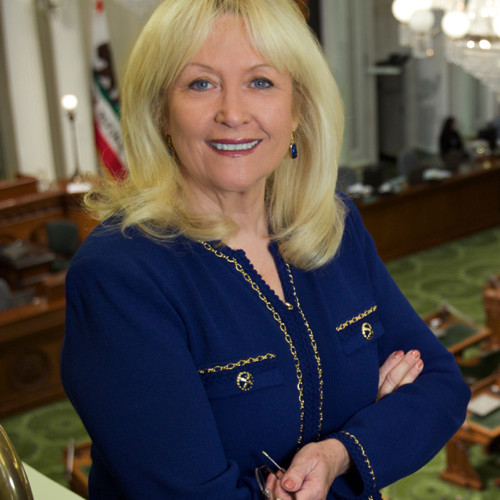 Connie Conway (Assembly photo)
Conway referenced a 2021 report describing a 100-mile radius around Fresno that produces a disproportionate share of the nation’s fruits, vegetables and nuts, warning that the region is increasingly vulnerable to groundwater limits, infrastructure gaps and rising energy costs.
“When we’re talking energy policy, we are actually talking water policy. And when we talk water policy, we’re talking about energy policy,” she said.
She warned that as aquifers decline and groundwater pumping depths increase, electricity demand climbs. Modern drip systems conserve water but require steady pressurization, further raising energy needs.
At the same time, hydroelectric generation fluctuates dramatically between wet and dry years, adding volatility to the grid.
Conway also highlighted electricity rates of up to 50 cents per kilowatt hour for some agricultural users — nearly triple the national average — and compared it to 15 cents in Texas and some other states.
“If you’re farming this agricultural land — that is so important to us and so precious to us — you cannot pick up the land and take it,” she said, contrasting specialty crop growers with livestock operators, who can relocate more easily.
Interested in more news on farm programs, trade and rural issues? Sign up for a four-week free trial to Agri-Pulse. You’ll receive our content - absolutely free - during the trial period.
Pointing to the closure of a Del Monte canning facility in Modesto that left 50,000 acres of cling peaches without a buyer, Conway asked what the replacement plan is if agricultural land continues to be fallowed.
“We are the San Joaquin Valley. We are not Silicon Valley,” she added, asking what work farmers and farmworkers could turn to if agricultural production drops.
Ross: Agriculture is the solution, not the legacy
Karen Ross, secretary of the California Department of Food and Agriculture, framed the issues through a climate and economic development lens.
Ross urged the valley to unify its voice in Sacramento and Washington, recalling the early days of the California Partnership for the San Joaquin Valley, created in 2005 to improve economic conditions, air quality and quality of life in the region.
“That willingness to work together with strong local leadership,” she said, helped the region “get our fair share” of state resources.
She seized on the momentum of the Make America Healthy Again movement to emphasize the nutritional and sustainable foods produced in California.
“When we talk about food is health, food is medicine, it’s what we grow,” Ross said, arguing that California’s specialty crops are central to combating chronic disease and advancing national nutrition goals.
She reminded the audience that California is the nation’s top dairy state and leads in fresh fruits, nuts and vegetables — production that cannot easily be replicated elsewhere.
“Why would we ever want to give that up?” she asked.
Ross described agriculture as integral to climate solutions, pointing to programs on soil health, methane digesters and water efficiency grants funded with more than $700 million in climate-smart agriculture investments.
“Agriculture is part of the solution,” she said, highlighting carbon sequestration in soils and renewable natural gas from dairy digesters as immediate tools to reduce emissions and improve air quality in the valley.
She also stressed that groundwater restrictions under the Sustainable Groundwater Management Act do not have to mean permanent land loss, urging collaboration on land use planning and renewable energy siting.
“It doesn’t have to be permanent,” Ross said of fallowed acreage, calling for regional coordination on smarter growth, circular bioeconomy investments and ag-tech innovation.
A unified push on energy and ag
The San Joaquin Valley sits at the center of California’s energy and agricultural future — but too often reacts rather than leads, according to Nick Rocca, a fourth‑generation raisin farmer and vice president of the Fresno County Farm Bureau.
Moderating a panel discussion on the state’s clean energy transition, Rocca stressed that the valley is not just a recipient of policy, but a producer of food, energy and economic output that the rest of the state depends on.
Rolston St. Hilaire, dean of the Jordan College of Agricultural Sciences and Technology at California State University, Fresno, emphasized that modern agriculture cannot be treated as a standalone sector, since it intersects with engineering, life sciences, emissions policy and grid management.
“Making a decision in isolation is just going to spell disaster for the group as a whole,” he said.
St. Hilaire also cautioned that policy volatility carries real consequences for long-term agricultural research.
“When you cancel them, you cannot get back to them and restart them quickly,” he said of research projects. “If you have a break in there, it may take you five years to come back to where you were a year ago.”
For valley agriculture, the concern is not simply cost — it is continuity.
Vincent Sorena, a vice president and investment manager at Nuveen Natural Capital, focused on infrastructure timelines and political volatility.
“If we're building out water projects, building out power projects, you have to be looking at a timeline that is fairly far out there to be able to plan properly,” he said
Too often, he added, major initiatives appear “somewhat tied to whatever the political climate is,” making it difficult for operators and investors to plan. Sorena acknowledged that no infrastructure project produces universal winners but argued that leadership requires minimizing downsides while still advancing necessary systems.
“No project has ever come out where everybody's a 100% winner,” he said
William Bourdeau, an executive vice president at Harris Farms and a board member for the Westlands Water District, addressed one of the valley’s most sensitive issues: the conversion of farmland to utility-scale solar.
While some critics argue renewable projects eliminate agricultural jobs, Bourdeau pushed back on that narrative, particularly in areas like Westlands, where water shortages have already forced fallowing.
“We're actually looking at opportunities to take a portion of some of the farms and have them make money on that to sustain farming on the other part of the land,” he said.
The Valley Clean Infrastructure Plan — a partnership with Westlands Water District — would repurpose up to 136,000 acres of drainage-impaired land for solar, storage and transmission infrastructure.
Yet Bourdeau stressed that the highest and best use of productive farmland remains agriculture.
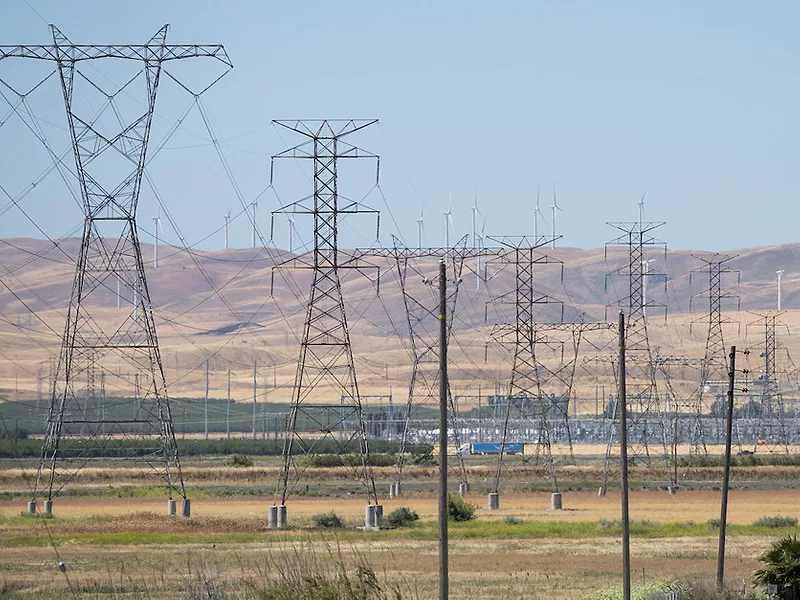
As water and power demands intensify, the conversation turns to one physical constraint: the wires themselves.
Transmission is the linchpin
Patrick Mealoy, partner and COO at Golden State Clean Energy, delivered a direct warning. California’s clean energy transition cannot happen, he said, without massive transmission expansion — and the valley is central to that effort.
“When you look at clean energy infrastructure and you look at this transition, it will not — and it cannot — happen in California without increasing the transmission system,” said Mealoy.
He described the valley as the state’s primary electron corridor, the pathway along which electricity flows north and south.
Yet transmission construction has lagged for decades.
“There hasn't been major transmission infrastructure built in Northern California in 40 years, with one exception,” Mealoy said, noting that even previously approved lines have been canceled. “There needs to be a united front of the valley pushing for getting infrastructure built that creates jobs but also allows for economic growth in the region.”
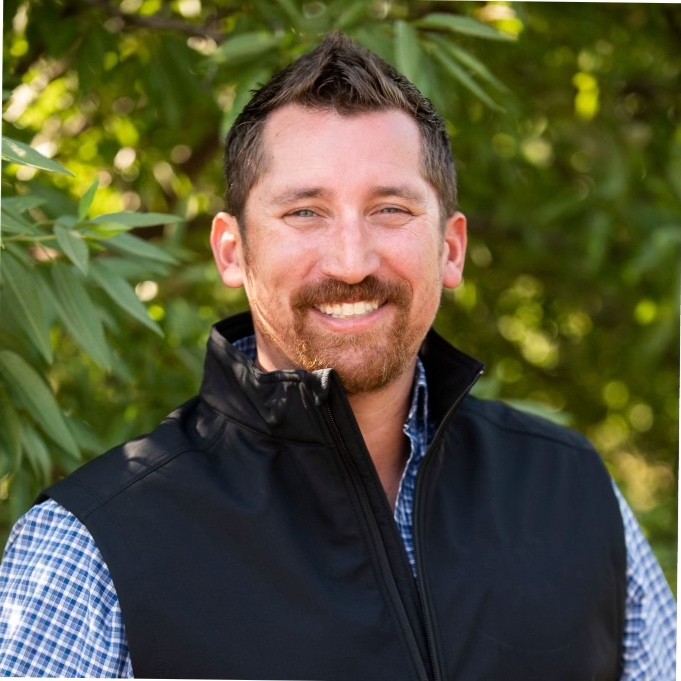 Nick Rocca (LinkedIn photo)
Compromise is unavoidable
Walter Mizuno, who directs the Fresno State F3 Center for Engineering Innovation and Design, underscored the necessity of balance and pragmatism.
“You have to be a little more able … to compromise and give up something and still get something in return,” Mizuno said, applying the message to water, energy, environmental regulation and economic development alike.
The valley’s challenge, he suggested, is not choosing between agriculture and clean energy. Rather, it is designing policies that allow both to coexist.
Suzanne Hague, a senior consultant for the Central Valley Community Foundation, framed the discussion within the state’s new Jobs First regional strategy.
“The clean energy future is here already,” she said.
Hague described the strategy’s Sierra-San Joaquin region— encompassing Madera, Fresno, Kings and Tulare counties — as uniquely positioned to shape that future.
The planning effort, she noted, engaged thousands of stakeholders to craft an economic vision centered in part on clean energy transformation.
But she acknowledged that infrastructure must be accelerated and community benefits must be tangible.
“There needs to be a regional approach to talk about how we can speed up infrastructure in the valley,” she said.
Navigating rates, reliability
Olivier Jerphagnon, CEO of AgMonitor Inc., focused on the complexity of navigating utility tariff and incentive programs. He described a “one-to-four spread” in effective electricity costs between growers who actively manage solar, storage and demand response programs and those who do not.
But Jerphagnon warned that as renewable penetration increases, reliability risks could grow without improved coordination among state agencies, utilities and local users.
“We need not just electricity — you need some other tools,” he said, advocating for a portfolio approach that blends solar, storage and conventional sources.
A unified valley voice
The summit highlighted the importance of coordination — between agriculture and energy sectors, among counties, and between state and federal policymakers.
Ross emphasized that planning across water, land use and energy agencies must be more intentional among entities like the Independent System Operator managing the regional grid, the California Public Utilities Commission and the California Energy Commission.
She pointed to the state’s forthcoming climate resilience strategy for agriculture and a new unified research and innovation agenda with CSU, the University of California and community college partners as examples of aligning long-term priorities.
“The future is ours,” said Ross. “It’s what we make it, and it’s what we make it working together.”

