
|
Health and Human Services Secretary Robert F. Kennedy Jr. says he ended a “war on protein" with the Trump administration's new dietary guidelines and food pyramid. For some farmers it may feel like he’s started a war on wheat.
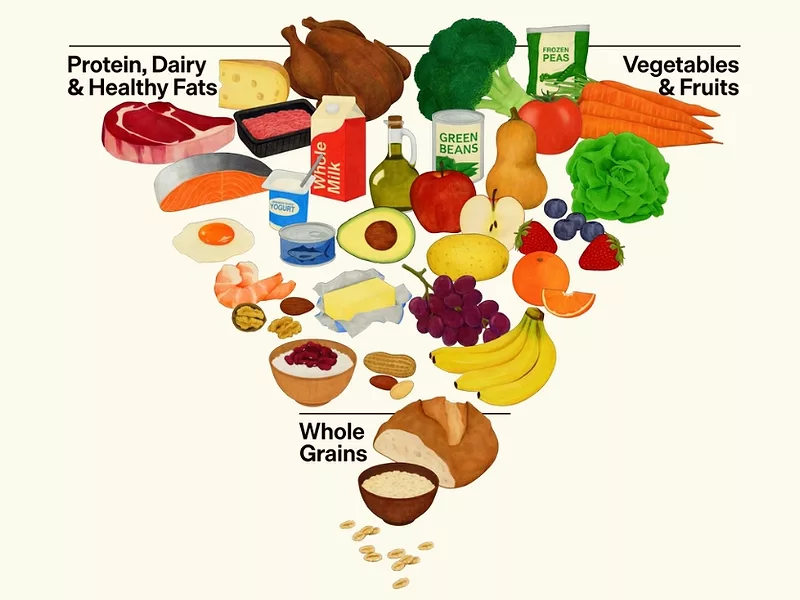
The administration's recommendations cut in half the amount of grains Americans are supposed to eat and effectively urge staying away from refined grains entirely. Under the guidelines, you’re only supposed to consume whole grains, as in whole grain bread or products such as Post Shredded Wheat cereal, or General Mills' original Cheerios.
The prior edition of the Dietary Guidelines for Americans, issued at the end of the first Trump administration in late 2020, recommended Americans consume six servings of grains for a 2,000-calorie-a-day diet, half of which were supposed to be whole grains.
The latest edition of the DGAs, issued in January, recommend just two to four servings a day, all of which should be whole grains. The guidance advises consumers Americans to “significantly reduce the consumption of highly processed, refined carbohydrates, such as white bread, ready-to-eat or packaged breakfast options, flour tortillas, and crackers.”
Interested in more news on farm programs, trade and rural issues? Sign up for a four-week free trial to Agri-Pulse. You’ll receive our content - absolutely free - during the trial period.
The elimination of refined guidelines fits into a broader strategy to get the public to cut down on highly processed, or ultraprocessed, foods.
The attack on refined grains and ultraprocessed foods is supported by many nutrition experts and consumer advocates.
Frank Hu, who chairs the Department of Nutrition at Harvard University's T.H. Chan School of Public Health, said the guidelines “move in the right direction by reinforcing the importance of reducing added sugars and cutting back on refined grains and other highly processed foods.”
At the same time, he expressed concern in a release that the guidelines are giving mixed messages about foods that are rich in saturated fats, including red meat, butter and beef tallow. The guidelines retained the 10% limit on saturated fats while at the same time urging Americans to consume more meat and dairy products.
Whole grains have never caught on with consumers
But wheat growers and industry officials are frustrated with Trump’s messaging around grains, and they say the new guidance isn’t practical – less than 1% of the grains Americans currently consume are whole grains. Whole grains include fiber and nutrients that are considered essential for healthy diets.
“We are a bit frustrated with how the communication came out on the dietary guidelines,” said Sam Kieffer, CEO of the National Association of Wheat Growers.
“Most Americans are not going to read the document. If you read the document, they focus on the health and stability of grains. Most Americans aren't going to read that. They're going to look at the pyramid, see that grains and particularly wheat and other grain products, are at the bottom of the pyramid, the pyramid’s smallest portion, and make assumptions.”
He said the messaging and graphics communicate that consumers should “avoid white bread. There's no reason to avoid white bread. It is healthy. It is economical.”
“We're not throwing stones at our brothers and sisters who are at the top of the pyramid,” Kieffer said, referring to meat, dairy products and fruits and vegetables. “A lot of our growers also grow the products that are prioritized in the pyramid. We're looking at this from a standpoint of science backs up the safety of our products.”
Idaho farmer Jamie Kress, who is president of NAWG, said “it is a little disheartening … when grain products are not prioritized, because we know the nutrition, we know the safety of what we grow, and we understand the value of incorporating not just whole grains, but also the refined grains, the white flour, the sandwich bread, if you will, in the diet. There is a place for that.”
Wheat consumption, plantings have been in long decline
The government has been specifically recommending consumption of whole grains for two decades without much impact on consumption. The 2005 dietary guidelines recommended Americans eat at least three 1-ounce servings of whole grains, or half of all grain intake, essentially the same recommendation that stood until this year.
“Despite really decades of work in the public health space to move people towards greater consumption of 100% whole grain foods, it's just been really difficult, and most Americans eat less than one serving daily,” said Erin Ball, executive director of the Grain Foods Foundation, which is funded by baking and milling companies.
“So yes, Americans need to eat more whole grains, but really, what we've seen, and some of the research shows this, particularly around kids, enriched grain flours make whole grain flours more palatable, and can actually help with increasing whole grain consumption.”
Numerous products are classified as “whole grain rich” because a majority of the grains the products contain are whole grains; fewer foods are 100% whole grains, she said. The distinction matters for federal nutrition programs that are required to follow the dietary guidelines. School meals, for example, have required half of grains served to kids be whole grains, in line with the previous dietary guidelines.
It’s not yet clear how the updated guidelines will affect school meals; USDA is currently revising school nutrition standards to reflect the new recommendations.
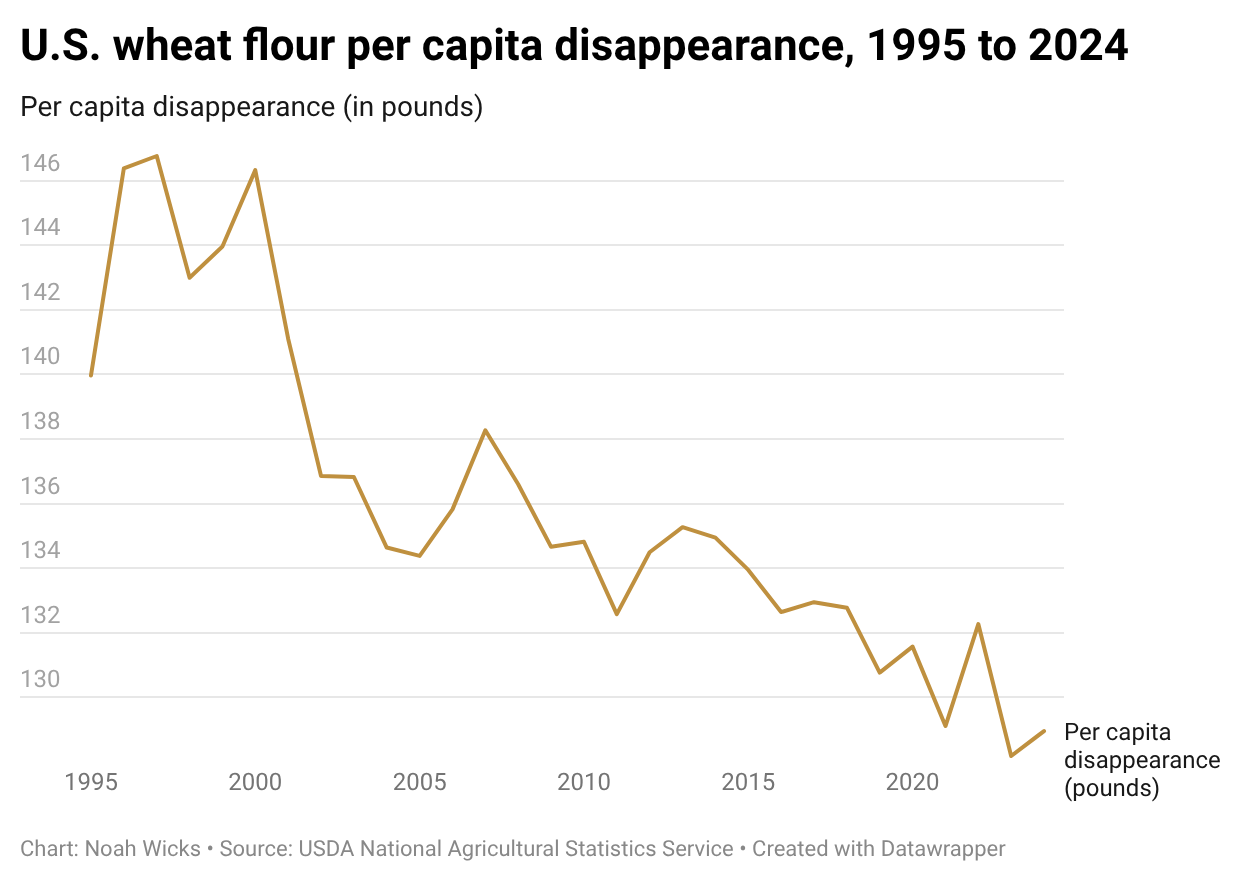
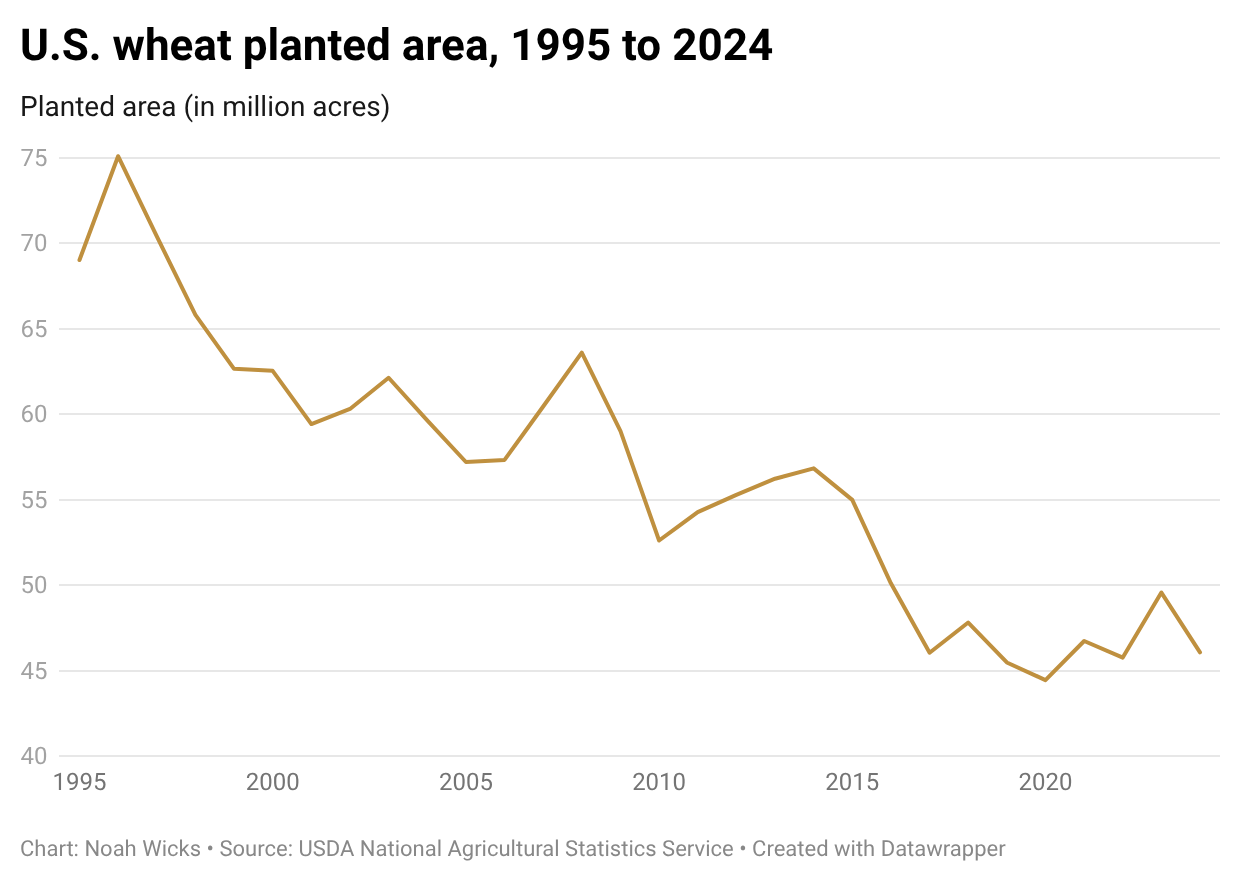
Both wheat consumption and wheat production have been on the decline in the United States, in part because of dietary changes, and at best the new dietary guidelines do nothing to reverse that trend. U.S. per capita consumption dropped from nearly 147 pounds per person in 1997 to under 129 pounds per capita in 2024, according to USDA. Over the same period, wh Erin Ball (Grain Foods Foundation photo)eat plantings dropped from more than 70 million acres to under 46 million acres.
“The consumer will drive demand, but we’ll continue to produce. … We need to continue to do our part as a farmer to ensure the food supply is there and not be scared off by rhetoric,” Kress said.
Even as wheat growers are seeing declining demand, farmers in the northern Plains may plant more of the crop this year because the input costs are lower than they are for crops like corn, said Walter Schweitzer, president of the Montana Farmers Union.
“Every extra bushel grown now is just an extra bushel of surplus. … Without having markets for our grains, we're getting more and more surpluses. And that's what's going to have an impact on our price,” he told Agri-Pulse.
One sliver of good news is that farmers who also raise cattle are seeing the benefit of stronger demand for beef at a time when cattle supplies are historically tight. Chris Tanner, a Kansas wheat grower, is among those producers.
“I look at it from the perspective of a farmer that has raised all those products, and in agriculture, we don't want to throw stones at each other,” Tanner said.
“Personally, a balanced diet is a healthy diet. … When you go into the grocery store, for the most part, you buy what you want to feed your family, not what the government has recommended that you feed your family.”

