
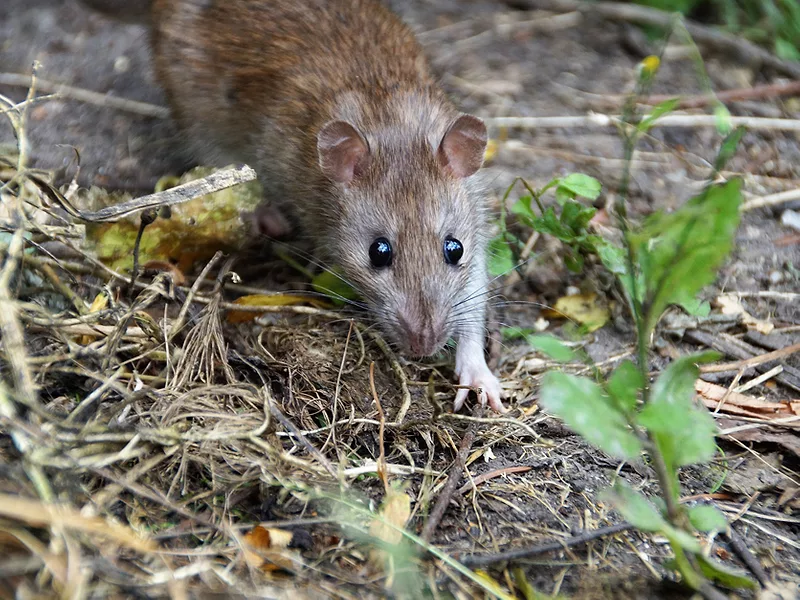
The California Department of Food and Agriculture has released an updated assessment of economic damage from rat infestations in Central Valley orchards, estimating tens to hundreds of millions of dollars in losses to almond and pistachio growers.
The updated CDFA analysis estimates economic damage to almonds ranging from $118 million to $297.7 million, while losses in pistachios are estimated between $48.1 million and $275.5 million.
The damage estimate includes yield losses, tree damage, tree replacement costs and repairs to farm equipment, according to the department’s assessment.
Rats are also destroying orchard infrastructure, particularly drip irrigation systems, which can disrupt watering schedules and reduce production. The analysis also cites chewed wiring on trucks, tractors and harvest equipment as a growing source of damage and repair costs.
The estimate focuses on a portion of the western San Joaquin Valley, specifically western Fresno County, where rat populations have surged in recent years. The analysis covers roughly 112,000 acres of almonds and 116,000 acres of pistachios.
The new estimate expands on previous CDFA work that primarily focused on almond orchards. The addition of pistachio acreage reflects concerns from growers that rat infestations are spreading across multiple tree nut systems.
The updated economic estimate does not include the cost of pest control measures. Costs for trapping, fumigation, baiting and installing owl boxes were excluded from the calculation.
Industry groups have warned that rat infestations have become an escalating challenge for orchard growers in parts of the valley. Rats chew through irrigation lines and tree bark, damage equipment and feed on nuts, creating both direct crop losses and costly infrastructure repairs.
Researchers and pest management specialists have pointed to several factors contributing to the surge, including favorable habitat conditions in orchards and nearby vegetation corridors.
State officials and researchers are continuing to study rat population dynamics and evaluate control strategies, including integrated pest management approaches that combine monitoring, habitat management and targeted pest control methods.

