
|
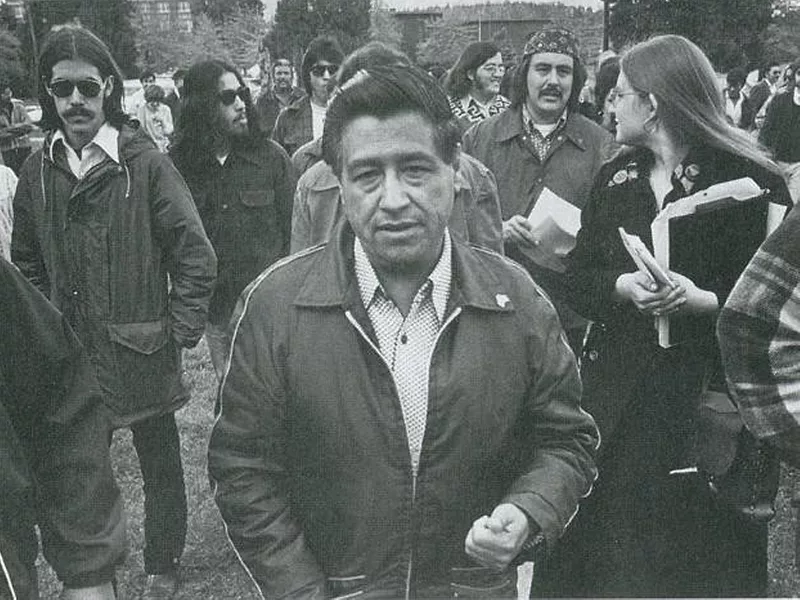
California has officially replaced César Chavez Day with Farmworkers Day, honoring the day on Tuesday after completing a swift and unanimous legislative effort marking a dramatic shift in how the state commemorates agricultural labor.
Assembly Bill 2156, brought by Assembly Speaker Robert Rivas and Senate President pro Tempore Monique Limón, cleared the Legislature with bipartisan support and immediately garnered the governor’s signature. It renames the March 31 holiday — observed as César Chavez Day since 2000 — to recognize the broader farmworker community.
The change comes amid a national reckoning over Chavez’s legacy after allegations of sexual abuse emerged from a New York Times investigation, with multiple women accusing the farmworker leader of misconduct spanning years. Two women said Chavez abused them as minors in the 1970s, with one alleging he “summoned her for sexual encounters … dozens of times” beginning when she was 13.
The investigation, drawing on interviews with more than 60 people and hundreds of pages of records, found what it described as extensive evidence that Chavez groomed and sexually abused girls who worked in the movement. Separately, longtime labor leader Dolores Huerta said Chavez assaulted her in 1966 and pressured her into sex earlier in their working relationship.
Huerta also described a broader culture within the United Farm Workers that marginalized women, saying, “Women are not seen as human beings. We’re just seen as sex objects.”
Interested in more news on farm programs, trade and rural issues? Sign up for a four-week free trial to Agri-Pulse. You’ll receive our content - absolutely free - during the trial period.
Manuel Cunha, the longtime president of Nisei Farmers League, recently told AgNet West that he recalled seeing a few girls accompanying Chavez at rallies in California.
The allegations spurred Democratic leaders who have long supported and been supported by labor unions to distance the farmworker movement from Chavez. In an unrelated press conference following the allegations, Newsom asserted that the movement “was always bigger than just one man,” echoing a central talking point by several state lawmakers, along with gubernatorial hopefuls.
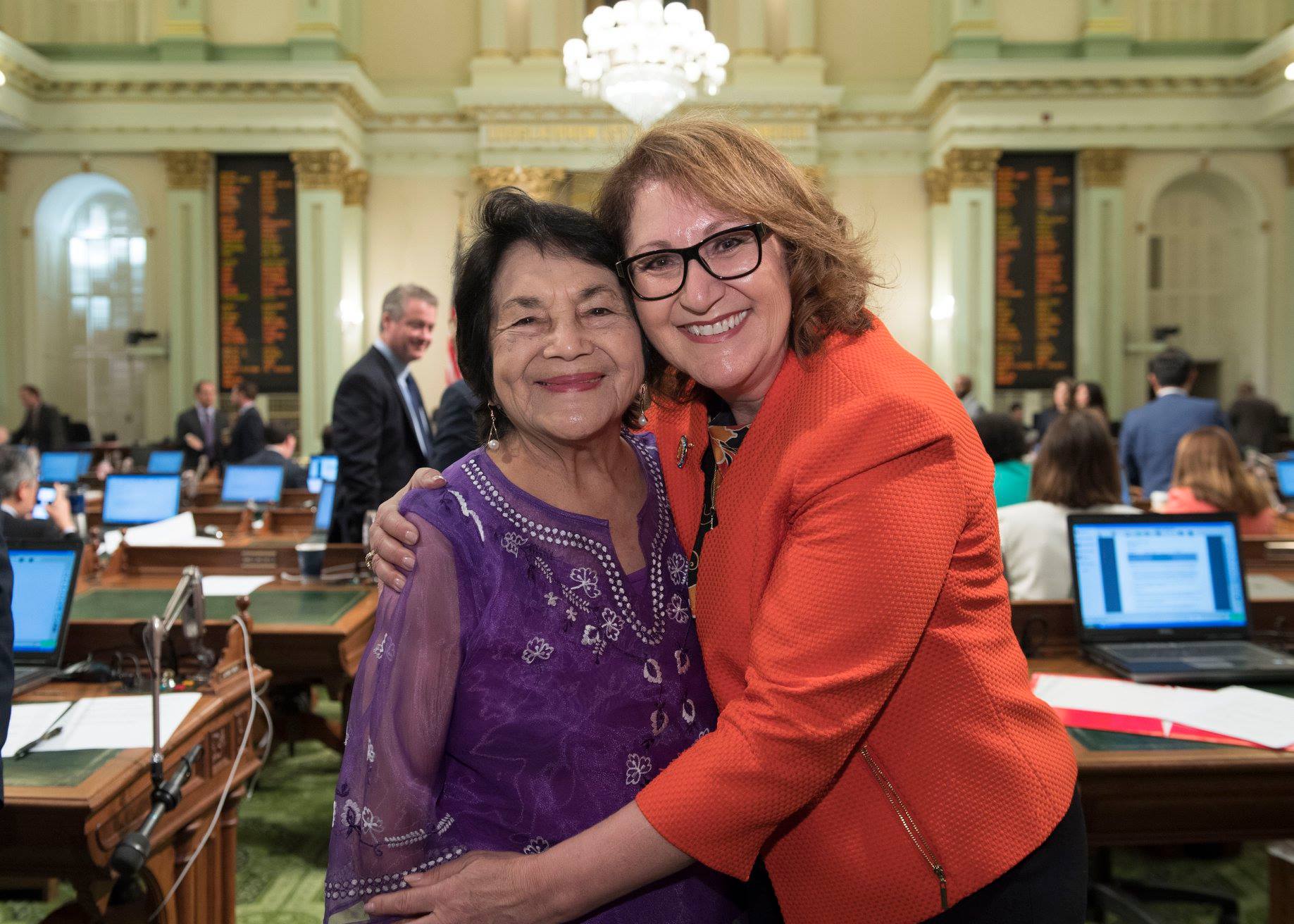 Dolores Huerta, left, with Sen. Eloise Gómez Reyes, D-Colton (Reyes office)
From tribute to tribunal
The tone of this year’s discussions honoring the farmworker rights movement stands in sharp contrast to the Legislature’s posture just one year ago, when state lawmakers unanimously adopted a resolution honoring César Chavez as a central figure in California’s civil rights and labor history. They described him as a symbol of justice and emphasized how “one person can overcome the odds and inspire a movement for social change.”
The speeches in 2025 were filled with reverence, highlighting Chavez’s leadership in the United Farm Workers, his role in organizing the 1965 Delano grape strike and his broader impact on labor rights until his death in 1993.
“Chavez's life serves as an extraordinary example of how one person can overcome the odds and inspire a movement for social change,” said Sen. Jesse Arreguín, D-Oakland, a co-author on the resolution. “He was a symbol of justice, an educator of civil and human rights, a role model and a beloved friend to many.”
Arreguín argued figures like Chavez are still needed because the state is facing a “lack of proper regulations and enforcement for the issues of heat illness in our fields.”
Sen. Catherine Blakespear, D-Encinitas, added that Chavez “brought young students into the movement, creating hope and activism and the commitment of change for a better tomorrow” and noted that “women were not just supporters, but often the driving force behind the scenes.”
Sen. María Elena Durazo, D-Los Angeles, was a young migrant farmworker picking cotton alongside her parents when Chavez began organizing strikes in 1962. Through that inspiration, Durazo later became a labor leader herself before taking office. She called Chavez and Huerta “our original dreamers,” crediting their efforts with helping families “change California.”
Democrats have long emphasized Chavez’s ties to broader civil rights struggles, drawing parallels between him and Dr. Martin Luther King Jr. and connections to LGBTQ and women’s rights movements and efforts to combat antisemitism. Arreguín tacked on the environmental movement and the animal rights movement as well.
Republicans joined in the tributes over the years, praising Chavez’s values of faith, hard work and community. Last year Sen. Suzette Martinez Valladares, R- Santa Clarita, noted that Chavez “was deeply skeptical of illegal immigration, recognizing that an unchecked labor market undermines fair wages for working class Americans.”
Confronting present-day realities
The release of the New York Times investigation sent shockwaves throughout California’s political landscape.
Rivas, who often cites his roots in a farmworker family, emphasized centering survivors in the conversation. “The first priority is to listen to them with humility and compassion,” he said, adding that the farmworker movement “has never been about one man; it is bigger than any one person.” Limón similarly called the accounts “devastating and painful,” thanking victims for coming forward and stressing that the movement has always been about farmworkers and families, not a single individual. U.S. Democratic Sen. Alex Padilla similarly called it “heartbreaking” and said survivors “deserve to be heard.”
In agriculture, the news fueled further resentment for United Farm Workers, a group that has long disparaged farm employers.
“Without full transparency regarding these allegations, the UFW risks further diminishing their credibility as a union and their ability to advocate on behalf of union members,” Christopher Valadez, president and CEO of the Grower-Shipper Association of Central California, told The Produce News.
Rivas and Limón immediately began drafting legislation to rename the state holiday.
During floor debates, lawmakers described farmworkers as essential yet often invisible.
“The farmworker movement is about the thousands of women and men whose hard work not only feeds our nation but creates lasting change,” said Limón.
The discussions also highlighted the dangers farmworkers face, with Limón pointing to the death of a worker following an immigration enforcement action, calling it “a reminder of how much farmworkers risk every day.”
Other lawmakers underscored the deeply personal nature of the issue.
 Sen. Jesse Arreguín, D-Oakland (office photo)
“I grew up in the dirt of the Central Valley,” said Asm. Alexandra Macedo, R-Tulare. “[Immigrant farmworkers] paved the way for women like me and my mom, who carry on the legacy of farming.”
On the family farm, her grandfather “never saw people on his payroll as employees. They were family.” And they were pallbearers at his funeral.
Fellow Republicans like Sen. Shannon Grove, R-Bakersfield, honored farmworkers as well, while urging their counterparts to “be serious about supporting the entire agricultural industry” by delivering reliable water supplies to farms to avoid further fallowing in the San Joaquin Valley and enacting “policies that keep farming viable here in California.”
“Farmworkers don't exist in a vacuum,” said Grove. “Their livelihoods depend on a healthy, sustainable agriculture industry.”
Asm. Carl DeMaio, R-San Diego, called the urgency measure renaming the holiday “a rushed job” that “airbrushed César Chavez out.”
“What a difference a year makes,” said DeMaio, recalling the last time the Legislature discussed the labor leader. “I understand the desire to quickly take out the trash, because there's a controversial topic that's been thrown in the lap of a lot of folks who have marketed different political agendas based on César Chavez.”
DeMaio went on to argue that “bad policies by out-of-touch bureaucrats and politicians here in Sacramento have crushed farming in our state.” He chastised his Democratic colleagues for approving a controversial card check bill that removed the secret ballot process in union elections. He claimed that has led organized labor to bully farmworkers to gather votes.
“They don't even get the decency of having a private vote on whether they want someone to take money out of their paycheck,” he said.
Industry groups echoed the emphasis on recognition, while calling for policy follow-through.
“Farmworkers are at the heart of every harvest, and their contributions deserve recognition on both this special day, and year-round as well,” said Shannon Douglass, president of the California Farm Bureau, in a statement following the passage of AB 2156. “As we celebrate their contributions, we must also advance policies that support both farm employees and the farmers and ranchers who rely on them.”
While the debate played out in Sacramento, broader societal shifts were underway as well. Across California and the country, institutions have begun renaming events, schools, public spaces and even a U.S. Navy ship.

