
|
A proposal to phase out “forever chemicals” in pesticides is exposing a sharp divide between public health advocates and agricultural interests, with lawmakers pressing both sides on whether California can move away from PFAS without disrupting crop protection.
Assembly Bill 1603 by Asm. Nick Schultz, D-Burbank, would ban pesticides containing intentionally added per- and polyfluoroalkyl substances, or PFAS, by 2035, with an earlier phaseout for 23 chemicals beginning in 2030. It would also prohibit the California Department of Pestic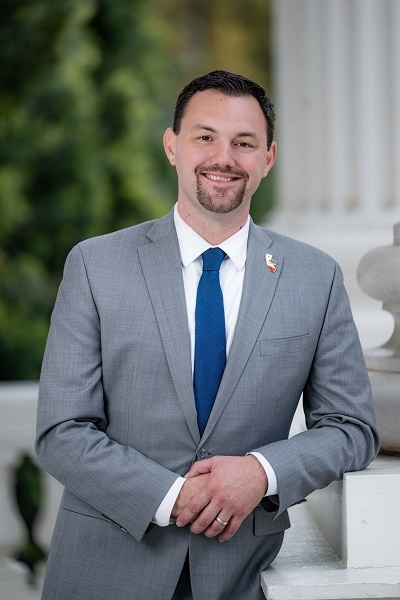 Asm. Nick Schultz (office photo)ide Regulation from registering new PFAS-containing products and require permits for continued use starting in 2028.
In a hearing on the bill last week, Schultz said he was shocked to learn PFAS pesticides are widely used on California crops.
“Simply put, they don’t go away,” he said. “PFAS pesticides are present on the fruits and vegetables that we feed our families.”
Schultz cited an analysis by the Environmental Working Group claiming more than 2.5 million pounds of PFAS are deposited on California agriculture and urban lands every year and that nearly 40% of state-tested produce samples contain one or more PFAS pesticides.
He argued regulators are not fully capturing the risks.
“Neither the state nor the United States EPA approaches are comprehensive when it comes to the assessment of PFAS pesticides,” said Schultz.
Supporters reinforced that message, emphasizing health risks and exposure through agriculture.
“PFAS — often called forever chemicals — pose serious, well-documented health harms,” said David Andrews, acting chief science officer at EWG. “What may surprise you is that our food is a major — if not primary — source of exposure, and it's underregulated.”
Andrews argued state and federal evaluations have not adequately evaluated the potential for immune system harm. He also warned of downstream impacts, saying PFAS pesticide use “is leading to hundreds of thousands of pounds” of small PFAS going into the environment each year, which would be “incredibly expensive to remove from water systems.”
Sakereh Maskal, a policy advocate at the Pesticide Action & Agroecology Network, tied the issue to environmental justice, telling the committee PFAS pesticides “disproportionately impact Latino farmworking communities in regions like Fresno, Kern and San Joaquin counties.”
Yet agricultural opponents warned that cancelling the products in one sweeping move would have steep ramifications for agriculture and rural communities.
Interested in more news on farm programs, trade and rural issues? Sign up for a four-week free trial to Agri-Pulse. You’ll receive our content - absolutely free - during the trial period.
Jeff Dawson, a former EPA senior science advisor and a technical advisor for CropLife America, told lawmakers the bill could affect about 1,150 products and the loss would lead to “a big impact on agriculture.”
Dawson emphasized the rigor of federal pesticide review, noting it takes about 12 years and about $300 million in industry investment to develop a novel pesticide, followed by extensive regulatory evaluation.
He also pushed back on the characterization of PFAS risks, saying concerns like persistence and bioaccumulation are routinely screened for in the pesticide data.
 Taylor Triffo (KSC photo)
Taylor Triffo, managing director of legislative affairs at Kahn, Soares & Conway, warned the bill could backfire by eliminating more tools that take a more targeted approach.
“That means we are going to be relying on broader spectrum, less precision-based products in order to manage the same pests and diseases that previously we had softer, safer chemistries for,” said Triffo.
Triffo also cautioned that in some cases, growers could be left without options.
“There are situations where — lygus in cotton, mealybug in tree nuts — will have nothing to manage them,” she said, noting that with DPR’s additional layers of review, it often takes 20 years for new products to be registered in California.
Separately, Western Growers argues EWG’s claims are based on misleading interpretations of pesticide data. The association contends that broad definitions of PFAS overstate risks by grouping thousands of chemically distinct compounds together, including those that lack persistence or bioaccumulation concerns.
It also emphasizes that the detection of pesticide residues does not equate to a health risk. According to DPR monitoring data, most produce samples either had no detectable PFAS residues or levels far below federal safety thresholds — typically less than 7% of EPA tolerance limits.
Dozens of other agriculture groups oppose the bill as well.
While the policy committee advanced the bill along party lines, the lawmakers leaned into the concerns, questioning whether the bill’s timeline — with restrictions starting in 2028 — provides enough runway for registering alternatives. Questions also emerged around how the state would handle enforcement and whether federal pesticide registrations — governed under the Federal Insecticide, Fungicide and Rodenticide Act — could complicate implementation.
The debate over AB 1603 comes as California continues to expand restrictions on PFAS across sectors, including in food packaging, textiles and firefighting foam. Other governments are moving in a similar direction. European regulators have banned several PFAS pesticides, and states like Maine and Minnesota are advancing their own restrictions.

