
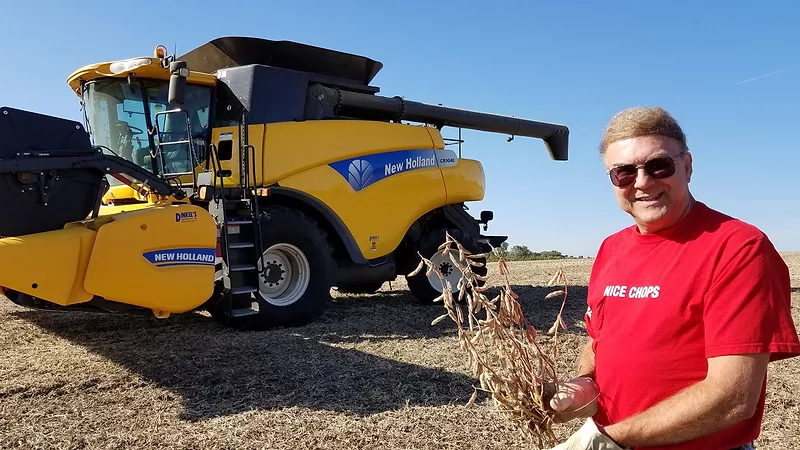
Nebraska soybean farmers just finished a third brutal market year. They are squeezed between increasing input costs, including diesel fuel, and falling crop prices tied to disruptions in overseas markets. With planting underway for the new year, strong domestic markets are our best hope for a return to profitability.
That’s why I thank the Trump administration and the Environmental Protection Agency for finalizing historic Renewable Fuel Standards. For the first time in the program’s history, the agency fully recognized the potential of the biodiesel, renewable diesel and SAF industry. EPA listened to the industry when stakeholders unified behind a 2026 biomass-based diesel volume of at least 5.25 billion gallons. And now, the administration has delivered.
EPA looked at the investments soy farmers and processors made in the United States. Soy farmers continue to get more productive every year, improving yields. As soy export markets became unreliable over the last decade, farmers looked for domestic markets and opportunities, which provide a better basis for farmers.
U.S. companies invested here in Nebraska to process more of the state’s soy crop. With new plants opened in David City and Norfolk, Nebraska can process as much as 75% of the more than 300 million soybean bushels grown in the state annually. That new local capacity increases the market options and value for farmers.
Interested in more news on farm programs, trade and rural issues? Sign up for a four-week free trial to Agri-Pulse. You’ll receive our content - absolutely free - during the trial period.
Biodiesel, renewable diesel and sustainable aviation fuel continue to be one of the best domestic market opportunities for soybean farmers. Twenty years ago, when the Renewable Fuel Standard began, the biodiesel industry with just a few hundred million gallons of capacity could use 1.5 billion pounds of soybean oil per year. It served as a backup market for surplus oil, allowing soybean farmers and processors to increase productivity.
Today, clean fuel production represents 10% of the value of every bushel of soybeans grown in the United States. For Nebraskans, that represented more than $300 million this past marketing year. Biodiesel and renewable diesel are the preferred market for soybean oil. The clean fuel industry has grown to 7 billion gallons of capacity – enough to meet 10% of the nation’s petroleum diesel demand.
With the RFS volumes finalized for 2026 and 2027, biodiesel and renewable diesel are going to meet America’s energy needs. The clean fuels industry anticipates using more than 17 billion pounds of soybean oil this year – nearly 1.5 billion pounds per month. That is a great opportunity for Nebraska farmers and oilseed processors to see a significant return on their investments and on their stored supplies of oil. It will build domestic markets and ease our reliance on unstable overseas purchases.
For farmers, oilseed processors and clean fuels producers this is a historic RFS rule. President Trump and EPA deserve a round of applause for the hard work and full consideration of agriculture’s needs and the opportunity for rural America to contribute to American energy security.
Greg Anderson is a soybean farmer in Newman Grove, Nebraska, and a board member of Clean Fuels Alliance America.