
A fight over pesticide labeling law now shifts to the Senate after House lawmakers voted down a measure that critics argue is a gift to farm chemical companies and supporters say is needed to guard against food supply mayhem.
By a vote of 280 to 142, the U.S. House on Thursday approved an amendment to strip from a farm bill language that would preempt state and local rules on pesticide warning labels. The farm bill passed the House, 224-200, and will head to the Senate.
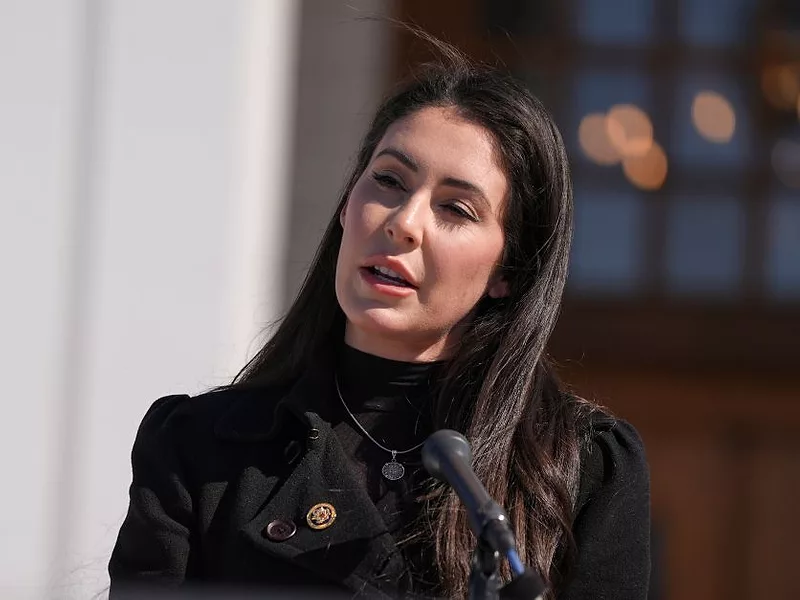
The push led by Rep. Anna Paulina Luna, R-Fla., and Rep. Eli Crane, R-Ariz., to remove the pesticide provision has opened a rift between Make America Healthy Again supporters, who say agriculture chemicals pose a public health risk, and fellow Republicans, who counter that long-established pesticides are safe and critical to growing enough crops to feed the world.
House Agriculture Committee Chairman Glenn "GT" Thompson, R-Pa., called the amendment "dangerous," and said the fight to get it into the farm bill isn't over. "The Senate has got to do his magic, and we got a conference committee," he said.
"Those votes were based on emotion, and so we'll keep talking about it, trying to get the science and the facts that are out there," Thompson said. The amendment "will increase the likelihood of harming farmers and, quite frankly, make food unaffordable for consumers. So I refuse to stand still and allow that to happen to the American people."
The controversy on Capitol Hill coincides with a Supreme Court case in progress in which crop science company Bayer, the defendant, is seeking federal preemption of state pesticide-label laws as it continues to deal with a tsunami of lawsuits claiming harm from its Roundup pesticides made with glyphosate, the world's most widely used weedkiller that's been around for half a century.
Bayer in a statement on Thursday said the vote for Luna's amendment meant Congress was turning its backs on U.S. farmers "in an increasingly competitive global landscape by allowing blatant misinformation to undermine support for this critical provision. The removal of this language could result in a patchwork of regulations creating ambiguity – at a time where clarity is needed most. This action puts current and future agricultural innovations for farmers at risk.”
Interested in more news on farm programs, trade and rural issues? Sign up for a four-week free trial to Agri-Pulse. You’ll receive our content - absolutely free - during the trial period.
Modern Ag Alliance, a Bayer-founded group, said the provision would have reaffirmed that, under federal law, EPA is the sole authority for pesticide labeling and packaging requirements. "It would not have weakened enforcement; federal and state regulators would retain full authority to hold bad actors accountable. It would not have restricted EPA’s ability to review new science or reassess products to ensure continued safety, nor would it have altered states’ authority to regulate the sale and use of pesticides," the group said. "This vote will raise grocery prices at dinner tables across the country—and be remembered at the ballot box.”
Luna, on social media, said: "They called me a `damn liar’ but facts are facts: pesticides are linked to a 30% increase in childhood cancer and over 170 studies corroborate the evidence. I’m not paid off by special interest groups, I serve the interests of my constituents, and we are choosing people over pesticide companies.”
Many farm groups rallied early last year when Robert Kennedy Jr. became the U.S. Health and Human Services secretary under President Donald Trump, kicking off the MAHA movement. Ag organizations feared a crackdown on farm chemicals was coming, though Kennedy early on said he wasn't planning to pursue anything that would make life harder for farmers.
In February, Kennedy defended a Trump order that emphasized domestic production of glyphosate. While Kennedy has made it clear he's not a fan of pesticides, he said if they “disappeared overnight, crop yields would fall, food prices would surge, and America would experience a massive loss of farms even beyond what we are witnessing today. The consequences would be disastrous.”
Meanwhile, the upcoming congressional elections in November could lead to increased oversight of pesticides, depending on control of the House and Senate.
Democratic Sens. Martin Heinrich of New Mexico and Cory Booker of New Jersey on Wednesday introduced legislation that aims to ensure manufactures of glyphosate "can be held liable under federal and state law should the chemical be proven to cause cancer." The bill, dubbed the "No Immunity for Glyphosate Act," would overturn Trump's executive order promoting production of glyphosate, the lawmakers said in a statement.
Booker is in line for a top leadership position next year on the Senate Agriculture Committee if Sen. Amy Klobuchar, top Democrat on the panel, wins her race to be governor of Minnesota. He told Agri-Pulse on Thursday that the success of removing the pesticide provision from the farm bill is the reflection of broader movement.
"Now, in the Senate, we're going to have a similar fight," he said. "I'm going to be one of those people that continues to push to clean our food system and rid it of these toxic chemicals."
For more news, go to www.Agri-Pulse.com.
.webp?t=1762183428)

