
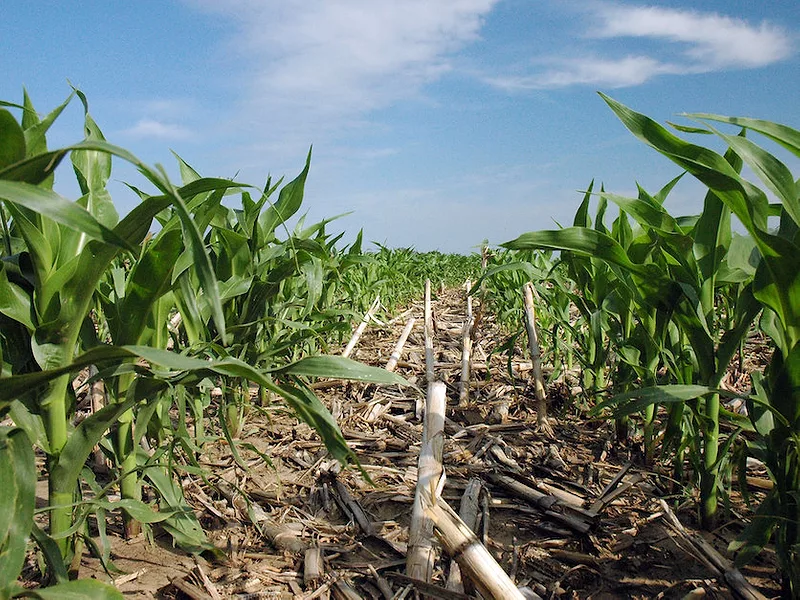
Farmers, traders and policymakers get a first official look at USDA’s supply and demand estimates for the 2026-27 marketing year on Tuesday, with questions swirling around grain and oilseed export demand, domestic crop use and this season’s production outlook.
U.S. old and new crop demand estimates will be influenced by what ends up happening in South America. Brazil’s second annual corn crop so far is looking robust and “could very well cut into the US market share here in the second half of this year,” said ADM Investors Services analyst Mark Soderberg.
U.S. soybean export estimates could be trimmed by about 20 million bushels and shift into domestic crushing. Soybean processing for oil needed to meet higher U.S. yearly quotas biofuel-blending quotas is causing record-level crush rates and margins in an attempt to “get enough soy oil for green diesel,” Soderberg said.
Renewable diesel margins remain strong despite skyrocketing soybean oil prices as U.S. biofuel credit values have shot up. Favorable federal tax policy for renewable fuels is also helping, according to Soderberg.
USDA’s report is always a potential market mover, but this year it hits as fuel and fertilizer shipping disruptions due to war in the Middle East enter an 11th week. Prospects for a lasting peace between the U.S. and Iran looked unlikely as of Monday late afternoon, with President Donald Trump calling a ceasefire between the two nations on “life support.”
“It's becoming apparent that the grain markets are fully engulfed in the broader macro-unease surrounding the war in Iran, with limited visibility and growing questions around the U.S.’s actual position in the conflict,” said Joe Brown, associate merchant at The Andersons.
The conflict is having a mixed impact on grain and oilseed markets. Surging fertilizer and fuel prices threaten to worsen the economic hardship of American crop growers. Meanwhile, big hedge fund money is flowing into commodities as a “geopolitical and inflation hedge,” Brown said.
USDA’s World Agricultural Supply and Demand Estimates, known as the WASDE, is set for release Tuesday at noon in Washington. The report hits the same week as an expected pro-ethanol bill vote in Congress, a U.S. wheat inspection tour throughout Kansas and a high-stakes meeting in Beijing between Trump and Chinese President Xi Jinping.
Still, the “broader commodity complex remains tied to developments in the Middle East and the status of the Strait of Hormuz,” said No Bull Ag analyst Susan Stroud. “Even if tensions ease or free trade flows are restored - that does not immediately solve the problem. Physical markets do not normalize overnight.”
It’s easy to be “in the know” about what’s happening in Washington, D.C. Sign up for a FREE month of Agri-Pulse news! Simply click here
Beef industry awaits executive orders as frustration builds
A White House official told Agri-Pulse and other media outlets on Monday that the president was set to sign a pair of executive orders to increase beef imports and grow domestic herds. The administration also told industry figures that it would suspend certain tariff rate quotas that allow set volumes of beef to enter the U.S. at a reduced tariff rate.
But the administration provided no further details and the text of the executive order has not been published.
The Trump administration rankled industry and lawmakers when it temporarily expanded the quota allocated to Argentina earlier this year. Some reiterated their concerns on Monday, arguing that higher import levels could undermine efforts to rebuild U.S. cattle herds.
“The long-term solution for rebalancing domestic beef production with domestic beef demand is to incentivize the expansion of the domestic cattle herd, which will only occur if America’s cattle farmers and ranchers have confidence that their prices will not be continually manipulated by dominant beef packers or continually undercut by excessive imports,” Bill Bullard, CEO of R-CALF, said in a statement.
Take note: GOP lawmakers were also lukewarm on the idea Monday evening. Senate Majority Leader John Thune, R-S.D., told Agri-Pulse that he understands the need to bring down domestic beef prices, but said he doesn’t like the idea of using imports to do so.
“Where I come from in cattle country, we're not a big fan of foreign imports,” he said. “We have the best herd in the world and we'd like to keep it that way.”
Fertilizer woes take spotlight in Senate Ag Committee hearing
As the world moves into an 11th week of fertilizer shipment disruptions, a leading trade association says it agrees with calls for better market transparency.
The Fertilizer Institute’s Chief Executive Officer Corey Rosenbusch will tell members of the Senate Agriculture Committee that a federal portal is needed to deliver timely global industry data.
“Establishing this function would aid farmers in their planning and budgeting, while serving as an impartial resource for Congress and the public,” according to Rosenbusch’s prepared testimony for a hearing on how to ensure fertilizer stability and affordability for U.S. ag producers.
TFI’s support for market transparency comes as some of the world’s biggest manufacturers of crop nutrients are the target of criticism from both farmers and government officials.
The hearing is scheduled for 3 p.m. Read more on Rosenbusch’s testimony at Agri-Pulse.com.
Also on the Hill: Axios reports that House Speaker Mike Johnson, R-La., is addressing Repulican senators at their weekly lunch today in an attempt to “heal growing friction.”
Farmers reiterate call to scrap phosphate tariffs after Mosaic cuts output
U.S. growers responded to the news that the leading U.S. phosphate fertilizer producer is cutting production with renewed calls calls for lower tariffs to ease price pressures.
Mosaic announced Monday it would temporarily reduce production in two U.S. phosphate plants over high sulfuric acid prices. The production losses will affect facilities in Florida and Louisiana.
“This is the worst time possible for Mosaic to decrease domestic phosphate production,” the American Soybean Association’s Scott Metzger said in a statement. “High sulfuric acid costs are disrupting the global fertilizer market, and farmers are ultimately paying the price through higher input costs.”
Metzger argued that the administration should lift countervailing duties applied to Moroccan and Russian phosphate to shore up domestic supply.
“[T]his ill-conceived duty has increased the cost of phosphate fertilizer for farmers … while commodity prices continue to trend downwards,” Metzger noted.
ASA was among more than 50 ag groups that wrote to the International Trade Commission earlier this year urging the agency to revoke the duties.
Read more at Agri-Pulse.com
Cargill executive to join Trump China visit
Brian Sikes, Cargill’s chairman and CEO, is among 16 business executives joining President Donald Trump’s trip to China this week, according to a list published by the New York Times.
The visit comes as the U.S. beef industry is pushing the Trump administration to press Beijing to reinstate export registrations for a slate of U.S. facilities that expired last year. Administration officials have indicated that agricultural commitments could be among the outcomes of Trump’s meeting with Chinese President Xi Jinping.
Apple’s Tim Cook, Tesla’s Elon Musk and Visa’s Ryan McInerney are also among the executives that will participate.
Final word
“Elevated fuel and fertilizer costs have already altered margins and planting economics globally — particularly for nitrogen-intensive crops — and those impacts will linger long after the headlines fade.” – No Bull Ag’s Susan Stroud on how, despite any potential ceasefire in the Middle East, it will take time for key ag supply chains to normalize.
For more news, go to www.Agri-Pulse.com.
.webp?t=1762183428)


