
|
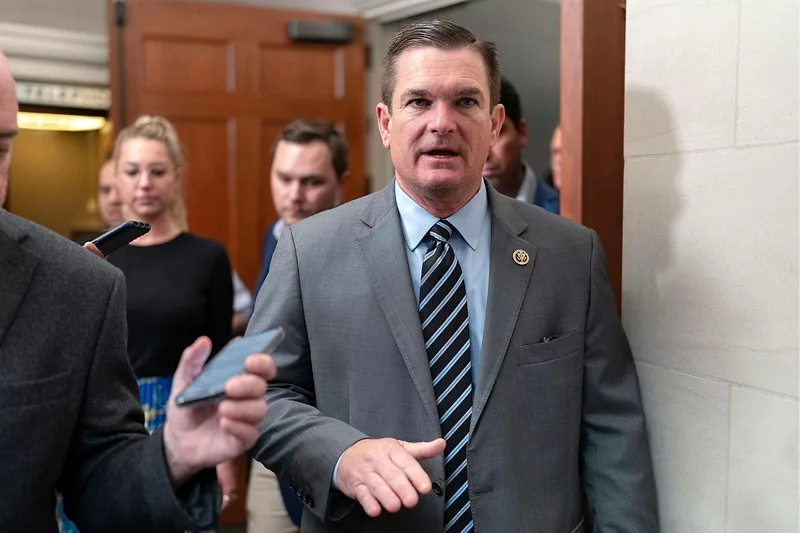
Georgia congressman Austin Scott is openly positioning himself to become the next Republican leader of the House Agriculture Committee, arguing that his ties to the Trump administration, vision for enhancing farm profitability, and focus on protecting American agriculture from foreign adversaries make him the right leader to guide the panel through the prolonged downturn in the ag economy.
Current House Ag Committee Chairman Glenn “GT” Thompson, R-Pa., is set to reach the end of his six-year term limit as the panel’s top Republican at the close of the 119th Congress, though House rules allow members to seek a waiver for an additional two years. While Thompson told Agri-Pulse he “wouldn’t be opposed to at least trying" to obtain a waiver, he added it’s still too early to make that request.
Still, Scott praised Thompson’s leadership as an “exceptionally good chair,” and is making a case to become his successor.
“I'm absolutely seeking the chair of the House Ag Committee,” Scott told Agri-Pulse Newsmakers. “What I will tell you is that I look forward to working hand in hand with [Ag Secretary] Brooke Rollins and our producers to make sure that we are doing what is right for American production agriculture.”
Scott, who worked on the 2014 and 2018 farm bills, as well as the recent House-passed bill, said his top priorities would include improving producer profitability and expanding affordable access to seed and chemical technology.
“We've been backing up for a while now with regard to the profitability in agriculture, and so we're very much going to be focused on working with land-grant institutions, including the economists, in finding ways to get the American producer more for what the American consumer actually pays at the grocery store,” Scott said.
“We're going to make sure that we keep American production agriculture together,” he added, emphasizing the need to reverse the declining share of the food dollar farmers have received in recent years.
The Georgia Republican, whose district includes major cotton, peanut and poultry production, has steadily expanded his influence in farm policy since being elected to Congress in 2011. As vice chairman of the Ag Committee and chair of the panel’s subcommittee overseeing commodity programs, crop insurance and agricultural credit, Scott has played a growing role in shaping the farm safety net and disaster assistance. 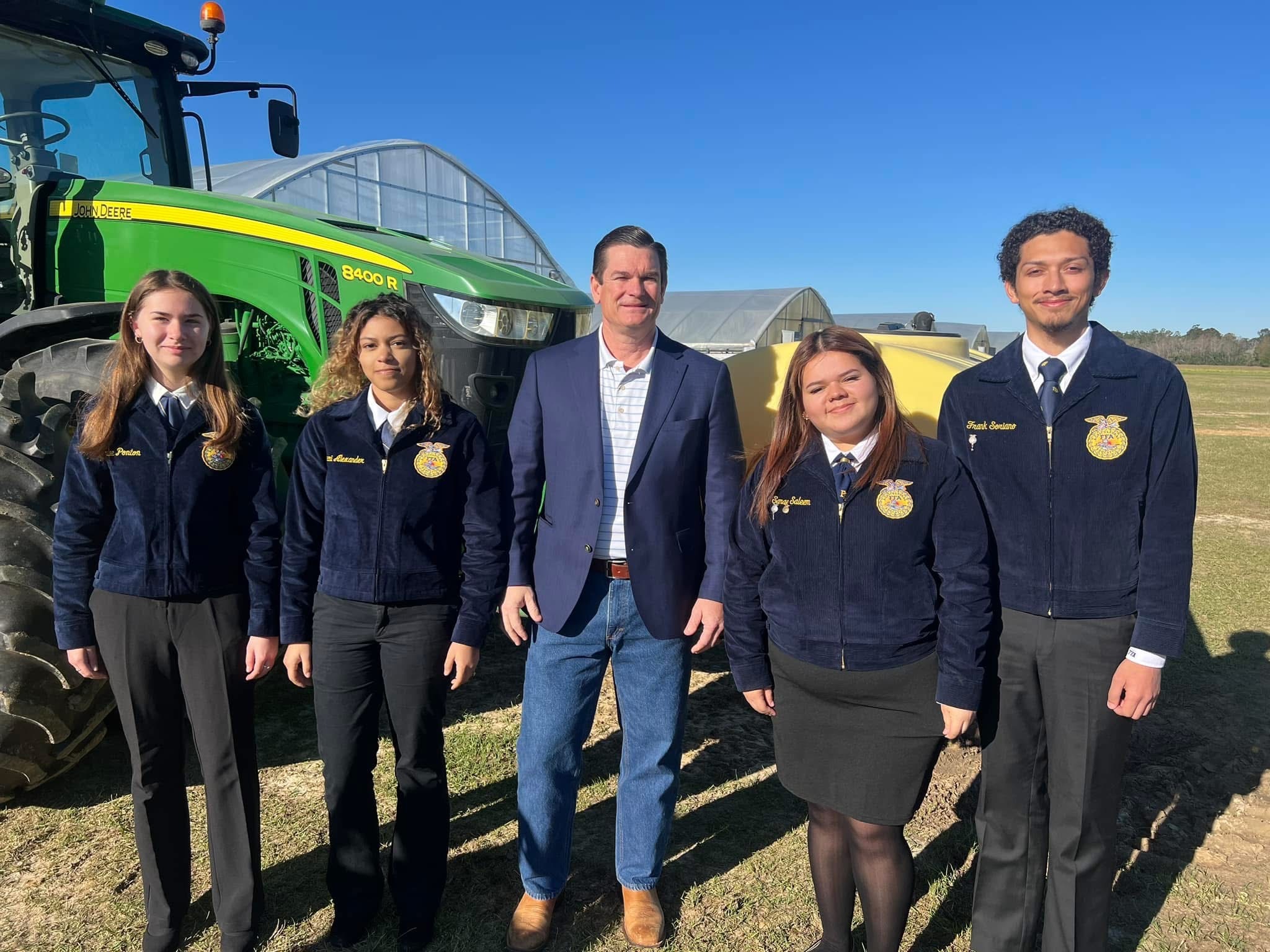 Scott meets with FFA members in Lowndes County, Georgia, on National Ag Day in 2025. (Photo: @Rep. Austin Scott)
He’s also landed face time with administration leaders. Scott was the sole House Ag Committee member to join President Donald Trump, Ag Secretary Brooke Rollins and other administration officials at a White House roundtable to unveil the $12 billion Farmer Bridge Assistance Program in December. He used his remarks to raise concerns about financial pressure in the timber sector and warn administration officials about the potential impact of the European Union’s deforestation regulations on U.S. timber producers.
Also a member of the Armed Services Committee, Scott has been a leading advocate for legislation to mandate national security reviews for foreign U.S. farmland acquisitions, which aligns with broader GOP and Trump administration efforts to frame food production as a national security priority. Scott has also co-sponsored legislation to add the agriculture secretary to the Committee on Foreign Investment in the United States for more agriculture-specific oversight.
In the Agri-Pulse Newsmakers interview, Scott noted the need to keep a focus on ChemChina, the parent company of crop protection company Syngenta, and other organizations “that don't share the interest or the values of the American producer.” He has argued that allowing the Chinese Communist Party to consolidate control over the global agriculture industry threatens U.S. food production and supply chain security.
\It’s easy to be “in the know” about what’s happening in Washington, D.C. Sign up for a FREE month of Agri-Pulse news! Simply click here
Beyond Agriculture and Armed Services, he also serves on the Rules and Intelligence committees, giving him political influence well beyond farm policy.
Geographic politics of ag committee leadership
Geographic representation of ag committee leadership has been a long-contested issue in farm politics. The interests of Scott’s south-central Georgia district, which is home to cotton, peanut, timber and poultry production, could clash with the ag interests of a Midwest farm-state member whose district is home to corn, soybean, hog, and ethanol production, for example.
“We've stayed together in the past. That is key to getting the farm bill done,” Scott said, emphasizing the need for unity among committee members to make legislative progress.
“There are going to be times when what we do is a little better for one commodity than the other one, but you know the way you address that is not by not doing anything. The way you address that is when you come back the next time, you make sure that you keep in mind what happened on the last one,” Scott said. “And we just have to keep pushing forward.”
Recently deceased David Scott, a Democrat, was the first and remains the only Georgian to hold the committee’s top leadership post. He was chairman from 2021-23 and ranking member from 2023-25.
Thompson, whose diverse North Central Pennsylvania district is home to dairy and livestock as well as row, specialty crop and timber production, told Agri-Pulse he’s interested in continuing his chairmanship another year to “have the opportunity for myself and the team I formed to provide wide oversight with USDA implementing this great farm bill.”
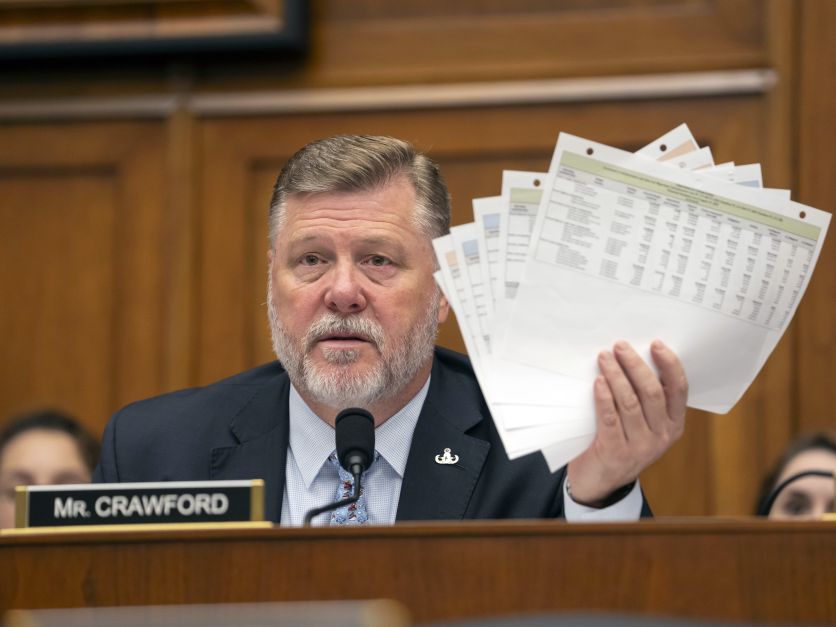 Rep. Rick Crawford, R-Ark. (AP Photo/Mark Schiefelbein) A waiver from the House GOP steering committee would be needed to extend Thompson’s tenure as chairman.
The farm bill was passed out of the full House with a 224-200 vote in April and now awaits legislative action in the Senate. It's unclear if the legislation can secure the needed 60 votes in the upper chamber to move forward to full passage. The last complete, five-year farm bill was passed in 2018, and extensions have been advanced since the legislation's first expiration in 2023.
Thompson, who was the most senior member of the committee when tapped for the leadership role in late 2020, edged out both Scott and Arkansas Republican Rick Crawford in the chairman vote.
Crawford remains a senior member of the panel but is positioned to lead the House Transportation and Infrastructure Committee next year after current chairman Sam Graves’ retirement from Congress. Graves, of Missouri, received a rare waiver to bypass conference term limits for what will total eight years of committee leadership at the end of the year.
Oklahoma Republican Frank Lucas, chairman of the committee during passage of the 2014 farm bill, told reporters in April “it wouldn't be a bad job” to hold the committee’s top Republican leadership role next year if Thompson successfully passes the 2026 farm bill. Procedurally, Lucas would need a waiver from the House GOP steering committee to fill the role.

