
As policy watchers await a draft farm bill from the Senate Agriculture Committee, lawmakers also need to focus on passing year-round E15, weighing in on California’s Proposition 12, and getting more economic aid into the hands of crop growers, American Farm Bureau Federation’s John Newton says.
“It's going to be critically important” for Congress to pass legislation allowing year-round sales of higher ethanol blends, known as E15, and provide additional federal funds to farmers hurt by lower crop values, surging production costs and a recent lag in demand, Newton, vice president of public policy and economic analysis at AFBF, tells Agri-Pulse.
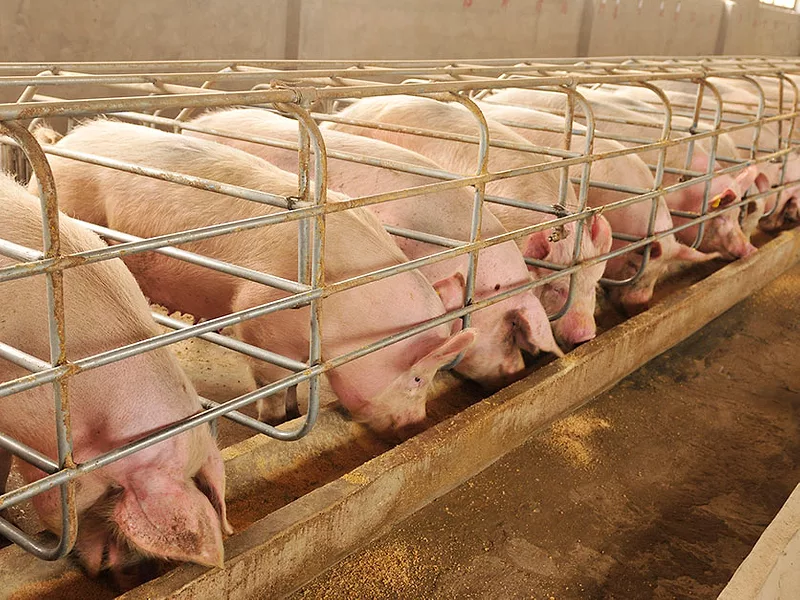
Congress also needs to deal with a patchwork of state livestock welfare laws, such as Proposition 12, Newton says. The Supreme Court in 2023 ruled that any issues stemming from the regulations can only be addressed by the legislative branch, a need echoed by both the former Biden administration and current Agriculture Secretary Brooke Rollins, Newton adds.
Such issues are key priorities for AFBF, the country’s largest farm group, regardless of if they end up in a new farm bill, according to Newton.
“They're farm bill-related, and we need all of those things to happen” in this Congress, Newton says.
EPA biofuel rules are delivering for America’s farmers, CFAA says
The Trump administration’s record-high biofuel-blending rules are a clear economic win for rural America, says Clean Fuels Alliance America CEO Donnell Rehagen.
In a major turnaround from prior quotas, “EPA is purposefully building a domestic market for U.S. farmers,” Rehagen writes in an online post.
“The agricultural economy is already responding to the signal,” he says.
EPA expects biomass-based diesel production from soybean oil to nearly double from about 1.3 billion gallons in 2025 to more than 2.5 billion gallons next year. It also sees a boost in the use of other crop oils, especially canola, and coproducts of crops like distillers corn oil, according to the CFAA chief.
Cut through the clutter! We deliver the news you need to stay informed about farm, food and rural issues. Sign up for a FREE month of Agri-Pulse here.
Production of U.S. biodiesel, renewable diesel and sustainable aviation fuel is booming, and if USDA estimates are right, domestic output of the biofuels would provide a value-added market for half of this year’s available domestic soybean oil, he says.
The growth is welcome news after U.S. agriculture lost $14.9 billion in annualized sales to China due to tariffs from March 2025 to February 2026, according to a North Dakota State University study. Soybean farmers absorbed almost half those losses, or $6.8 billion, with top soy-growing states like Iowa, Illinois, Kansas, Nebraska and Minnesota suffering the biggest losses, according to the researchers.
Three new screwworm cases detected in Texas
The Agriculture Department has detected three new cases of New World screwworm in Texas, bringing the overall U.S. case count to 15, according to the latest data from the Animal and Plant Health Inspection Service.
A new case of the pest in sheep was found in Crockett County this weekend, along with two cases in cattle in Edwards County.
But, but, but: USDA has declared three of the cases to be inactive, according to the APHIS tracker. Those include a case in a New Mexico dog, and two cases in cattle in Edwards and Zavala counties.
Senate bill would create standardized specialty crop framework
Two Senate Ag Committee Democrats plan to propose legislation today to standardize a framework for future Agriculture Department rollouts of specialty crop disaster assistance.
Sens. Ben Ray Luján of New Mexico and Elissa Slotkin of Michigan are prepared to introduce the Cultivating Horticultural Innovation in Local Economies (CHILE) Act, which would set rules for USDA to follow when providing assistance to specialty crop growers. It directs USDA to base payments on producers’ sales in the year before a disaster.
Additionally, the bill proposes $5 billion in assistance to specialty crop producers for fiscal year 2027.
Take note: Multiple iterations of aid programs with different requirements over the last decade have led specialty crop groups to push for a standardized structure based on a producers’ prior-year sales. The farm bill that passed through the House earlier this year includes such language.
CRA says refiners have helped advance regen ag on more than 8 million acres in North America
The Corn Refiners Association has supported adoption of regenerative ag practices across more than 8.5 million acres in North America.
Regenerative ag, the association says, is “a systems-based approach that seeks to sequester carbon in the soil to improve soil health, biodiversity, water quality, and air quality, all while ensuring the long-term viability of agriculture production.”
That definition aligns with “many in the agriculture industry and Field to Market,” a CRA press release out today says.
CRA says the area covered by regen ag practices is equivalent to more than 10 million football fields. The estimate comes from a member survey and mostly covers the U.S., where USDA estimates farmers planted about 95 million acres of corn this season.
The Trump administration has touted regenerative agriculture as a way for farmers to reduce inputs without sacrificing yields.
Pest control company won’t enforce noncompete agreements
One of the largest pest control companies in the U.S. has agreed to stop enforcing noncompete agreements against more than 18,000 workers nationwide.
The Federal Trade Commission had alleged that Rollins Inc.’s noncompete agreements generally prohibited its former employees from working in the pest-control industry for two years after leaving Rollins. In addition, those agreements “prohibited employees from working in pest control within a predetermined distance, typically within a 75-mile radius from one of Rollins’ more than 700 locations in the U.S.,” according to the FTC’s complaint.
The final consent order “also imposes other conditions, including requiring Rollins to provide notice to current and former employees that they are no longer subject to a noncompete agreement and that they can compete against Rollins, including by starting their own business.”
Ag appropriations bill markup postponed
The Senate Appropriations Committee has postponed a markup of the agriculture and FDA appropriations bill that had been scheduled for Thursday.
The committee said markups on that bill, as well as bills to fund the Veterans Affairs and Commerce departments and the legislative branch, would be rescheduled. Committee member Mitch McConnell, R-Ky., will not be back for votes this week. He is recovering following a hospitalization June 14.
Final word
“Thanks to bold expansion, such as this, the United States can now process three out of every five rows of soybeans grown across our fields, keeping more value right here where it belongs. Translation: less reliance on China.” — National Oilseed Processors Association President and CEO Devin Mogler at the opening of Incobrasa Industries’ new $250 million soybean crushing plant in rural Illinois.
.webp?t=1762183428)

