
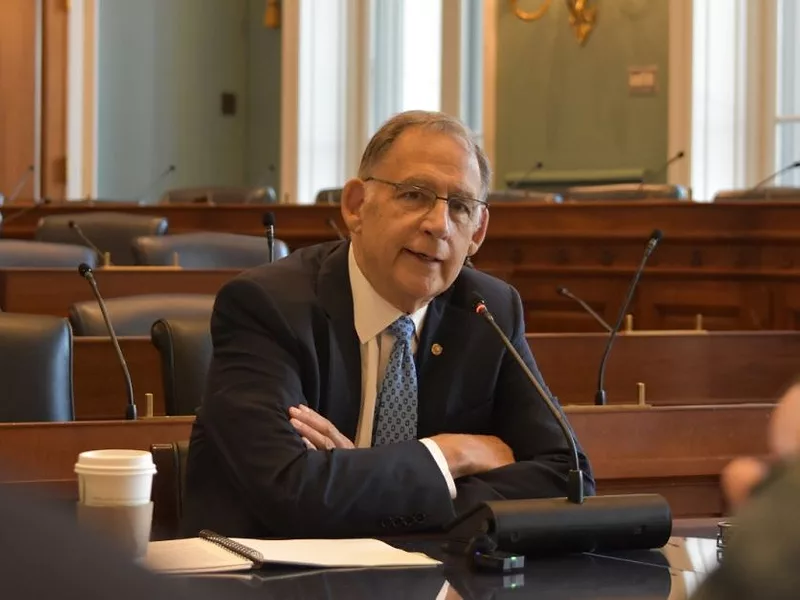
The Senate’s draft farm bill doesn’t include language for year-round E15 or the elimination of California’s Proposition 12, but Agriculture Committee Chairman John Boozman is still highly optimistic both measures will make it through Congress this year.
On the push to nullify state livestock welfare regulations like Prop 12, the Arkansas Republican tells Agri-Pulse Newsmakers there’s a “fair chance” such a provision will be included in a final farm bill crafted in conference committee, since it was part of the House-passed ag legislation.
House Ag Committee Chairman Glenn "GT" Thompson, R-Pa., also has said he believes there's a "good possibility" the measure will be in the legislation when the House and Senate reconcile their two versions of the bill.
Boozman supports the anti-Prop 12 effort, but said he didn’t include the measure in a draft farm bill unveiled this week because it isn’t likely to get enough support from Democrats to pass. “We need 60 votes in the Senate, as opposed to 51 in the House, and so it makes it more difficult,” he said.
On E15, the ag chairman expects language allowing year-round sale of higher ethanol-fuel blends, known as E15, to be included in a nearly $90 billion supplemental government funding package, as called for on Wednesday by President Donald Trump.
But if that doesn’t work out, Boozman is optimistic E15 could pass the Senate as a stand-alone bill. “We're committed to getting it done, and I believe that we have an excellent chance of getting it done this Congress,” he said.
Ethanol groups fight back on legal challenges to EPA biofuel rules
The two biggest U.S. ethanol trade groups are defending the Trump administration against legal challenges to EPA biofuel-blending rules from environmentalists, biogas groups and oil refiners.
Growth Energy and the Renewable Fuels Association each filed motions in federal court asking to intervene in the group of consolidated cases in support of EPA.
The Center for Biological Diversity, Sierra Club, American Fuel & Petrochemical Manufacturers and other organizations have asked the court to review EPA’s latest renewable volume obligations, or RVOs.
Cut through the clutter! We deliver the news you need to stay informed about farm, food and rural issues. Sign up for a FREE month of Agri-Pulse here.
RFA and Growth Energy say they expect the groups to argue, in part, that the RVOs are too high.
Growth Energy CEO Emily Skor says U.S. biofuel law is working as Congress intended.
“We have special interests aiming to undermine the record-setting 2026-2027 RVOs to the detriment of farmers, consumers and the environment,” she said in a release.
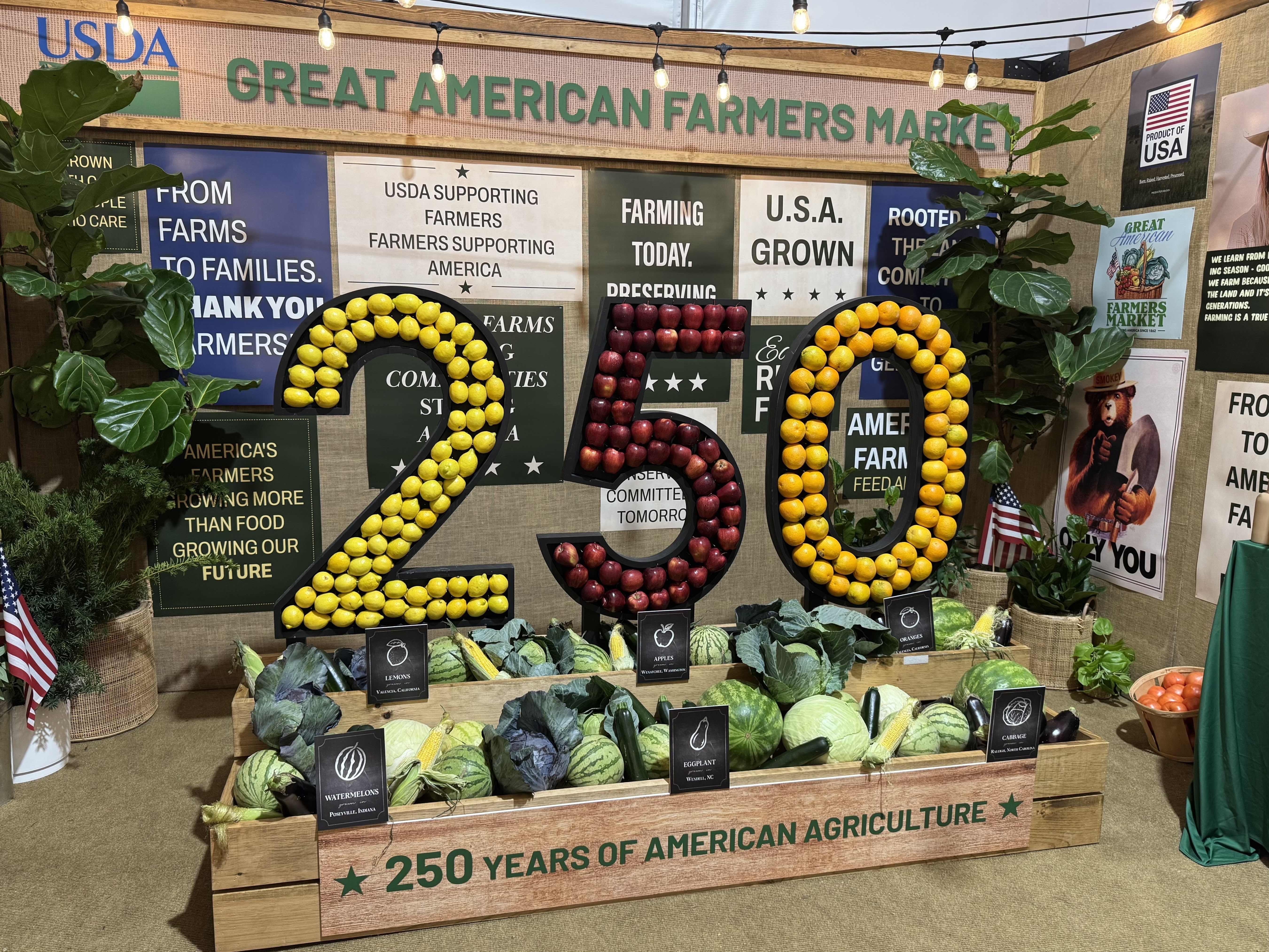
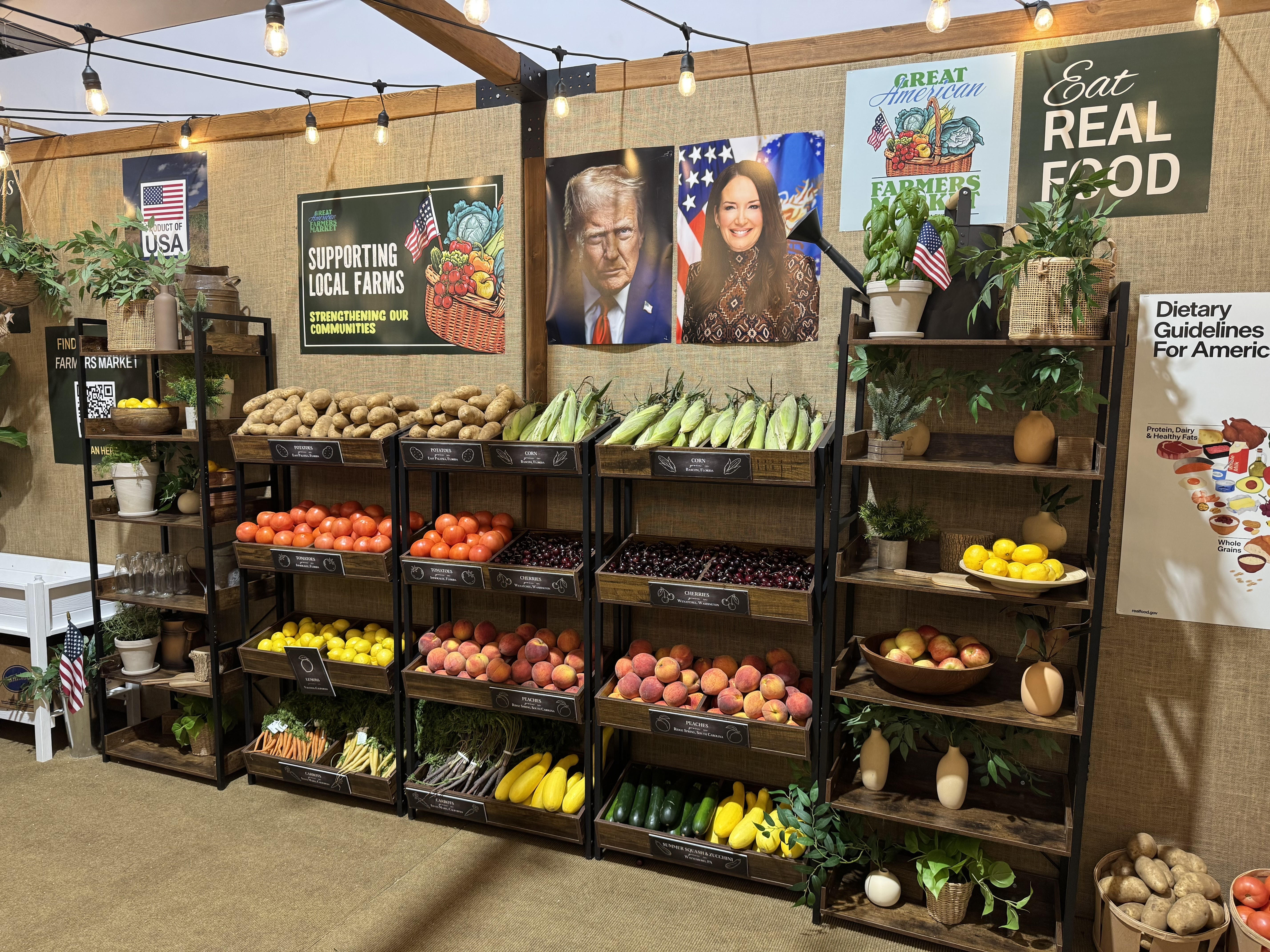 USDA's booth at the Great American State Fair on the National Mall in Washington, D.C., as part of the country's 250th-anniversary celebration. The exhibit, known as "The Great American Farmers Market," runs from June 25 through July 10. Produce is sponsored by the International Fresh Produce Association. (Agri-Pulse photo)
SCOTUS decision should help ‘contain’ litigation, Bayer says
The Supreme Court’s decision Thursday in favor of Monsanto should help to “significantly contain litigation by preempting conflicting state-law-based warning claims,” parent company Bayer says.
The parent company said the 7-2 decision and a proposed $7.25 billion class-action settlement should put a big dent in the number of current Roundup-related cases and future claims.
The court’s holding “should result in the dismissal of current warnings-based claims and foreclose future claims based on state-failure-to-warn theories, which make up the vast majority of claims in the litigation to date,” Bayer’s release said.
The decision prompted a slew of divided reactions. Business and ag groups including the American Soybean Association applauded it, but public health groups and a group of former EPA employees said it would make it harder to hold pesticide companies to account.
The court ruled that federal pesticide law “preempts state-law-based failure-to-warn claims when [EPA] has made a definitive determination on product safety,” Bayer said.
Read more about the decision in our story here.
States under the gun on SNAP benefit costs due to error rates
States may have to shell out about $9 billion to cover SNAP benefits starting next year, when accounting for payment error rates issued Wednesday for fiscal 2025, the Center on Budget and Policy Priorities says.
“Almost half of states may owe $100 million or more,” the nonpartisan research and policy institute says in an analysis released Thursday. The One Big Beautiful Bill Act shifted more of the administrative costs to run the Supplemental Nutrition Assistance Program to the states and also required them to pay a portion of SNAP benefits for the first time.
Starting Oct. 1, 2027, that portion will be between 5 and 15 percent of benefits, depending on the error rate for fiscal year 2025 or 2026. “The error rate is a measure of over- and underpayments in SNAP that largely reflect unintentional mistakes, often by program administrators,” CBPP said.
“If states can’t fully cover these huge new costs by raising taxes or cutting other services, they’ll need to further restrict access to SNAP or potentially end the program entirely,” CBPP said.
 Farmers, ranchers, administration officials and lawmakers gathered in the White House Rose Garden for dinner while President Donald Trump spoke. (Agri-Pulse photo)
 Trump signs executive order on regenerative agriculture
A new executive order signed by Trump seeks to promote precision ag techniques and expedite approval of new pesticide active ingredients. Trump signed the order Thursday shortly before hosting farmers for dinner at the White House Rose Garden.
The order also directs USDA, EPA and the Department of Health and Human Services to develop a framework to evaluate the cumulative health effects of pesticide exposure across chemical classes in the food supply. The EO further instructs EPA to prioritize registration actions for substances that can serve “as alternatives to older active ingredients.”
U.S., Uzbekistan reach ‘early harvest’ of trade commitments
The U.S. and Uzbekistan have struck an “early harvest” of trade and investment commitments, the Trump administration says.
As part of top U.S. trade negotiator Jamieson Greer’s visit to the Central Asian nation this week, Uzbekistan agreed to eliminate or reduce tariffs on a range of American industrial goods and agricultural products, according to a statement from the Office of the U.S. Trade Representative.
The Trump administration committed to “favorable consideration” in tariff actions for Uzbek industrial goods and ag products, to the extent consistent with U.S. law.
The agreement builds on $32 billion in bilateral commercial deals reached between the countries last year.
The U.S. “strongly supports” Uzbekistan in its efforts to join the World Trade Organization, USTR said.
Nearly $12 million in U.S. agricultural products were exported to Uzbekistan last year, including food preparation-related products, seeds for planting, tobacco and poultry, according to USDA.
Final word
“It’s great that there is going to be extra help for our farmers, but unless there is real change in the policies … unless there's some additional changes to the farm bill, we're going to be in the same place next year.” – Rep. April McClain Delaney, D-Md., on President Donald Trump’s request for Congress to include $11 billion of additional farmer aid in a supplemental funding bill.
.webp?t=1762183428)

