
|
The draft water right for Sites Reservoir delivered what project backers have sought for decades: a finding that enough water is available in the Sacramento River to supply the proposed 1.5 million acre-foot reservoir.
But Sites Project Authority Executive Director Jerry Brown says the conditions attached to that still leave the fate of the $6 billion project unsettled.
In an update to the California Water Commission last week, Brown described the State Water Resources Control Board’s preliminary determination a significant milestone, noting California has not issued a water right of comparable size in six decades. Yet he warned that the project-specific rules for diversion could reduce Sites’ performance by up to 15% and broader restrictions on Sacramento-San Joaquin Bay-Delta flows could cut project yield by as much as 50%.
The contracts now being developed for the state-funded public benefits account for the project-specific restrictions — but not the potential losses tied to the pending Bay-Delta Water Quality Control Plan.
Modeling under the authority’s requested permit showed Sites could have filled during the wet 2023 and 2024 period. Yet the draft conditions could have reduced that amount from 1.5 million acre-feet to roughly 750,000 acre-feet, though Brown described that as a ballpark estimate, noting the calculation is more complicated.
The permit has become the project’s critical path. The authority expects the water board to issue a revised draft in July and a final decision as early as September. A favorable revision would trigger a four-month investor commitment period, with the authority hoping to return to the commission for a final funding award for Proposition 1 water bond dollars in December and start construction in early 2027.
A decision that leaves the most restrictive terms intact could force a two- to four-month pause while the authority and its participating water agencies reassess the project. Brown said that could push the funding hearing into April.
“We are really not in a position to move forward without having a good understanding of what the water right requirements and conditions are,” Brown said.
The uncertainty comes as the commission increased Sites’ conditional funding eligibility by $268.9 million last week, bringing the potential state investment to about $1.36 billion. The project must still lock in financing, complete remaining permits and contracts, and demonstrate that its public benefits justify the award.
State and federal officials press for revisions
Gov. Gavin Newsom joined the push for permit revisions in one of dozens of letters submitted to the water board. Calling Sites “the 21st century infrastructure California needs for our new hydrology,” Newsom said the board should continue protecting Sacramento River flows while ensuring the reservoir can store enough water to remain viable.
Cut through the clutter! We deliver the news you need to stay informed about farm, food and rural issues. Sign up for a FREE month of Agri-Pulse here.
“I urge you to balance the many public interests to ensure Sites Reservoir can be built,” Newsom wrote.
Democratic U.S. Sen. Alex Padilla struck a similar tone. Padilla acknowledged that many proposed surface storage projects would cause too much environmental harm to justify their benefits. Sites, he argued, is different because it would capture a portion of atmospheric river flows, avoid blocking fish migration and reserve water for fish and wildlife during dry periods.
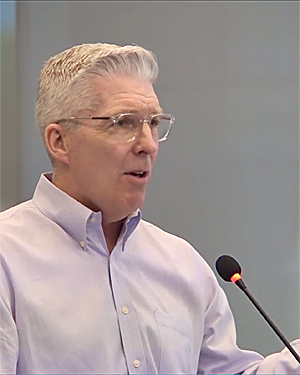 Jerry Brown, Sites Reservoir (YouTube)
“I believe there is a path forward to protect fish and wildlife in a manner that allows the construction of a viable Sites Reservoir,” Padilla wrote.
Ten California House members, including Republican Rep. Ken Calvert and Democratic Rep. John Garamendi, said the draft correctly found water available but contains “technical and legal flaws” that would diminish the project’s benefits.
“Time is of the essence,” they wrote.
The most detailed state response came from Natural Resources Secretary Wade Crowfoot. His agency urged the water board to revise five areas: the core diversion criteria, Sites’ potential participation in the Healthy Rivers and Landscapes Program (formerly known as voluntary agreements for the Bay-Delta Plan), its proportional responsibility for Bay-Delta requirements, protections for environmental flows, and the treatment of water entering the reservoir from local creeks.
Crowfoot argued the draft improperly makes Sites responsible for systemwide Delta conditions beyond the project’s control. One term would prohibit diversions when Delta outflow falls below 55% of unimpaired flow. Another could stop Sites from diverting on any day when Healthy Rivers and Landscapes water is present in the Sacramento River, even when other flows would independently satisfy the permit’s diversion requirements.
The Natural Resources Agency wants the permit to protect the environmental water without treating every day it is present as off limits to Sites.
“This everyday restriction is not necessary to protect HRL flows and has substantial water supply impacts for Sites Reservoir,” the agency wrote.
CalEPA Secretary Yana Garcia backed that approach, asking the board to explicitly preserve Sites’ option to join the voluntary Healthy Rivers and Landscapes pathway and remove the mere presence of program flows as an automatic bar to diversion.
Those requests drew strong support from urban and agricultural agencies that would ultimately finance most of the project. Eleven south-of-Delta participants serving more than 21 million people and agricultural land supported the preliminary finding that at least 986,000 acre-feet is available for appropriation. But they argued several terms improperly regulate State Water Project operations through Sites’ permit, constrain future decisions and are too vague to implement.
Metropolitan Water District of Southern California has already spent about $31 million on planning and holds a potential 22% share of Sites. Its board has not committed to construction, and Metropolitan warned that the final permit will directly influence that decision.
Metropolitan said the draft could reduce water supplies and affordability, blur the legal distinction between Sites water and State Water Project water, and impose operational limits without adequate evidence. Project water moved through state Delta pumps would remain non-State Water Project water and would already be governed by existing pumping, water quality and endangered species requirements, the district argued.
With 55% of Sites’ storage participation coming south of the Delta, Commissioner Daniel Curtin said that makes the water right “mission critical” as agencies decide whether to sign binding contracts.
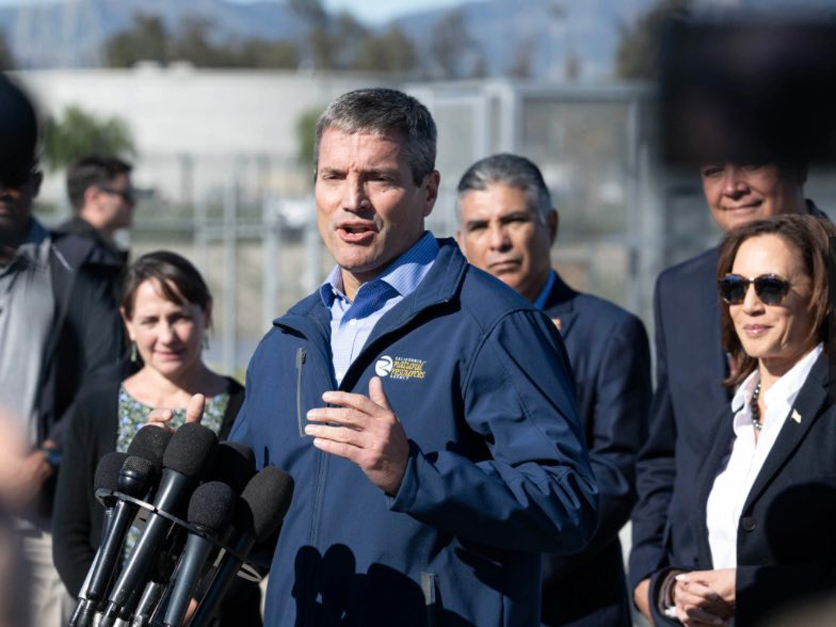 CNRA Sec. Wade Crowfoot (DWR photo)
“This is when the skepticism really begins to grow,” Curtin said. Though he described himself as a longtime surface storage supporter, he warned that Sites faces “a complex couple of months” as investors calculate costs and consider whether they have better alternatives.
Affordability and environmental benefits face scrutiny
The Southern California Water Coalition offered one of the sharpest critiques, saying the draft appears to approve Sites “in concept while constraining its operations in practice.”
The coalition estimated one set of fish-related diversion terms could reduce deliveries up to 15%, while Bay-Delta provisions could cut yield by 48%. It argued the board should not assume that additional restrictions automatically produce better environmental outcomes.
Northern California Water Association President David Guy focused on the cost consequences. He called affordability “the defining issue for this project and our generation” and warned that delays, overlapping requirements and regulatory uncertainty ultimately fall on families, farms and businesses.
Sacramento Valley water providers raised another concern over whether the draft would undercut benefits near the reservoir while trying to protect the region.
The Tehama-Colusa Canal Authority objected to denying Sites the right to capture inflows from Stone Corral and Funks creeks. It said requiring those flows to be released could force Funks Reservoir into flood control operations more often, reducing capacity that its member districts use to move excess Central Valley Project water for farms, habitat projects and groundwater recharge.
Reclamation District 108 challenged the draft’s denial of a 1977 priority date and argued the board was applying area-of-origin restrictions too broadly. The district said Sites would strengthen supplies within the Sacramento Valley as well as deliver water south.
Not every commenter wanted the permit loosened. Several urged the board to reject the water right or retain strong conditions, warning that water stored in the shallow off-stream reservoir could warm, evaporate and accumulate methylmercury or harmful algae before being released into the Sacramento River.
Ben King, a Colusa Basin landowner, told the commission that Sites operations could deprive wetlands and riparian lands of natural flows. Regina Chichizola, representing environmental interests, said the project’s benefits keep changing while its state funding keeps rising.
Commissioners raised similar questions about the state’s return on its investment. Sandi Matsumoto, who also directs the California water program at The Nature Conservancy, noted that total ecosystem water volumes in the draft benefit contract appear substantially lower than those proposed in 2017. She worried the new water right conditions could reduce them further.
Brown acknowledged the quantities could fall significantly if the Bay-Delta restrictions remain.
Kristal Davis Fadtke, an environmental program manager at the California Department of Fish and Wildlife, said the new contract’s gross ecosystem volume is about half the original amount, rather than one-third as Matsumoto estimated, but maintained that even a smaller delivery would improve conditions over the current baseline.
For Brown, the draft’s finding that water is available clears a fundamental legal hurdle, but the conditions will determine whether investors see enough usable water to cover their costs.
“We are acting fast because we need to act fast,” he said.

