
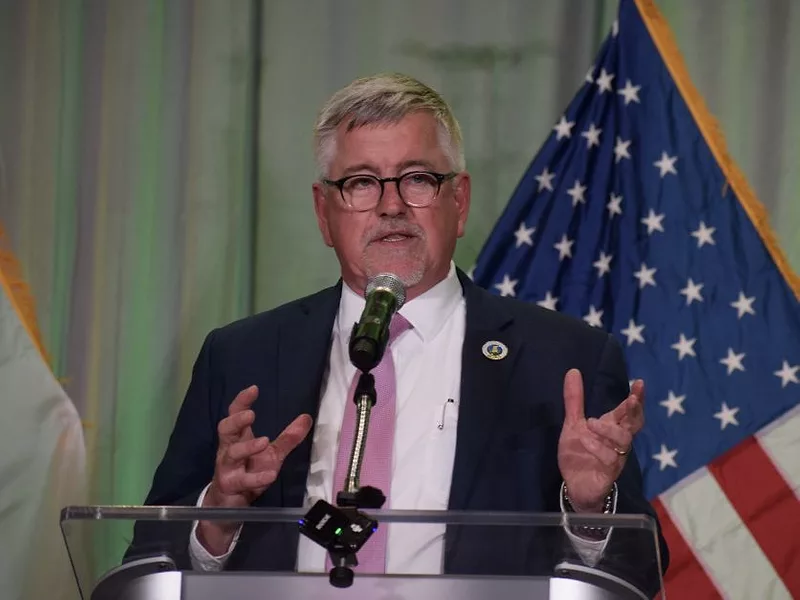
USDA is still hiring at both the Farm Service Agency and the Natural Resources Conservation Service despite tight budgets, Undersecretary Richard Fordyce told the House Agriculture Committee Wednesday.
Fordyce acknowledged that both agencies have lost staff in 2025 but said an ongoing reorganization within the Farm Production and Conservation mission area would not trigger further cuts.
Democrats criticized the staffing losses at FSA, with Rep. Jim Costa, D‑Calif., labeling them “detrimental.”
“They’ve delayed payments … farmers are stuck waiting,” Costa said.
The National Sustainable Agriculture Coalition found, based on Freedom of Information Act request documents, that more than one‑third of FSA offices saw a net loss of staff and 42 offices ended 2025 with no county employees.
NRCS has also experienced an acute staffing reduction with a loss of 23% in 2025, including 711 soil conservationists and 283 soil conservation technicians. But the agency is planning to hire up to 9,500 staff, Fordyce said in the hearing. He also mentioned tools like the "One Farmer, One File" initiative, which he said will streamline interactions between farmers and NRCS staff.
“We're hopeful that in FY 2027 through the appropriations process, that we will be able to see more of a normal appropriation related to staffing,” Fordyce said.
Cut through the clutter! We deliver the news you need to stay informed about farm, food and rural issues. Sign up for a FREE month of Agri-Pulse here.
Rep. Jahana Hayes, D-Conn., pushed back, saying, “I would submit that appropriations is not the only constraint, that much of what we're dealing with is choices made by this administration that we're now trying to correct for ... so I think it would have to be a really compelling argument to come back to Congress, and now ask for appropriations to replace staff that was cut by the administration.”
Conservation
The hearing also addressed USDA conservation funding issues.
In response to Rep. Angie Craig, the committee’s top Democrat, Fordyce said he was “not aware” that the House-passed farm bill would reduce expected funding for the Environmental Quality Incentives Program by about $1 billion over the next few years compared to the One Big Beautiful Bill Act.
While EQIP would still eventually reach its full new baseline of $3.25 billion, that level would not be hit until FY31 instead of FY28 under the OBBBA.
In fiscal 2025, the share of EQIP applications receiving awards dropped from 43% to 24%, according to a recent analysis by the Institute for Agriculture and Trade Policy.
Fordyce said he would follow up on Craig’s question about how many fewer contracts would be administered if the farm bill becomes law.
Rep. Derrick Van Orden, R-Wis., noted that farmers often wait three to six months between application and award. “What are you doing over there to make sure that we can ... level these bubbles?” Van Orden asked. “You know, six months to farmers, that's an entire growing season.”
Fordyce noted there may be design challenges delaying the grants, but agreed the process needs to be faster.
With assistance from Noah Wicks and Kim Chipman.
