
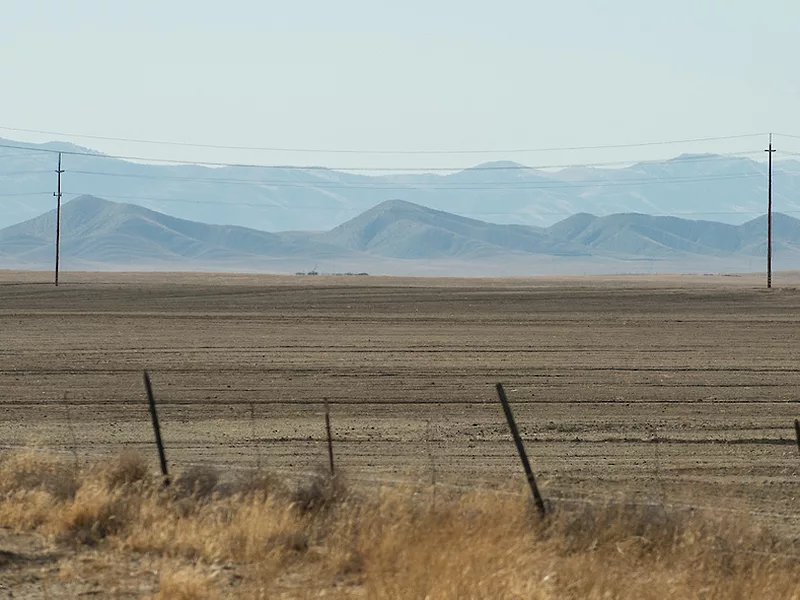
San Joaquin Valley farmers facing groundwater cutbacks could plant low-water winter forage crops on some land otherwise destined for fallowing, generating modest returns while reducing dust and preserving agricultural capacity, according to a new Public Policy Institute of California report.
PPIC estimates implementation of the Sustainable Groundwater Management Act could remove between 500,000 and 900,000 acres — as much as 20% of the valley’s irrigated farmland — from full production. While solar development, habitat restoration and groundwater recharge may offer alternatives for some properties, those projects can require substantial investment, lengthy permitting or sustained public funding.
The report instead points to “SGMA-ready” crops, particularly wheat, barley, oats, rye and triticale grown during the cooler winter months. Researchers found those crops can use rainfall and small amounts of supplemental irrigation to produce livestock forage while avoiding some of the economic, environmental and public health consequences of bare fields.
Cut through the clutter! We deliver the news you need to stay informed about farm, food and rural issues. Sign up for a FREE month of Agri-Pulse here.
Fallowing eliminates irrigation demand but can increase weeds, pests, soil degradation, heat and airborne dust. PPIC’s modeling also challenges the assumption that bare fields efficiently capture winter rainfall. Fallowed ground can lose 60% to 90% of annual rainfall to evaporation by late March, with only a small share reaching groundwater.
Winter forage, by contrast, can shade the soil, improve infiltration and generate a marketable crop without substantially reducing recharge when managed properly. The researchers recommend planting early, applying limited irrigation to establish the crop and harvesting it for forage before spring water demand rises.
A companion PPIC analysis found wheat forage can be established with about 4 inches of supplemental irrigation, although financial results vary sharply by rainfall, location and water availability. At that irrigation level, about half of the acreage studied would be unprofitable in an average year. With 8 inches, 92% of locations were estimated to be profitable or marginally profitable.
The economics are strongest in wetter portions of the northern valley. Tulare and Kings counties have concentrated dairy demand but lower rainfall, making the crops less viable with only 4 inches of irrigation. Most locations were unprofitable during dry years even with 8 inches, while most were profitable in wet years with just 4 inches.
PPIC finds that groundwater sustainability agencies could encourage adoption by allowing low-cost winter water in wet years, avoiding water accounting rules that penalize limited crop evapotranspiration, and offering credits for improved rainfall capture. State and federal agencies could also provide planting incentives or crop insurance to reduce growers’ risk.
The report suggests a payment of roughly $50 per acre could help marginal operations break even in normal years. Winter forage will not replace all land expected to leave production, PPIC concluded, but could give growers another option for keeping fields productive as SGMA restrictions tighten.
