
|
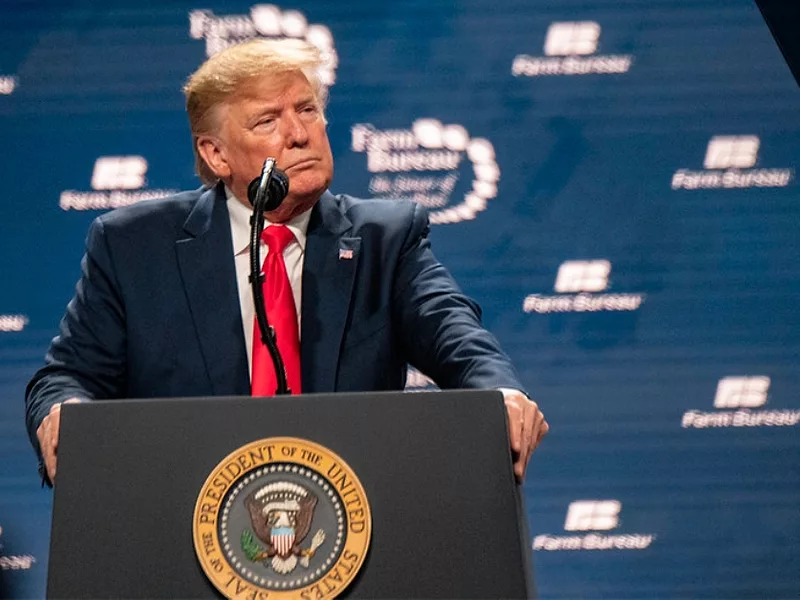
President Donald Trump’s global tariffs are set to expire July 24 without an act of Congress. The administration could restore the levies using the same authority or conclude a tariff investigation into 60 nations to replace those them, industry insiders say.
Trump imposed the global 10% tariffs through a never-used-before authority known as Section 122 that allows temporary levies up to 15% on nations for balance-of-payments deficits for 150 days. That period is set to expire at the end of next week, and Congress has taken no action to extend the levies.
Congressional action
House Ways and Means Trade Subcommittee Chairman Adrian Smith, R-Neb., said Monday he couldn’t answer “entirely” if Congress is planning on extending the Sec. 122 tariffs. He said he’d like to speak with other members of Congress and review the details.
“Personally, I’m still not a fan of tariffs,” Smith said to Agri-Pulse. “I think it's important to point out that they have gotten other countries to make concessions, and I think that’s important.”
The Senate also doesn’t appear to have a plan to extend the tariffs past the initial 150 days. Sen. Lisa Murkowski, R-Alaska, said Tuesday she doesn’t know if there’s a plan to address the levies. Murkowski voted for resolutions to disapprove Trump’s so-called “reciprocal” and global tariffs that he imposed using an international economic emergency law. She also voted to end levies on Brazil and Canada.
The Supreme Court on Feb. 20 ruled that the administration lacked the authority to impose tariffs using the International Emergency Economic Powers Act, or IEEPA. The Trump administration imposed the Sec. 122 tariffs that same day.
Murkowski isn’t the only senator in the GOP to push back against the tariffs. Sen. Susan Collins of Maine and Kentucky Sens. Rand Paul and Mitch McConnell joined with Democrats to vote against the tariffs. Sen. Thom Tillis, R-N.C., also voted for a resolution to end the national emergency declared to tariff Brazil, but he didn’t vote in favor of the other resolutions.
There are also GOP tariff skeptics in the House. The chamber passed a resolution to end the tariffs on Canada, 219–211, in February, with six Republicans voting with Democrats.
The effort to end the tariffs in the Senate was led by Sens. Tim Kaine, D-Va., and Ron Wyden, D-Ore. Kaine introduced a measure, dubbed the Reclaim Trade Powers Act, that would eliminate Sec. 122 altogether. Rep. Jimmy Panetta, D-Calif., introduced the House companion version.
“I don't hear any momentum right now to extending them. I don't,” Kaine told Agri-Pulse Monday. He also said he’s not sure if the Senate Finance Committee has any plans to mark up his legislation to eliminate Sec. 122.
“I'm not on the finance committee, so I don't know whether they've talked about markup. I think there's still enough disagreement among the two parties on the 122 tariffs that I have a hard time seeing that that's going to come out. And if you try to [unanimous consent] it on the floor, you could try that, but I think somebody would object,” he said.
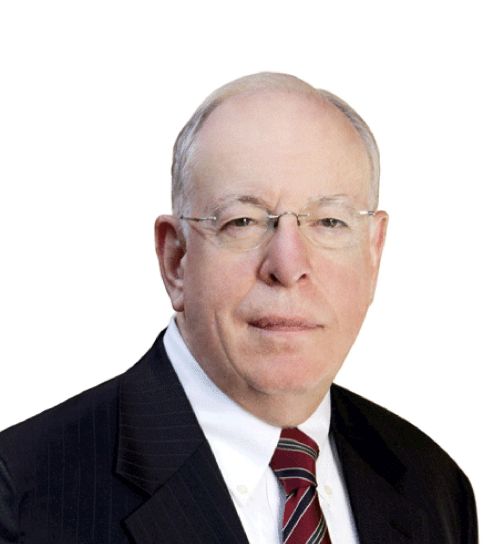 Alan Wm. Wolff (Peterson Institute for International Economics)
 To extend the global tariffs, Congress would have to pass legislation with a simple majority, said Alan Wm. Wolff, a senior fellow at the Peterson Institute for International Economics and former deputy director-general for the World Trade Organization. However, Wolff added that a filibuster is always a possibility.
“[Congress] could do it without citing 122 or by citing 122. The downside of citing 122 is the Court of International Trade already found that there is no balance-of-payments problem,” Wolff said Monday.
The court ruled in a 2-1 decision that the tariffs were unlawful because the administration used “trade and current account deficits to stand in the place of balance-of-payment deficits.” The Justice Department appealed the decision and Customs and Border Protection continues to collect the levies.
Other paths forward
The administration appears to have a backup plan to ensure there isn’t a gap in collecting tariffs. U.S. Trade Representative Jamieson Greer hinted it’s possible to redo the Sec. 122 tariffs.
“I might get in a little trouble here. So when you look at that statute, it says they expire. But doesn’t say when you can redo it, right?” Greer said to Michael Froman, the president of the Council on Foreign Relations, on May 26.
“I mean, I can’t imagine that Congress would say, well, this is just, you know, once per term, right? I mean, it’s designed to get at a certain issue, which is a balance-of-payments challenge,” Greer continued.
USTR is also investigating 60 nations under Section 301 for forced labor violations at breakneck speed. The agency has a year to conclude the investigation.
Those levies range from 10% to 12.5%, according to a June 5 notice from USTR. The Sec. 301 tariffs could replace the Sec. 122 tariffs. Wolff isn’t anticipating a break in tariffs upon the expiration of the Sec. 122 levies.
“They could turn around on time and say, ‘Well, we finished our 301 investigation. We already said we found guilt on the part of quite a number of countries. Now we're putting into effect whatever it is,’” he said. “We’re in the third act of this play. The third act is 301.”
Another industry insider said the administration could also use Section 338 to impose tariffs. It would allow the president to tariff nations up to 50% on products from countries that have discriminated against U.S. commerce. However, the insider noted that it’s unlikely Trump will mobilize that authority.
The administration also has imposed levies on several products, including steel, aluminum and lumber, using Section 232.
USTR and the White House didn’t respond to a request for comments.
Trade deals part of the Trump agenda
Trump has touted the tariffs as a key negotiating tool to achieve his “America First” trade agenda. Since entering office, the administration has entered into approximately 20 trade agreements or frameworks to open markets to U.S. farmers.
“They need to have a tariff in place in order to apply any tariff at all, other than the one that existed in 2024 which was an average of 3%, which just doesn't do it."
For more news, explore Agri-Pulse.com.
Correction: Sen. Ron Wyden is a Democrat.
