
|
The Trump administration has entered into nearly 20 trade agreements and frameworks to boost market access for agricultural producers, several of which require approval by the other country's legislature, enabling U.S. enforcement.
"The president has been a remarkable negotiator, and in most of these cases the situation is such that we are gaining access and not giving up access in countries where historically we have experienced negative trade relations related to the trade deficit, and so there's absolutely an enforcement mechanism,” Lindberg said in a June 30 interview with Agri-Pulse.
Lindberg said many of the countries that have entered into deals with the U.S. have taken steps toward implementation, including Ecuador, Argentina, Malaysia and Indonesia. The administration expects the agreements to be a boon to the agricultural sector.
Ecuador agreed to give preferential treatment to more than 90% of U.S. agricultural goods. This includes eliminating tariffs for soybeans, fruits, alcoholic beverages, nuts and certain dairy, beef, pork and poultry products, according to the Office of the U.S. Trade Representative.
The USTR also says Argentina will allow U.S. poultry to enter the country within one year and will reduce red tape for the export of beef and pork products. The Buenos Aires Times previously reported that Argentine Cabinet Chief Manuel Adorni said the agreement would be sent to the country’s Congress for approval.
The framework for the U.S.-Argentina agreement was released Nov. 13, 2025, and the agreement itself was signed by USTR Jamieson Greer and Argentina’s Minister of Foreign Affairs, International Trade, and Worship Pablo Quirno on Feb. 5.
The agreements with Argentina and Indonesia stipulate that the countries will allow U.S. producers to export certain meats and cheeses using geographical indicator terms like feta, Swiss, cheddar, American, mozzarella and more. Indonesia also agreed to adjust sanitary and phytosanitary measures to allow U.S. products to enter the country provided they are based in science and don't act as non-tariff trade barriers.
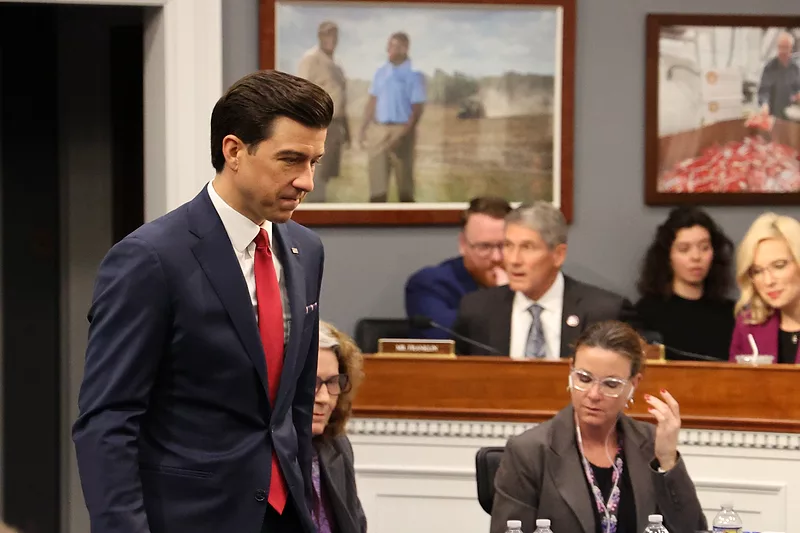
 Jamieson Greer (AP photo)
“We discussed trade issues between the two countries. The negotiations have been going on for quite some time, which means that we have found mutual benefit and respect. I think it’s good,” Subianto said in a statement to the press at the time.
The agreement was praised by the National Milk Producers Federation, U.S. Dairy Export Council, National Cattlemen’s Beef Association and U.S. Meat Export Federation, among others, according to USTR.
However, while those countries are moving forward, it's less clear if Malaysia is implementing the agreement after the U.S. Supreme Court rolled back the Trump administration's reciprocal tariffs due to a lack of authority under the International Emergency Economic Powers Act
“It is not on hold. It is no longer there, it’s null and void,” Malaysia’s Trade Minister Johari Abdul Ghani said after the February decision dropped, The Diplomate reported.
The administration subsequently imposed a global 10% tariff under Section 122 that is set to expire July 24. USTR also launched 60 Sec. 301 investigations that would impose tariffs ranging from 10% to 12.5%. Malaysia is among the countries subject to the investigation.
It's unclear if the agreement remains. USDA didn’t immediately respond to a request for clarification.
Impact on farm country
Lindberg said the trade deals and frameworks will benefit farm country.
“I met with a lot of farmers around the country early on, and asked them: ‘What's your number-one issue?’ And market access was, in fact, their focus for our work at the Foreign Agricultural Service,” Lindberg said. “So a lot of these agreements take down tariffs, many of them – most of them – have some restructuring of non-tariff barriers to allow our folks to compete on a level playing field, and we have seen countries moving forward on implementation.”
Other countries that have made steps to carry out the trade deals include the United Kingdom, European Union and Japan.
The UK is currently negotiating or has negotiated exemptions from various Trump administration tariffs, including the levies on steel, aluminum, lumber and automobiles. The House of Commons Library reported that the U.S.-UK agreement in principle or the “Economic Prosperity Deal” has been partially implemented.
USTR said the UK agreed to create $5 billion in new export opportunities, of which $700 million would be earmarked for ethanol exports and $250 million for other agricultural products.
The EU on July 1 opened its market to U.S. nuts, fruits, vegetables and lobsters, among other products, while Commerce Secretary Howard Lutnick met with Japan’s Minister of Economy, Trade and Industry Ryosei Akazawa on March 6 and again virtually on June 3 to reaffirm the agreement and discuss tariff measures.
Trade deficit forecast
Lindberg said the various trade agreements will help bring down the agricultural deficit. USDA reported that the agricultural trade deficit was projected at approximately $50 billion at the start of Trump’s second term. That number is projected to fall to $29 billion and is updated monthly.
“The reality has been, we've seen so far this year a reduction of 61% of the trade deficit over the government fiscal year last year,” Lindberg said, noting that the forecast doesn't account for all of the trade deals because they haven't been fully implemented yet. “So I'm actually optimistic that we could continue to see incredible progress on that trade deficit going forward.”
Lindberg pointed to the agreement with China. The country committed to buying 12 million metric tons of U.S. soybeans in the final two months of 2025, and an additional 25 million tons in 2026 and 2027, respectively. China also agreed to purchase at least $17 billion of U.S. agricultural products each year, 2026 through 2028.
“That's a great win that would obviously make an additional impact here that's not currently in the existing $29 billion forecast,” Lindberg said.
Agri-Pulse’s China soybean purchase tracker indicates that China has fulfilled its initial commitment, a claim that was reaffirmed by the USDA.
“China has essentially met its current marketing year obligation to import 12 million metric tons (MMT) of U.S. soybeans. It remains too early to project their soybean import performance for the upcoming marketing year, or overall agricultural trade figures for the remainder of the calendar year,” a USDA spokesperson said in a statement.
