
The unexpected passing of Republican Sen. Lindsey Graham is raising the odds of South Carolina turning competitive this November.
Graham, in the Senate since 2003, had been strongly favored to win his bid for reelection this fall. The race remains rated “Likely Republican,” though Democratic contender Annie Andrews, a physician, “gives Democrats a credible nominee,” according to the nonpartisan Inside Elections with Nathan L. Gonzales.
“Trump’s low job approval rating is creating an environment where Republican seats are at risk in places that aren’t competitive under normal circumstances,” Gonzales says.
The odds of a Democratic upset in the state seem slim, however. President Donald Trump won the state in 2024 by a nearly 18-point margin.
The last time South Carolina elected a Democratic senator was 1998, the last term of Fritz Hollings, who was first elected in 1966.
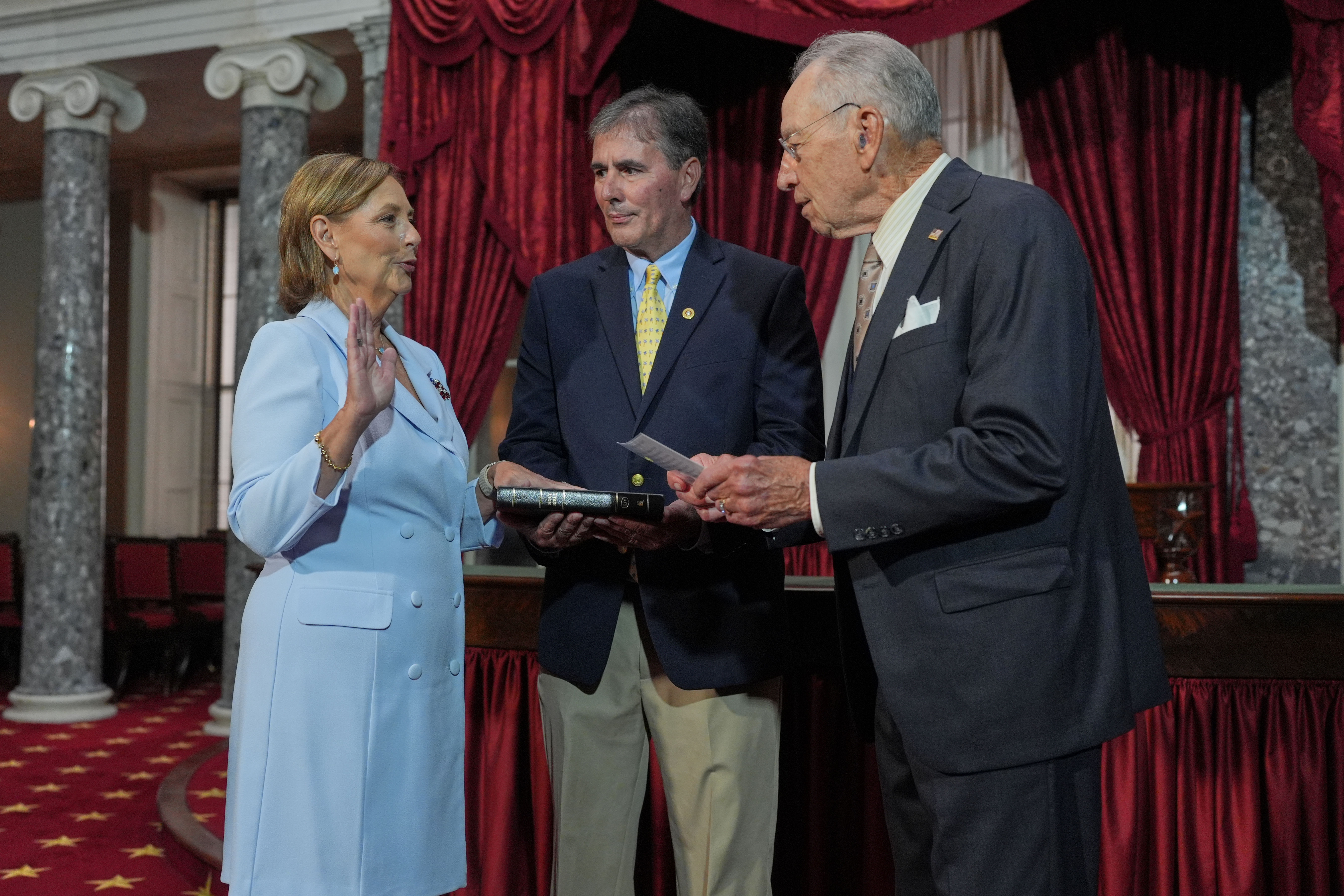
Darline Graham, Lindsey Graham’s younger sister, was sworn in on Tuesday as his interim replacement.
What to watch: The window for candidates to file paperwork to run in a new Republican primary opens July 21, Gonzales notes, citing state law. It closes on July 28.
A special primary is set to be held Aug. 11, with an Aug. 25 runoff if needed.
Possible contenders include Graham herself, GOP Reps. Ralph Norman and Nancy Mace, former Gov. Nikki Haley and Lindsey Graham’s primary opponent Mark Lynch.
Groups file suit over rescission of ESA ‘harm’ definition; one signals lawsuit to come
One lawsuit was filed and another threatened Tuesday over the Trump administration's rescission of the definition of "harm" in the Endangered Species Act.
The Center for Biological Diversity, WildEarth Guardians and Friends of the Wild Swan are among the plaintiffs in the suit filed in the Western District of Washington. It challenges the Fish and Wildlife Service and National Marine Fisheries Services’ decision last week to finalize a rule narrowing the prohibition against "taking" endangered species by removing regulatory language allowing the wildlife agencies to consider how species are harmed by habitat destruction.
The groups claim the way the rule change was done violates the Administrative Procedure Act, the National Environmental Policy Act and the ESA.
Meanwhile, Defenders of Wildlife warned FWS and NMFS leaders on Tuesday that it plans to sue them over the same rule, which rescinded the definition of “harm” in previous ESA regulations.
In a letter, Defenders of Wildlife senior attorneys Erica Pencak and Jane Davenport provided notice of their intent to sue the agencies, alleging they failed to perform an interagency consultation on the rule change under Section 7 of the ESA.
Take note: The attorneys argue in the letter that due to the rescission, FWS will no longer need to consider logging in its biological opinion on Northern spotted owls and that the Forest Service “will not be able to rely on” that opinion to satisfy obligations to ensure the species is properly protected when considering changes to its Northwest Forest Plan.
Senate Finance Committee advances ITC nominees
The Senate Finance Committee on Thursday advanced a slate of nominees to serve as members of the International Trade Commission.
The panel advanced the nominations of Brett Doyle, 21-6; David Foley Jr., 21-6; Peter-Anthony Pappas, 21-6; Bartholomew Thanhauser, 27-0; and Samuel Negatu, 25-2.
“The International Trade Commission’s work to investigate unfair trade practices and provide Congress and the administration with quality analysis of trade issues is critical, and a full slate of commissioners will help it accomplish those missions,” Senate Finance Committee Chairman Mike Crapo, R-Idaho, said in a statement. “I am confident in each nominee’s ability to serve Americans’ best interest and look forward to their confirmation by the full Senate.”
USTR urges USITC lamb investigation
U.S. Trade Representative Jamieson Greer on Monday sent a letter to U.S. International Trade Commission Chairman David Johanson urging the commission to launch an investigation to determine if lamb imports into the U.S. are damaging the domestic industry.
“U.S. import statistics indicate that lamb meat imports, which are sourced in major quantities from multiple countries, have increased in recent years. Available information suggests that imports resulted in domestic industry lost sales, revenues, and market share as imported lamb meat significantly undersold the domestic like product,” Greer said in the letter.
The move was applauded by the Ranchers-Cattlemen Action Legal Fund United Stockgrowers of America. R-CALF said in a press release that more than 70% of lamb consumed is imported, and domestic production has fallen by more than 60%.
Democrats unveil seed patent bill aimed at breaking up ‘Big Ag’
Reps. Jim McGovern, D-Mass. and Greg Casar, D-Texas, introduced a bill on Tuesday they say would curb “corporate abuse” of seed patents.
The Fair Seeds for Farmers Act is aimed at breaking up “Big Ag,” protecting farmers, lowering grocery costs, and strengthen the U.S. food system, the lawmakers said in a joint statement.
A small number of conglomerates are using patent claims and threats of lawsuits to control what farmers plant and force them to buy expensive products, in turn driving up costs, they said.
“It’s wrong, and our bill is about starting to change the broken status quo by rebuilding America’s food system from the ground up,” McGovern said.
The abuse of seed patents is putting family farms out of business, Casar said.
USDA agrees to send food aid to East Africa
USDA has signed an agreement in principle with Catholic Relief Services, an international aid organization, to provide up to $235 million in food and nutrition assistance to Sudan and Ethiopia through the Food for Peace program.
Food for Peace previously was administered through the U.S. Agency for International Development. USDA took over the program after USAID was dismantled at the start of President Donald Trump’s second term.
“American farmers feed, fuel, and clothe the world, and under President Trump’s leadership, we’re utilizing that bounty to serve those in need while ensuring that the benefits of U.S. food aid flow back to America’s hardworking farmers, ranchers, and producers that make this assistance possible,” USDA’s Deputy Undersecretary for Trade and Foreign Agricultural Affairs Michelle Bekkering said in a press release.
USDA’s Foreign Agricultural Service said commodities will be 100% U.S. origin.
“The scale of humanitarian need in Sudan and Ethiopia demands sustained national and international commitment, and strong partnerships are essential to meeting these needs,” Sean Callahan, the president and CEO of CRS, said in a press release. “With USDA’s support, CRS and our partners can continue providing critical assistance to people whose lives and livelihoods have been upended by crisis.”
Final Word
“The unknown is when McConnell gets back, and that's very necessary to have a Republican majority on the Appropriations Committee, and I don't have an answer on that. But by the way, the Appropriations Committee isn't the only place to put E15.” — Sen. Chuck Grassley, R-Iowa, on the outlook for getting E15 into an appropriations bill with Sen. Mitch McConnell, R-Ky., out due to health issues.
.webp?t=1762183428)

