
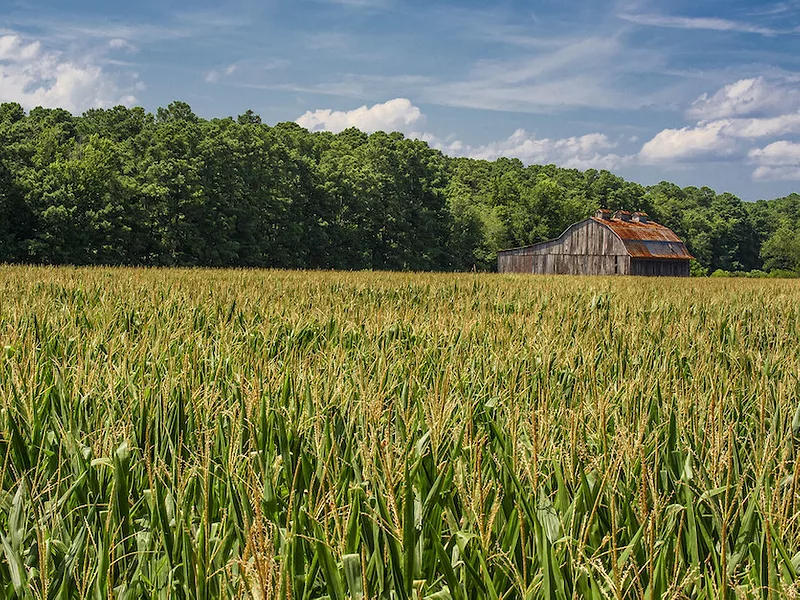
Corn, soybean and ethanol groups will gather on Capitol Hill this week as the legislative window for completing top agriculture agenda items narrows.
Agriculture and biofuel producers are set to meet with members of Congress and their aides on top issues, including year-round, voluntary sales of E15; additional financial aid for crop growers; and long-overdue updates to key agriculture and rural programs through a new farm bill.
The National Corn Growers Association, the American Soybean Association and the Renewable Fuels Association all hold D.C. “fly-ins” later this week. Another big focus of the groups is for the Trump administration to finalize rules for a biofuel production tax credit, widely known as 45Z.
The visit to the nation’s capital comes as the U.S. faces increasing challenges from fast-developing global agriculture rivals like Brazil. NCGA last week released a study showing that U.S. corn and soybean farmers pay “substantially” more for seeds and pesticides than their counterparts in South America.
“That's certainly putting U.S. farmers at a disadvantage,” NCGA chief economist Krista Swanson tells Agri-Pulse Newsmakers. “It brings into question a lot of things about the competitiveness in the global marketplace and the fact that we're all producing a commodity that we're selling into the global market.”
Lindsey Graham’s death spurs tributes from both sides of political aisle
Official Washington was stunned by the death of Lindsey Graham, who had served as a Republican senator from South Carolina since 2003. He was 71.
Graham, a 2016 presidential candidate, passed away Saturday evening “from a brief and sudden illness,” his office said in a statement.
President Donald Trump ordered U.S. flags lowered to half-staff and called Graham a “true American patriot.”
“He's a tough one to lose. He was great. He was unique in every way, actually,” Trump told NBC News’ “Meet the Press,” where Graham had been scheduled to appear Sunday.
Trump said Graham was like family and that he had spoken with him early Saturday evening.
Graham came to Congress in 1995 as a member of the U.S. House. He was the first Republican from South Carolina’s 3rd Congressional District since 1877.
He most recently served as chair of the Senate Budget Committee and was heavily engaged in national security and foreign policy. He had just returned from a trip to Ukraine, where he met with President Volodymyr Zelenskyy.
“Lindsey was a true defender of freedom and the values that make our world safer. He visited Ukraine 10 times during the years of Russia's full-scale invasion and was here with our people when it was most needed,” Zelenskyy said Sunday. “We remained in constant dialogue, and I will miss our conversations.”
Tributes to Graham flooded the media on Sunday, including from Israeli Prime Minister Benjamin Netanyahu, former President Joe Biden and Democratic Sens. Amy Klobuchar and Adam Schiff.
Graham was up for reelection this year in a Senate race he was strongly favored to win.
He played a key role in passing last year’s One Big Beautiful Bill Act, which made 2017 tax cuts permanent and included major agriculture policy provisions.
Cotton industry hopes for relief
The U.S. cotton industry is hoping for relief provided by farm aid payments and legislation to encourage the use of U.S-made cotton as it faces stiff international competition and elevated input costs, the head of the National Cotton Council tells Agri-Pulse Open Mic.
Brazil has become a formidable cotton producer, going from about 7 million bales per year a decade ago to close to 20 million today, Gary Adams tells Agri-Pulse’s Jeff Nalley. USDA’s Foreign Agricultural Service estimated in April that the South American country’s cotton production in marketing year 2026-27 would be 18 million bales, a 7.6% decline from MY 2025-26.
Adams says there’s “a lot of economic pressure out there in the industry,” expressing hope that Congress can approve the $11 million sought by the administration to help farmers. He appears less optimistic about the farm bill.
“As I look toward the legislative calendar for the rest of the year, I still try to hold out some confidence that Congress will get [the fam bill] finished up this year,” he says. But it may very well have to be put in the heart of a bigger piece of legislation, and that may be something that's all the way out into the lame duck.”
Adams also stumps for a bill introduced by Sen. Cindy Hyde-Smith, R-Miss., and others to provide tax incentives to textile firms for using U.S. cotton. The legislation would be “sending the signal through the supply chain that you need to be using U.S. cotton in your products as opposed to Brazilian, Australian or some other grade,” he says.
Listen to Agri-Pulse Open Mic here.
Three turkey companies face trial, but judge says evidence thin
A federal judge has ruled that turkey companies Butterball, Jennie-O Turkey Store and Prestage can face trial over some allegations they conspired to restrict supply and raise prices, but has ended the case brought by indirect and direct purchasers against Foster Farms and Perdue, granting them summary judgment.
In his ruling, U.S. District Judge Sunil Harjani of Illinois’ Northern District found that a reasonable jury could return a verdict favoring the purchasers’ claims against Butterball, Jennie-O and Prestage, but added that “the evidence is far from overwhelming.”
“When viewed in the light most favorable to plaintiffs, while the evidence is sufficient for some of [their] claims to survive a summary judgment motion, defendants may very well be able to persuade the trier of fact to support the non-collusive version of events,” Harjani wrote. "That decision is left in the hands of the jury.” He set an October trial date.
More meat companies adopt voluntary ‘Product of USA’ labels
Ten meat and poultry companies recently adopted voluntary “Product of USA” labels, according to the Agriculture Department.
Harris Ranch, One World Beef, Upper Iowa Beef, American Foods Group, Agri Beef, FPL Food, Hadrick Farms, Fort Worth Meat Packers, Wholestone Farms and Harrison’s Poultry have all adopted the label, which USDA rolled out in March, according to a press release.
“Honest representation honors the work of producers and gives consumers the confidence to know exactly what they're buying,” said Juan Ramos, founder and CEO of Texas-based Fort Worth Meat Packers.
Final Word
"It's open. We bombed the hell out of them last night. They're very, very evil and sick people." — President Donald Trump, speaking on NBC's "Meet the Press" on the status of the Strait of Hormuz following U.S. strikes against Iran after an Iranian attack on a container ship in the strait.
.webp?t=1762183428)

