
The House on Tuesday approved a resolution, 214-211, that would allow for floor consideration of a continuing resolution that would keep the government funded through the midterm elections and reconciliation 3.0 under a closed rule.
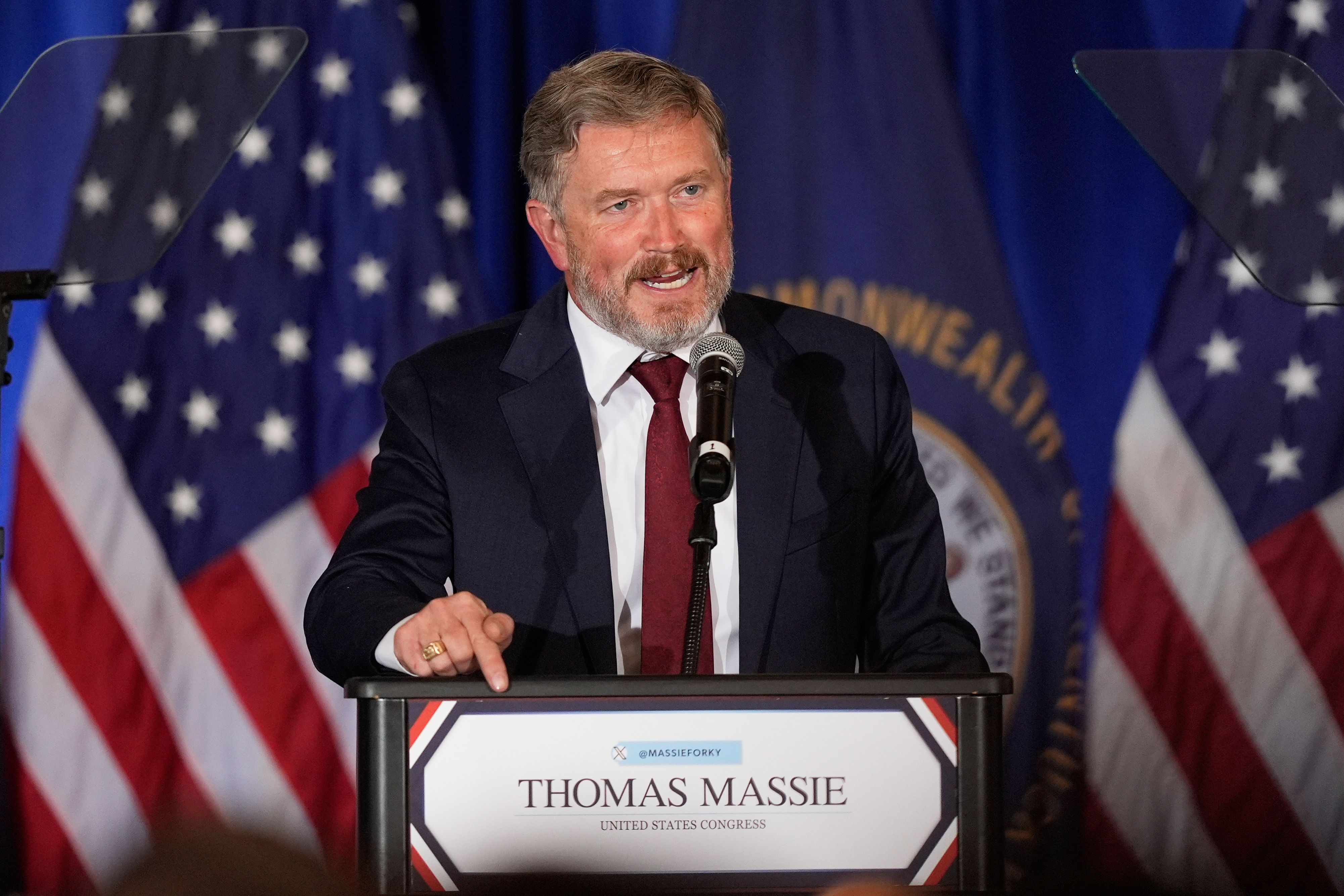
Rep. Thomas Massie, R-Ky., was the sole Republican to vote against the rule. The rule also would allow for consideration of the FY2027 National Defense Authorization Act — a key point of contention for Massie.
“Unfortunately the Rule passed just now and no debate or vote was allowed on section 219, integration of US military technology and supply chains with Israel’s,” Massie said on X.
The House began voting on NDAA amendments Tuesday night. The chamber also voted to approve the CR, 220-205.
House Agriculture Chairman confident in upcoming farm aid vote
The House is expected to vote on the $95 billion reconciliation package Wednesday under a closed rule, meaning no amendments can be made to the measure on the floor. The package would allow the House Agriculture Committee to increase the federal deficit by up to $12 billion. Those funds are going to be split between traditional row crops, specialty crops and sawmills.
“I'm hopeful, it's absolutely needed,” House Agriculture Chairman Glenn “GT” Thompson said, adding that he’s hoping the floor vote will be the “easy part.”
“The more challenging part will just be figuring out how to split that up and invest it between commodities, specialty crops and sawmills, which is absolutely critical for our nation,” he said.
The package is also tied to funding for the war with Iran. Thompson said he’s not concerned that the war funding will endanger passage of farm aid.
“Obviously, we have a responsibility first and foremost for the safety of our citizens, our communities, our nation, and making sure that our military has an adequate arsenal for the future,” Thompson said. “Somebody will always find a reason to vote against something here. That's the easiest thing in the world. Hopefully, everybody finds the courage to do what's right, and we can get this passed.”
Pilot animal drug approval program to incentivize domestic production
A new pilot program would incentivize domestic manufacturing of animal drugs by giving priority review consideration to applications if both the product and its active ingredient are produced in the U.S., the FDA’s Center for Veterinary Medicine said Tuesday in a press release.
The program would also allow sponsors to include a second domestic active ingredient in their original applications, which the agency says would eliminate a post-approval supplemental application necessity.
The release said the animal drug pilot program mimics a pilot for generic drug manufacturing for humans. That pilot program was announced October 2025, and the release says it was “successfully implemented.”
Mandatory COOL for beef and pork could come with costs, report suggests
A new report commissioned by the Meat Institute suggests instituting a mandatory Country of Origin Labeling framework for beef and pork similar to the one in place in 2013 could come with costs of $1.02 billion in the first year, and an estimated $4.8 billion over five years and $10.1 billion over 10 years.
The analysis, conducted by Decision Innovations Solutions, estimated variable expenses would constitute between 86% and 92% of the total costs, while capital expenses would account for between 8% to 14%.
The analysis also suggested under the 2013-era MCOOL rule, consumers would pay an additional $835.1 million for retail beef and $284.3 million for retail pork.
Keep in mind: The U.S. required country of origin labeling on a number of meat, fish and fruit and vegetable products beginning in 2009, but Congress repealed MCOOL for beef and pork in 2015 after the World Trade Organization ruled it discriminated against Canadian and Mexican livestock and authorized over $1 billion in retaliatory tariffs against U.S. exports.
Hoeven seals deal to restore prevent plant ‘buy-up’ option
The USDA will restore the prevent plant “buy-up” option under crop insurance, says Sen. John Hoeven, chair of the Senate Agriculture Appropriations panel.
The North Dakota Republican secured the agreement at a Senate appropriations hearing on Wednesday, with Ag Secretary Brooke Rollins agreeing to bring back the 5% buy-up option.
“This is an important tool that has been utilized by producers to cover more than 67 million acres across the nation, including 10 million in North Dakota,” Hoeven said.
The buy-up option refers to increased coverage above the basic level when natural disasters, like flooding or bad weather, prevent farmers from planting crops by a set date. USDA’s Federal Crop Insurance Corporation did away with it late last year as part of a rule aimed at “modernizing the system.”
Swine vet group says California’s Prop 12 can compromise animal welfare
The American Association of Swine Veterinarians is reiterating its support for nullifying California’s Proposition 12 and similar state animal welfare laws in a farm bill.
“The choice between individual stalls and group pens must be made on a case-by-case basis, depending on the circumstances faced by each individual herd and farm,” the group said in a statement.
Categorically banning certain housing options “undermines the veterinarian’s ability to respond to these variables and may, in some cases, compromise animal wellbeing rather than improve it,” AASV said.
The comments are in response to the Humane Veterinary Medical Alliance urging Congress to reject “Save Our Bacon,” or similar provisions, in a farm bill.
A House-passed farm bill contains the so-called “fix” that would abolish Prop 12. A proposed Senate farm bill excludes it.
The American Veterinary Medical Association also backs efforts to invalidate Prop 12.
Final Word
“We are 100% supportive of that and are moving forward to execute that buy-up option” — Agriculture Secretary Brooke Rollins to Sen. John Hoeven, R-N.D., at the appropriations hearing Tuesday.
.webp?t=1762183428)

