
WASHINGTON, Nov. 17, 2016 - Oil
wells drilled horizontally through hydrocarbon-bearing formations are often
among the highest
producing wells in the U.S., according to data from the Energy Information
Administration.
Modern horizontal drilling
achieved commercial success in the 1980s and has become more common recently as
drilling techniques improved, EIA says.
Geologic formations are almost always much greater in horizontal extent than they are in vertical thickness, EIA notes. For this reason, more oil-bearing rock is exposed for production in horizontal drilling than in vertical drilling.
EIA says that horizontal wells are
often completed in combination with hydraulic fracturing to maximize production
along the exposed rock formation.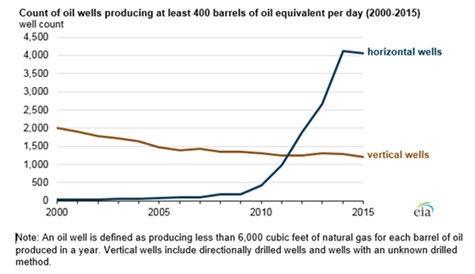
In 2015 the data show that nearly
77 percent of the most prolific U.S. oil wells, or those producing more than
400 barrels of oil equivalent (BOE) per day, were horizontally drilled wells.
For about 85,000 moderate-rate
wells producing in 2015, defined as more than 15 BOE per day and up to 400 BOE
per day, 42 percent were drilled horizontally.
The agency says that of the
approximately 370,000 lowest-rate, marginal oil wells in 2015, also known as
stripper wells, only about 2 percent were horizontal wells.
#30
For more news, go to: www.Agri-Pulse.com
