
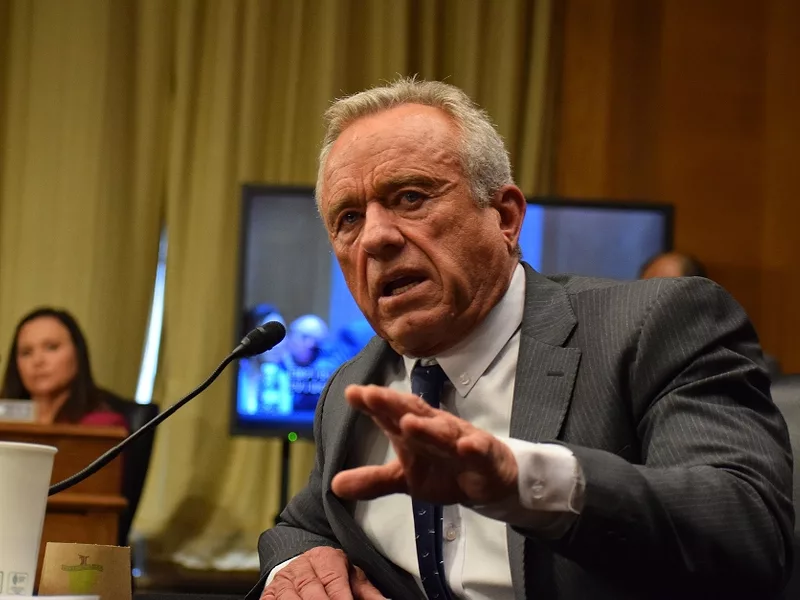
With the help of farm-state senators, Robert F. Kennedy Jr. used his confirmation hearings to paint himself as a champion of agriculture, arguing that many producers support efforts to roll back chemical use and shift to regenerative farming.
But agriculture economists and some farm groups are still concerned about some of Kennedy’s claims.
Kennedy's thoughts on agriculture took up a fraction of the time devoted to discussions of his vaccine skepticism, which were frequently characterized as "anti-vaccine," though Kennedy called himself "pro-safety." In the end, though, he eked out a win in the Senate Finance Committee on a party-line 14-13 vote Tuesday, sending his nomination to be secretary of the Department of Health and Human Services to the full chamber. He also appeared before the Senate Health, Education, Labor and Pensions Committee.
“I want to work with our farmers and food producers to remove burdensome regulations and unleash American ingenuity,” Kennedy told the Finance Committee. “I simply cannot succeed without a partnership, a full partnership, of American farmers.”
In both appearances, Kennedy suggested he would work closely with Agriculture Secretary-nominee Brooke Rollins to support regenerative agriculture, including the use of less-chemical-intensive practices.
Kennedy said the use of certain seeds and chemicals in farming practices are hurting both the soil and farmers, asserting that diseases such as Parkinson’s, cancer and autoimmune disorders are common in farm country.
He added it’s important to wean U.S. farms off chemicals so farmers can sell more products to Europe.
"We have to offer farmers an off-ramp from chemically intensive agriculture, which they don't want to do," he said. "There's illness all over the farm community, and it's undoubtedly related to the intensity of chemical pesticides."
Since the hearings, President Donald Trump has indicated an openness to exploring the use of pesticides in farming.
“We’re not the healthiest country, so maybe there is something to the fact that we shouldn’t be using so much chemical, and maybe that’ll stop,” Trump said during a news conference Monday. “But Bobby Kennedy is the one, because he’s not a believer in all of the things we have done, and neither are the Europeans.”
It’s easy to be “in the know” about what’s happening in Washington, D.C. Sign up for a FREE month of Agri-Pulse news! Simply click here
In a blog post following Kennedy’s hearings, the Breakthrough Institute said claims that U.S. farming practices are blocking the export of crops to Europe is false. The group openly opposed Kennedy’s confirmation ahead of the hearings.
The European Union was the fourth largest market for U.S. agricultural exports in 2023 at $12.3 billion, following China, Mexico and Canada, according to the Economic Research Service.
Additionally, the group noted that EU is already one of the largest export destinations for U.S. soybeans, which are predominantly grown with conventional practices.
The institute also wrote that many farmers using no-till practices rely on herbicides like glyphosate, the active ingredient in Roundup, which Kennedy says causes cancer. While incentivizing the transition to organic farming practices could allow for more crop exports to the EU, it could also reduce yields, the group wrote.
“Kennedy’s proposed transition, and its expected yield penalties, is not necessarily one that U.S. farmers want, despite Kennedy’s implications that this is the case,” the group wrote. “Kennedy fails to reckon with the economic realities facing food production today, the costs to farmers to transition operations to organic, and how a Republican administration already wary of public spending could feasibly stomach subsidizing such a transition.”
A recent survey by Farm Journal showed that many ag economists agree with these concerns. Ninety percent of surveyed economists said Kennedy’s selection to lead HHS was not positive for U.S. agriculture.
Some economists worried his appointment could create divisions in agriculture between commercial and organic or regenerative producers. Another said “his disrespect for science is troubling.”
Farm Journal also cited concerns from farmers across the country on Kennedy’s statements on pesticide use and the shift to organic and regenerative farming.
House Agriculture Committee Chair Glenn Thompson, R-Pa., said he looked forward to working with Kennedy, if confirmed, to help him better understand the realities of American agriculture.
“We’re always looking for better, healthier, more efficient ways to provide food and fiber and energy,” Thompson said.
 House Agriculture Committee Chair Glenn Thompson, R-Pa.
 On Kennedy’s push for more regenerative agriculture, Thompson said “all agriculture is regenerative” through work to promote healthy soils, new technology and conservation programs.
“I’m happy to hear he’s interested in really modern American agriculture,” Thompson said.
There has been an uptick in interest from fresh produce growers in regenerative agriculture, said Sara Neagu-Reed, director of production and environmental policy at the International Fresh Produce Association. In response to this interest, IFPA created a regenerative ag working group a year ago to craft an outcome-based definition of the practice for the fresh produce industry.
She said if Kennedy is confirmed and the discussion on regenerative agriculture continues, the fresh produce industry will be in a good position to engage at the federal level because of this preliminary definition and work.
 Sara Neagu-Reed, IFPA
“We just want to be as supportive as possible for what our growers want to pursue based on consumer demand, and this seems to be something consumers continue to harp on and ask for,” Neagu-Reed said. “We want to be able to meet our growers where they are, and if that involves us also advocating for alternative resources, then we will happily do that.”
Some of the largest farm groups have remained generally quiet on Kennedy’s nomination, though before the election, nearly 270 farm groups took aim at his views without naming him.
Speaking at the annual meeting last month, American Farm Bureau Federation President Zippy Duvall didn’t mention Kennedy by name but said it’s important to engage with the new administration.
“Many of them are not familiar with agriculture. And some of them have ideas that could set back years of progress in modern farming and food security,” Duvall said. “How we engage with those skeptics of modern agriculture is tremendously important.”
He continued that everyone shares the same values and wants to achieve healthier outcomes but added that “it’s important to ground these conversations in science.”
Joe Maxwell, president of Farm Action Fund, said he was excited to see Kennedy, along with Democrats and Republicans, recognize that the diet Americans eat is contributing to the country’s “broken” health system. He added that Kennedy appears in line with his group’s thinking that there is inadequate support for food crops in America.
“We don’t feed ourselves,” Maxwell said. “The further away that food is from us, the less nutritious it is.”
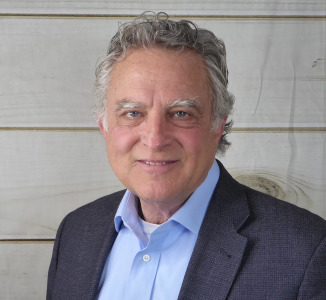 Joe Maxwell, president of Farm Action Fund
It’s still unclear exactly how much influence Kennedy would have if confirmed. EPA regulates pesticide usage, and USDA oversees federal nutrition programs. The Food and Drug Administration, part of HHS, approves food ingredients and regulates 80% of the food supply, most all foods other than meat and poultry.
Sen. Chuck Grassley, R-Iowa, said at the HELP hearing he expects Kennedy to allow EPA and USDA to do their jobs without his interference. However, other Republicans seemed more open to Kennedy taking a collaborative approach with other cabinet members.
Maxwell said it’s significant that the country is having a conversation about chemical use in farming, and hopes more farmers will join that discussion.
Beyond setting the tone and conversations within the administration, however, Kennedy could have some influence through the Dietary Guidelines for Americans and food research. HHS and USDA are tasked with writing the final DGAs this year, which inform decisions on procurement for federal nutrition programs like school meals.
Maxwell said the DGAs could be a first opportunity for Kennedy to demonstrate his commitment to addressing food industry influence, conflicts of interest and healthy eating.
During the hearings, senators and Kennedy seemed in sync on the need to address the impact of ultraprocessed foods on American diets. Kennedy said he wouldn't restrict what people can or can’t eat, but ensure that consumers understand the potential health effects of certain foods through proper research.
In addition to helping shape the DGAs, Kennedy could continue Biden administration efforts to define “healthy” foods and improve food product labeling.
In his appearance before the Senate HELP Committee and in other public comments, Kennedy has discussed the need to address food dyes that could be exposing consumers to dangerous ingredients.
In a statement, Sarah Gallo, senior vice president of federal affairs at Consumer Brands Association, said keeping consumers safe is the packaged goods industry's No. 1 priority.
“We proudly deliver safe, affordable, convenient product choices to consumers, and are continuously innovating to meet the evolving needs of consumers,” Gallo said. “The federal regulatory agencies within HHS operate under a science and risk-based mandate and it is critical that framework remains under the new HHS secretary.”
For more news, go to www.agri-pulse.com.

