
Decades before he was the Health and Human Services secretary, Robert F. Kennedy Jr. was a staunch environmental advocate.
In 1999 he founded the Waterkeeper Alliance, a network of environmental organizations that now has 350 members in 46 countries. It spawned the California Coastkeeper Alliance the same year. The group has recently pushed for legislation to make all surface water drinkable, fishable and swimmable by 2050 and to add an environmental justice member to the state water board.
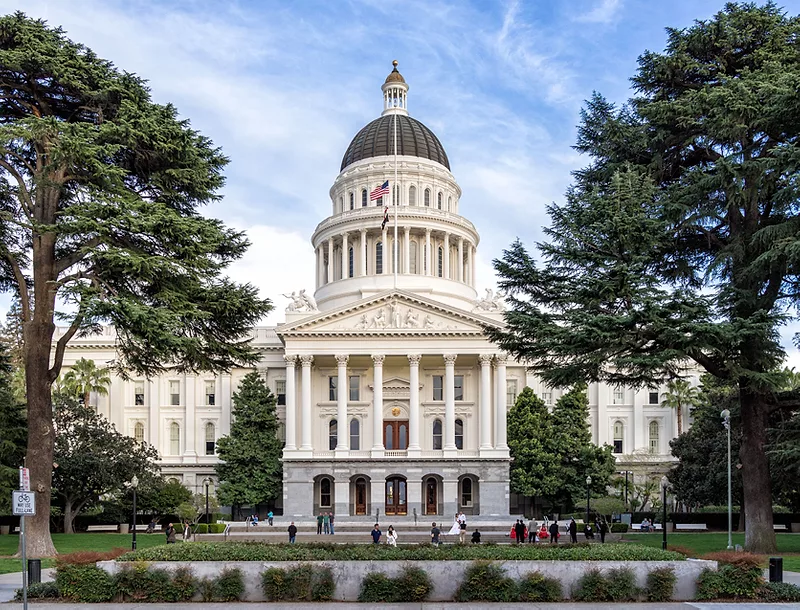
This year it has helped craft SB 601 to expand the board’s jurisdiction and protect more water bodies following federal rollbacks. One of the main drivers for the measure is deregulatory efforts underway with the Trump administration, where Kennedy now serves.
Take note: A decade ago Kennedy himself battled against the author of SB 601, Sen. Ben Allen of Santa Monica. As an anti-vaccine activist, Kennedy spoke out against Allen’s bill to revoke nonmedical exemptions. Once passed and signed into law, the bill made California the strictest state for vaccine rules.
Read more about SB 601 in the Agri-Pulse West Newsletter hitting inboxes later this morning.
California lawmakers defend hydrogen projects
Senators Alex Padilla and Adam Schiff of California are leading a bipartisan effort to maintain federal funding for state hydrogen projects.
The Biden administration used the Bipartisan Infrastructure Act to funnel $1.2 billion into the California-based Alliance for Renewable Clean Hydrogen Energy Systems hub. But last week Trump’s Department of Energy put the project on a “hit list” of 300 projects nationwide at risk of defunding.
It’s easy to be “in the know” about what’s happening in Washington, D.C. Sign up for a FREE month of Agri-Pulse news! Simply click here
California lawmakers wrote to Energy Secretary Chris Wright, asking him to consider the lower energy costs and manufacturing jobs associated with the state’s budding hydrogen economy. Republican Reps. David Valadao, Vince Fong, Young Kim and Jay Obernolte of California were among the signees.
Trump raises reciprocal duties on China by another 50%
President Donald Trump has tacked on an additional 50% to reciprocal duties applied to Chinese exports just hours before the tariffs are set to take effect.
China was due to face a reciprocal duty of 34% beginning at 12:01 am on Wednesday. But after Beijing announced that it would respond to new U.S. tariffs in kind with a matching 34% levy on U.S. products, the president signed an executive order Tuesday raising the U.S. duty to 84% ahead of the tariff taking effect.
Read our full report at Agri-Pulse.com.
Ag already part of tariff negotiations, Greer says
Talks between the Trump administration and Japan to improve market access for U.S. agriculture and other sectors are already underway and will soon reach a "new level," U.S. Trade Representative Jamieson Greer said Tuesday on the eve of new reciprocal tariffs taking effect.
“We want to have more market access in Japan for us. We feel like we should have more and better agricultural market access,” Greer told the Senate Finance Committee.
Read our full report at Agri-Pulse.com.
Vaden: USDA will work to remove ag trade barriers
President Donald Trump’s nominee to be deputy agriculture secretary, Stephen Vaden, sought to assure senators Tuesday that USDA would be a strong advocate for ensuring that tariff negotiations seek to remove barriers to farm exports.
“If we're going to be throwing punches on behalf of America's economy, there are some punches that need to be thrown on behalf of American farmers, too,” Vaden told the Senate Agriculture Committee at his confirmation hearing.
Read our full report at Agri-Pulse.com.
Supreme Court backs Trump on probationary worker firings
The Supreme Court voted 7-2 to stay a district court order that required the Trump administration to rehire about 16,000 probationary employees at six agencies, including USDA, which still faces other orders requiring it to rehire employees.
Two justices, Sonia Sotomayor and Ketanji Brown Jackson, disagreed with the majority.
Read our full report at Agri-Pulse.com.
Tariff negotiations kick off, officials are ‘all hands on deck’
President Donald Trump says prospects of a deal with South Korea over new U.S. tariffs are “looking good,” as officials fanned out across Washington to tout potential dealmaking.
“We have the confines and probability of a great DEAL for both countries,” Trump wrote on Truth Social on Tuesday. “Their top TEAM is on a plane heading to the U.S., and things are looking good.”
The administration’s top trade official told Finance Committee senators on Tuesday that the new tariffs would be coupled with “with immediate negotiations with our partners.” U.S. Trade Representative Jamieson Greer said discussions are already underway with Japanese officials.
Agriculture Secretary Brooke Rollins said in an interview Tuesday night on Fox that the cabinet is “all hands on deck” on trade discussions. “Just today, I had Ireland here talking about trade with the Irish,” Rollins said, referring to a meeting with Ireland’s Agriculture Minister. The president and other cabinet officials were taking more phone calls Thursday evening, she said.
“I believe we'll be hearing about new deals that are being struck, perhaps by the end of the week. But we will see,” Rollins told Fox’s Brett Baier.
Treasury Secretary Scott Bessent says as many as 70 countries have contacted officials to discuss potential deals.
But, but, but: Not everyone seems to be itching for a deal. Trump said on Tuesday morning he was still waiting for a call from Beijing after he threatened to hike China’s tariffs further. The administration later doubled down on the threat.
FDA cuts come into focus
An estimated 280 positions were cut from the Food and Drug Administration’s Human Foods Program during last week’s reduction in force. The layoffs leave about 750 employees left in the program, according to one industry source.
Some trainers who prepared the field inspection force for food safety were let go. Additionally, the entirety of the communications team was cut. Both moves are making industry stakeholders nervous.
Industry groups worked with external stakeholder engagement staff to schedule meetings. But these staff have been let go. The communications team was also responsible for maintaining the websites keeping stakeholders and consumers informed. Roberta Wagner, senior vice president of regulatory and scientific affairs for the International Dairy Foods Association, says industry groups are worried about the agency’s transparency and engagement going forward.
Some regulation writers in the foods program were also cut through the reduction in force, including those who worked on Food Safety Modernization Act policies. There are some regulatory writers still at FDA, but some of the institutional knowledge from the foods program is gone, Wagner said.
Meanwhile: Wagner said she’s aware of about 130 cuts from the Center for Veterinary Medicine. This is a smaller department, with about 600 people before the cuts. Support staff to the CVM director were eliminated, including employees involved in the agency’s H5N1 response.
FDA’s primary piece of the H5N1 response is centered on ensuring dairy foods are safe. Up to this point, the agency has focused on infections in lactating cows and providing safety guidance on raw milk. Wagner said infections in these cows are limited at this point.
Pork-state senators reup bill to strike down Prop 12
Three Senate Ag Committee members from the Midwest are taking another stab at pre-empting California’s Proposition 12, which sets housing standards for laying hens and sows.
Republican Sens. Chuck Grassley and Joni Ernst of Iowa, and Roger Marshall of Kansas have introduced the "Food Security and Farm Protection Act.” The measure would prohibit state governments from imposing production requirements on agricultural products originating in other states.
Take note: The lawmakers sponsored a similar bill last Congress, the EATS Act.
Lawmakers mount effort to repeal reciprocal tariffs
A group of mostly Democratic lawmakers are introducing resolutions in both chambers to repeal new reciprocal tariffs. The measures challenge the underlying emergency President Donald Trump used to impose new reciprocal duties.
Kentucky Sen. Rand Paul is the lone Republican backer. He joins six Senate Democrats including Minority Leader Chuck Schumer in launching the Senate effort. The bill will get a vote on the Senate floor after the Easter recess under existing rules.
Democratic Reps. Suzan DelBene, Wash., Gregory Meeks, N.Y., Richard Neal, Mass., and Rick Larson, Wash., introduced the House measure on Tuesday.
Take note: A similar effort challenging the tariffs on Canada passed the Senate last week after four GOP senators voted with Democrats. But even with the four Republican backers, the resolution is unlikely to get a vote in the House. House leadership have a workaround blocking votes challenging an emergency.


