
The Trump administration is weighing major cuts to the National Oceanic and Atmospheric Administration's budget, while also considering dissolving the agency's research arm and ending funding for some climate, weather and ocean laboratories and institutes, according to a draft budget proposal.
An Office of Management and Budget document reviewed by House Science, Space and Technology Committee Democratic staff calls for reducing the agency’s budget by $1.6 billion to $4.4 billion, which the document says will create a “leaner NOAA that focuses on core operational needs, eliminates unnecessary layers of bureaucracy, terminates nonessential grant programs, and ends activities that do not warrant a federal role."
The document obtained by Agri-Pulse is known as a "passback," a term for the annual budget plan OMB provides to a relevant agency.
NOAA's Oceanic and Atmospheric Research division would see a roughly 73% decrease in funding under the proposed plan, which suggests eliminating the division entirely. It would defund the Regional Climate Data and Information Program, which helps support the National Drought Information System, a network that tracks drought conditions and impacts to farmers.
The plan would eliminate funding for the Sea Grant program, which supports coastal and fisheries science extension specialists at universities across the U.S. It would also defund climate competitive research and the National Oceanic Partnership Program, according to the document.
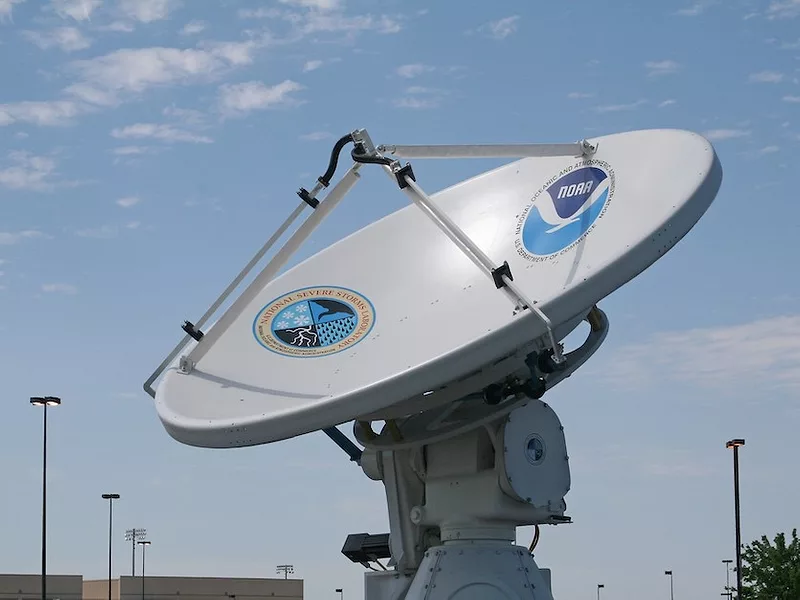
The proposal would end funding for climate and weather laboratories like the National Severe Storms Laboratory at the University of Oklahoma, which is working on creating updated radar models to track extreme weather.
In response to an Agri-Pulse request for comment, NOAA spokesperson Jasmine Blackwell said the agency does not discuss internal personnel and management matters.
Craig McLean, a former NOAA assistant administrator for research and acting chief scientist, said he believes the proposed cuts would “set the nation back to the 1950s” in terms of having the capacity to advance weather science. He said it would take away at-sea measurements that help to inform seasonal weather outlooks producers use to make farming decisions.
“They’re going to have to go back to the Farmers Almanac rather than using the up-to-date drought forecast, the up-to-date climate forecasts,” McLean said of farmers. “There’s a lot that’s going to hurt them by losing [this funding]."
It’s easy to be “in the know” about agriculture news from coast to coast! Sign up for a FREE month of Agri-Pulse news. Simply click here.
Remaining OAR programs would be moved into other parts of NOAA, like the National Ocean Service and the National Weather Service. These would include the U.S. Weather Research Program, the Tornado Severe Storm Research/Phased Array Radar, the Joint Technology Transfer Initiative, Ocean Exploration and Research, Integrated Ocean Acidification, Sustained Ocean Observations and Monitoring, and High-Performance Computing Initiatives.
The document also proposes transferring some National Marine Fisheries Service functions to the U.S. Fish and Wildlife Service, part of the Interior Department. These would include the agency’s Endangered Species Act and Marine Mammal Protection Act implementation responsibilities, according to the document.
Passbacks are used by OMB to inform agencies of budget proposals that will ultimately go to Congress. Congress ultimately would need to appropriate the funding requested, as well as authorize any of the major structural changes proposed in the document, McLean said.
“The law would have to change in some ways in order to do this,” McLean said.
In a statement, the House Science Committee’s top Democrat, Zoe Lofgren of California, called the budget plan “both outrageous and dangerous” and said it would “leave NOAA hollowed out and unable to perform its life-saving work." She said OAR is “foundational to the agency’s mission to protect life and property.”
"The White House seems to think that our science capabilities operate in vacuums from one another,” Zofgren said. "That is not the case. It’s a holistic system, and each piece of the agency is critical to strengthening the accuracy of weather forecasting and data, and then providing that data to the people who need it.”
For more news, go to Agri-Pulse.com.

