
Extreme drought is sliding into a distant memory for many Californians and the bills inspired by dry times have hit a downward trend as well. Instead the Legislature is looking to Trump-proof environmental laws, establish permanent fish and tribal protections and solidify long-term water supply goals.
It has been more than two years since the last statewide drought dissipated, but policies drafted at its peak are still inspiring debates in Sacramento.
Assembly Bill 263 is proposing to permanently enshrine into law a set of instream flow requirements for the Scott and Shasta rivers, after the State Water Resources Control Board readopted the emergency drought rules for the fourth year in a row in January.
Introducing the bill to the Assembly Water, Parks and Wildlife Committee last week, Assemblymember Chris Rogers, D-Santa Rosa, celebrated the removal of four dams along the Klamath River for reducing fish disease and creating hundreds of miles of new spawning and rearing habitat. Yet he warned that wild Chinook and coho salmon are still “in serious peril” in the river’s two main tributaries, the Scott and Shasta rivers.
Rogers defended claims from environmental, sportfishing and tribal interests often wielded against farmers to preserve more freshwater flows in Northern California rivers and to drastically curtail agricultural diversions.
Defending farm water from cutbacks
Rogers' bill has drawn opposition from local and state agricultural associations, led by the California Farm Bureau. Policy advocate Alexandra Biering worried about politicians stepping into the regulatory arena. She explained to the committee that the water board grounds its orders in science and adheres to the strict tenants of the California Environmental Quality Act, while investing in a robust public and stakeholder participation process.
“AB 263 would entirely wipe out these due process protections and could easily be expanded to include any watershed in the state,” added Brandon Fawaz, who plays a leading role in the Siskiyou County Farm Bureau. “The impact of this regulation carries consequences. The ending of family farms and breaking working landscapes will be the legacy of emergency curtailments.”
Democrats approved the measure along a party-line vote. The same committee advanced a separate bill to boost tribal benefits. AB 362 would require the water board to incorporate water needs for tribal practices into the contentious debate over updating the Bay-Delta Water Quality Control Plan and within regional plans for other watersheds.
Last year Asm. James Ramos, D-Highland, made a similar push for boosting tribal water rights until the Assembly Appropriations Committee stalled his measure. The Shingle Springs Band of Miwok Indians is once again sponsoring Ramos’ bill.
“AB 362 would place tribal water uses on equal footing with other statewide beneficial uses of water, such as recreation and agriculture,” said Malissa Tayaba, vice chair of the tribe, who reasoned the board and its regional branches must do more than enact new tribal designations. “None of the water boards have set enforceable water quality standards that protect the way tribes uniquely use our waterways.”
It’s easy to be “in the know” about agriculture news from coast to coast! Sign up for a FREE month of Agri-Pulse news. Simply click here.
 Asm. Chris Rogers, D-Santa Rosa (Rogers office photo)
Leading the opposition coalition, the California Association of Water Agencies raised alarms that the legislation could substantially redistribute water supplies throughout the state and present legal challenges and further delays to updating the Bay-Delta Plan.
SGMA reforms to protect drinking water
In a hearing packed with more than three hours of testimony, the committee also took a favorable view toward concerns over water scarcity for socially disadvantaged communities through AB 1413.
The measure steps into the complex arena of court adjudications over groundwater rights, restricting the judicial decisions when a subsequent increase in pumping would interfere with the implementation of local groundwater sustainability plans. The bill spurred confusion and heated discussions over the varying roles of the two branches of government for determining water rights and for balancing aquifers under the Sustainable Groundwater Management Act.
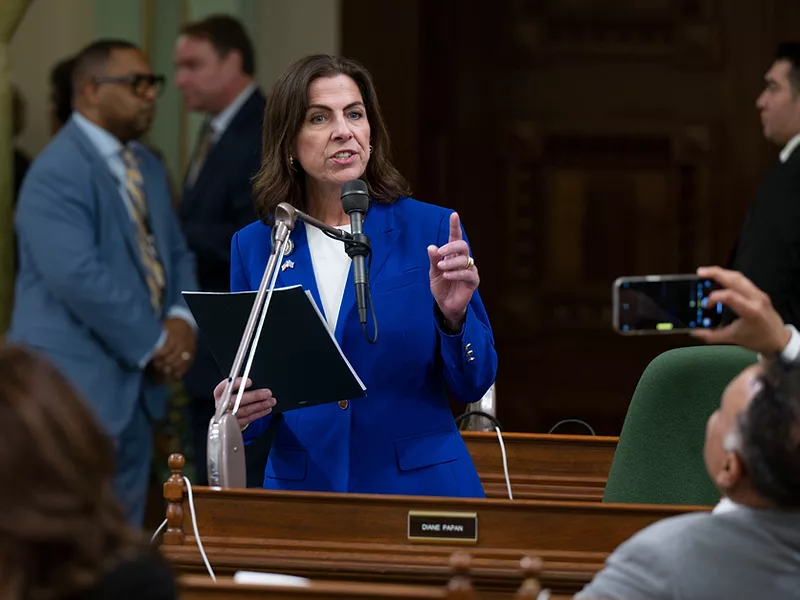
Committee Chair Diane Papan, D-San Mateo, argued her measure would “limit the filing of frivolous adjudications.” Papan is the latest lawmaker to pitch reforms to the adjudication process to protect small pumpers. She builds on a case made by the Community Alliance with Family Farmers. The progressive trade group has leveled charges of unfair adjudication practices on a large pistachio farm at odds with the Indian Wells Valley Groundwater Authority.
The authority has teamed up with a local GSA to back Papan’s AB 1413. They faced off against Valerie Kincaid, an attorney at Paris Kincaid Wasiewski representing GSAs throughout the state. Kincaid argued the bill conflates two legal processes for different issues and would make the SGMA process more expensive, controversial and difficult and would force resource-constrained GSAs to mount legal defenses against lawsuits.
The committee also approved a bill to place a higher burden of proof on parties seeking adjudications and require the associated GSAs to report on potential impacts to small farms and communities. The lawmakers then unanimously backed a measure filed in response to a “mass exodus” of GSAs from a Tulare County joint power authority. The agencies separated from the JPA in hopes of obtaining a “good actor” exemption from SGMA probation, after the water board granted the designation for the first time to two GSAs last year.
Trump-proofing California
The water board is also at the center of an effort to expand California’s water quality authority to fill a shrinking federal footprint.
President Donald Trump’s actions to “maximize water deliveries” and override “disastrous California policies” to deliver more water to farms and cities has inspired new legislation out of the Bay Area.
Acting on a presidential directive, the Army Corps of Engineers in February released water from two San Joaquin Valley reservoirs, sending downstream water managers into disarray. It prompted Papan to delve into the state’s options for blocking such “unnecessary and harmful discharges.”
AB 1146 would attempt to rid the process of political influence by empowering the water board to issue interim relief orders to halt any releases perceived as unlawful. Papan hopes to add teeth to the orders by charging violations as misdemeanors.
“California will not stand idly by while attempts are made to manipulate our water supply for political theater,” said Papan in a statement introducing the measure.
Papan’s committee will take up AB 1146 at the end of April.
Investing in water infrastructure to build reliability
Republicans and the Legislature’s current — and a former — Agriculture Committee chairs have set their sights on further expanding the water supply.
Asm. Alexandra Macedo, R-Tulare, has launched into her first year in elected office with strong messaging and legislation to boost agriculture in her district. She has filed AB 267 to redirect $1 billion in annual spending from the High-Speed Rail Project — long a Republican punching bag — to invest in water infrastructure projects and wildfire prevention.
Macedo has also teamed up with Asm. Juan Alanis, R-Modesto, to maintain the party’s push to dedicate 1% of the revenues in California’s general taxpayer fund to invest in water delivery and supply projects. Last year Alanis called for 1.5% but the constitutional amendment never came up for debate, and a proposed 2022 amendment requested 2%. Alanis is also pressing for the water board to consider economic impacts before readopting emergency regulations like the Scott and Shasta drought order.
All three measures await hearings and are unlikely to gain much traction in the Democratic-controlled Capitol.
 Asm. Alexandra Macedo, R-Tulare
A more modest request of $500 million to raise B.F. Sisk Dam comes from Asm. Esmeralda Soria, D-Fresno. The money would fund highway improvements to accommodate the reservoir expansion.
Progressive skepticism over expanding the water supply has not deterred Senator Anna Caballero, D-Merced. She has returned to her effort to develop nine million acre-feet of new water by 2050, after Governor Gavin Newsom vetoed her proposal under a more ambitious 2040 timeline. He was leery of the estimated $6 million annual price tag.
Caballero wants to go above and beyond Newsom’s supply strategy by codifying into law major revisions to the California Water Plan, the state’s long-term goals guiding its investments.
“There's been a lot of stress and angst over setting a target,” Caballero told a Senate committee last week. “The argument used is that we don't use targets to try to reach a goal. That's one of the most ludicrous things I've ever heard. We use targets all the time. It's a way to drive us towards sustainability.”
Senate Bill 72 has gained the backing of nearly 200 agricultural associations, business interests and water providers, along with opposition from a dozen environmental groups. It attracted unanimous bipartisan support in its first vote.
Sen. Melissa Hurtado, a fellow moderate Democrat from Bakersfield, prioritized water infrastructure money in her first term but this year is taking a more tailored approach, asking her colleagues to endorse a new water supply forecasting model. Assembly Republican Leader James Gallagher, meanwhile, is proposing to set water storage as the preferred method within the California Water Plan for meeting the growing demand.
Several more measures touch on water issues peripheral to agricultural issues and more bills are anticipated as lawmakers continue to flesh out policy language in their measures.
For more news, go to Agri-Pulse.com.

