
Some farm bill programs, including increased commodity program spending, may be rolled into the massive budget reconciliation Republicans are crafting, but a legislative fix for California’s Proposition 12 remains on hold until Congress can consider a standalone farm bill.
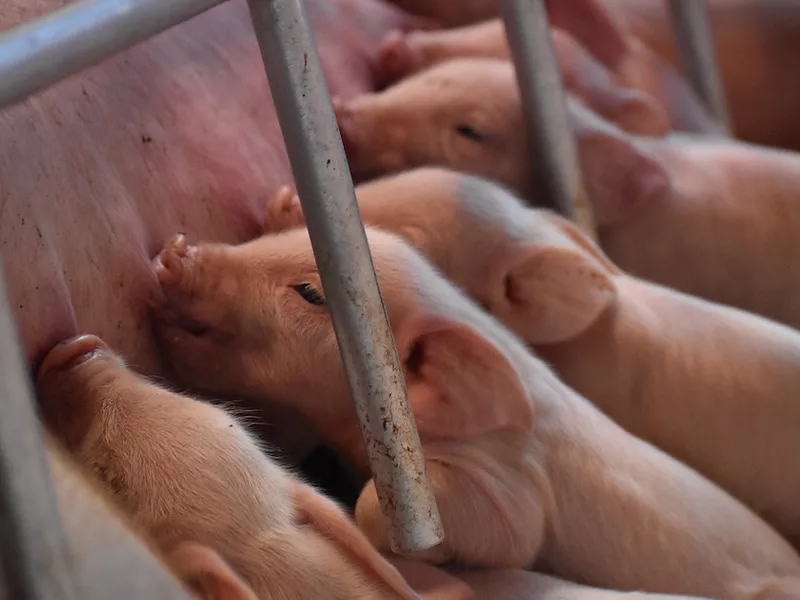
A ballot initiative passed by California voters in 2018, Proposition 12 mandates space requirements for breeding pigs and laying hens. All swine farms in California and those selling into the California marketplace were required to comply with its rules as of January 2024.
“Right now it's just affecting us in pork,” said Duane Stateler, an Ohio farmer and president of the National Pork Producers Council (NPPC). “But stop and think about what that would look like if it goes beyond pork into the rest of agriculture.”
The "Save the Bacon Act" included in last year’s House-passed farm bill would have prevented states from imposing production standards that affect interstate commerce while preserving their authority to regulate agriculture within their own borders.
House Ag Committee Chair Glenn “GT” Thompson, R-Pa., supports the provision.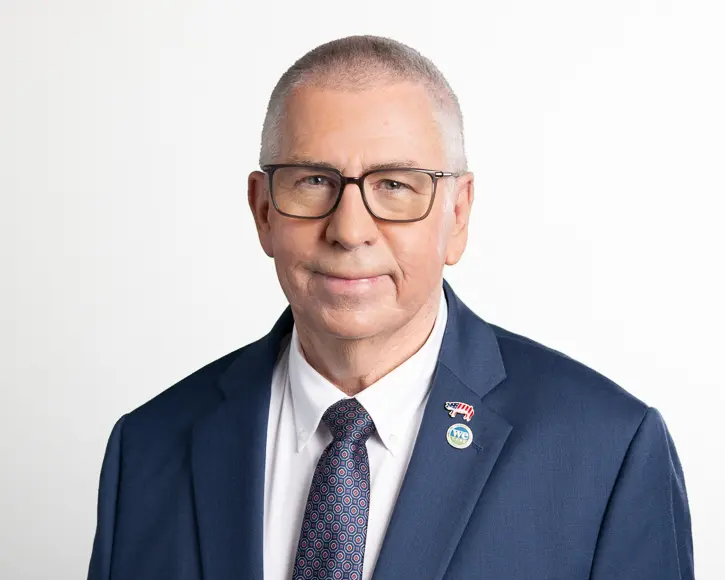 Duane Stateler (NPPC photo)
However, the Byrd Rule, named after the late Sen. Robert Byrd, D-W.Va., only allows provisions in reconciliation that directly change federal spending or revenue. That includes cuts to nutrition programs, Medicaid and taxes — which House Republicans are currently debating — but exempts policy changes with no budgetary impact.
“Not everything can be fixed in reconciliation that rural America needs, and we need to keep that coalition together,” Stateler said. “We still need a farm bill.”
However, as challenging as it will be for Republicans to come up with $230 billion in net budget cuts to fund a boost to reference prices, crop insurance support and trade promotion funding in the reconciliation bill, passing a farm bill later this Congress may be just as difficult. A big part of the reason is that Democrats are staunchly opposed to cuts in nutrition spending sought by some Republicans in the budget reconciliation process.
Sen. Ben Ray Luján, D-N.M., a member of the Senate Ag Committee, said SNAP cuts to offset higher farm supports in reconciliation “will destroy a farm bill. It’s the wrong way to go about it.”
Chuck Conner, president and CEO of the National Council of Farmer Cooperatives, says Congress likely will pass only a few large bills, so “it's gonna be a heavy lift” to even get a farm bill.
A farm bill future for Proposition 12
NPPC, which represents hog farmers, processors, pork suppliers and retailers, says the law is creating “generational concerns” for producers as they navigate the uncertainty of current conditions and struggle to plan for the future amid changing regulations.
“This isn’t about whether a solution is needed. That’s settled,” said NPPC CEO Bryan Humphreys, noting two administrations recognized the issue and the Supreme Court ruled in 2023 that only Congress can solve it. “The question now is what that solution looks like and how we get there.”
That solution, Thompson says, is likely through the farm bill. The Save the Bacon Act remains “a strong part of the bill going forward,” he said.
There were no proposed amendments to the provision in the 2024 House farm bill markup.
A coalition of farm-state lawmakers introduced the Food Security and Farm Protection Act in April as a revival of the controversial Ending Agricultural Trade Suppression, or EATS, Act. Led by Republican Sens. Joni Ernst and Chuck Grassley of Iowa and Roger Marshall of Kansas, the bill would prohibit states from setting agricultural production standards that affect producers in other states.
A spokesperson for Rep. Ash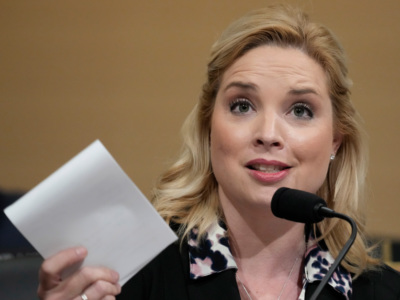 Rep. Ashley Hinson, R-Iowa (AP Photo/Alex Brandon)ley Hinson, R-Iowa, who led the EATS Act in the House last Congress, says she plans to introduce legislation and “looks forward to building bipartisan support” to block Proposition 12.
“The bill they reintroduced in the Senate is just as terrible as the last version,” said Marty Irby, president of Competitive Markets Action, which works to defend against attacks on states’ rights by the federal government and maintain competitive markets in the U.S.
“But if they introduce a new House bill, there could be a chance it could get done," he added.
His group announced a $100,000 advertising campaign in March against the measure. Irby says the group plans to continue the campaign through May and June with updated messaging to reflect the Senate-introduced bill.
“The EATS Act was dead after the animal rights folks really targeted it with their messaging campaign,” Thompson said, speaking on the legislation introduced last Congress. “They misled a lot of members of Congress when they portrayed it the way that they did.”
Rep. Don Davis of North Carolina, one of four Democrats on the House Ag Committee who voted in favor of advancing the farm bill last May, told Agri-Pulse he supports a legislative solution and sees the farm bill as “the most likely path” to get it enacted.
Cut through the clutter! We deliver the news you need to stay informed about farm, food and rural issues. Sign up for a FREE month of Agri-Pulse here.
“I do have greater concerns when we look at an action of the state that could really disrupt commerce,” Davis said. “I am still having conversations around that language, but broadly speaking, I would be supportive of it. And more importantly, sending a message that we really need to move towards a solution.”
Senate Ag Committee Chair John Boozman, R-Ark., acknowledged concerns about Proposition 12 in the Senate and said he expects "several of our members will have pretty strong ideas as to how to approach it.” However, he said nothing has been finalized on how to address it in the farm bill.
States rights fight
The clash over Proposition 12 has become a battle in a broader fight over states’ rights and federal authority. Supporters of the law, including California Democrats, argue that the state has the right to regulate goods sold within its borders and set higher standards if voters demand it.
“Enacting Proposition 12 was the will of California voters,” Sen. Adam Schiff, D-Calif., told Agri-Pulse. “Any attempt to overturn it will face strong opposition. Congress should continue to respect the decision of California voters — as it would the voters in any state — and I will push back on any efforts to undermine their voices."
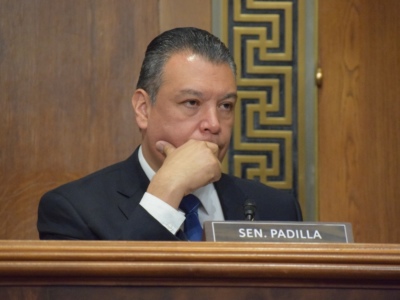 Sen. Alex Padilla, D-Calif. (Agri-Pulse photo)Sen. Alex Padilla, D-Calif., said Republicans are “scapegoating” California for broader agricultural and economic challenges.
“Undoing the safety of our food systems would not only impact California consumers and farmers but would also negatively impact farmers in states across the country,” Padilla said.
Other farm-state lawmakers insist the law violates the Constitution’s Commerce Clause and opens the door to a patchwork of conflicting state regulations.
Sen. Charles Grassley, R-Iowa, said Proposition 12 is “based on arbitrary, nonsensical standards” that have resulted in “a harmful patchwork of regulations across the 50 states. They’re a threat to Iowa, which leads the nation in pork production, and to farmers and consumers across this country."
The American Association of Swine Veterinarians (AASV) warns the law restricts on-farm decision-making and could also undermine veterinarians' ability to maximize animal welfare based on specific farm needs. “There is no one-size-fits-all housing type that is best for all sows,” the group said in a statement.
Former House Ag Committee Chair Frank Lucas, R-Okla., called the law “a real twist on the ag economy across the entire country.”
He held the gavel during the passage of the 2014 farm bill when similar legislation was proposed but not included in the final bill. “I've been very focused, like most aggies nationwide, on letting commerce flow. The tools to address that are a little complicated,” Lucas said.
Stateler, an Ohio pig farmer, warns that while pork is the target now, without intervention any commodity could be the next at risk.
“But what if someone takes that same idea to ‘We're not going to take corn. It has this certain product applied to it out of this state,’” Stateler said. “Right now, we're the ones dealing with it. But stop and think about what that would look like if it goes beyond pork into the rest of agriculture."
For more news, go to Agri-Pulse.com.

