
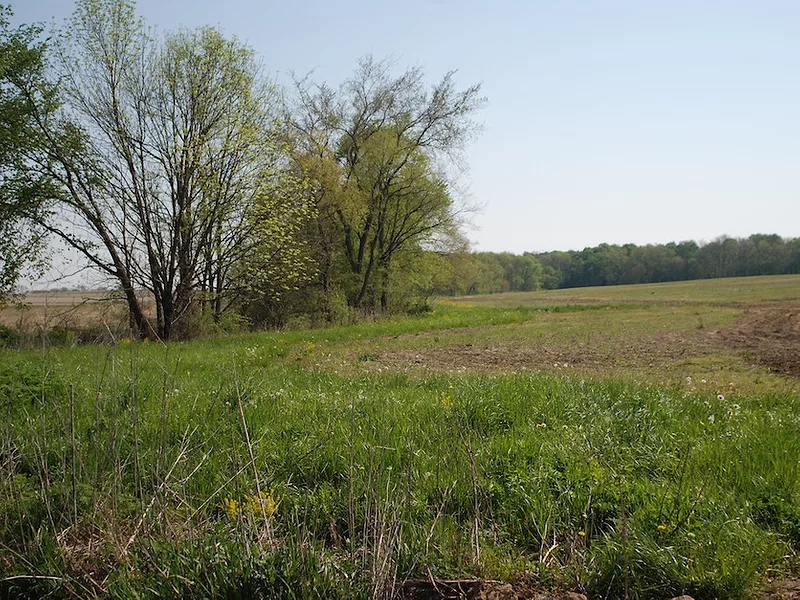
Authorization for the Conservation Reserve Program and other farm bill programs not included in this summer’s budget reconciliation bill have lapsed amid the shift to a new fiscal year.
House Ag Committee Chair Glenn Thompson, R-Pa., has made clear his hopes for a “skinny” farm bill, which would reauthorize programs not covered earlier this year in Republicans' One Big Beautiful Bill. But he hasn't scheduled any action on the legislation.
Senate Ag Committee Chair John Boozman, R-Ark., told Agri-Pulse that while “about 80% of the farm bill” was passed in reconciliation, the programs that are left out still need to be addressed.
"We’ve got to finish the farm bill, and so we'll be looking for a vehicle,” Boozman said. "I don't know exactly what it will be.”
Congress has several other major pieces of legislation it will need to work through before the end of the year leaving little time or opportunity to get a new farm bill passed. With the federal government shut down, lawmakers are currently focused on appropriations legislation. The Senate will also need to take up its version of the National Defense Authorization Act at some point as well.
Of the farm bill programs yet to be reauthorized, University of Illinois agriculture policy professor Jonathan Coppess said he believes CRP “raises the most questions and the most concern.” The program pays farmers to remove environmentally sensitive land from production, although activities like haying or grazing can continue in some circumstances.
“It's a really big issue that I, frankly, am surprised we have not heard more about,” Coppess said of CRP’s expiration, noting that current market challenges faced by row crop farmers heighten the need for the program's stability. He also said this is a bad time of year for the program to expire, since landlords and tenants are going to be renegotiating leases.
“The last thing I think we need are acres coming out of CRP and going back into production for crops in which we appear to have lost, or at the very least, really damaged export markets acres,” he said.
Andrew Schmidt, the director of government affairs at Pheasants Forever and Quail Forever, said USDA’s authority to enroll new CRP contracts was shut off as of Oct. 1. FSA can still continue to service and pay existing contracts, though some of these functions have been impacted by the current government shutdown.
Cut through the clutter! We deliver the news you need to stay informed about farm, food and rural issues. Sign up for a FREE month of Agri-Pulse here.
 Andrew Schmidt (Pheasants Forever photo)
“After the summer’s reconciliation package, it’s … the biggest, most significant piece of the farm bill that hasn’t been extended moving forward,” Schmidt said.
Schmidt also said the program currently holds around 26.6 million acres, near its 27-million acre cap. He said 1.5 million acres are set to expire next September and another 1.3 million acres expiring in 2027. Still, he noted that expiration will disrupt landowners’ attempts to reenroll expiring acres.
“They want to go in right away and know that there’s a place for them in the program, and they can’t do that until the program is reopened,” Schmidt said.
About 1.6 million acres in existing CRP contracts are set to expire at the end of fiscal 2026, Schmidt said.
Last month, more than 260 national and state farm organizations wrote to Congressional leaders asking for a new farm bill. While reconciliation included “vital provisions to ensure long-term stability and competitiveness for U.S. agriculture,” that legislation “cannot and should not be a substitute for a full farm bill,” the letter said.
However, lawmakers may need to instead look at a straight farm bill extension, rather than a new farm bill, said Callie Eideberg, a principal at the Vogel Group and previous staffer for then-Senate Ag Committee Chair Debbie Stabenow, D-Mich. In addition to time constraints, Eideberg said passage of a new farm bill would be complicated by the inclusion of farm bill programs in the reconciliation bill, which she said “effectively broke the traditional farm bill coalition.” While a simple extension could be attached to any large bill, Eideberg said an omnibus spending bill is a likely vehicle.
For more agriculture news, go to: www.Agri-Pulse.com

