
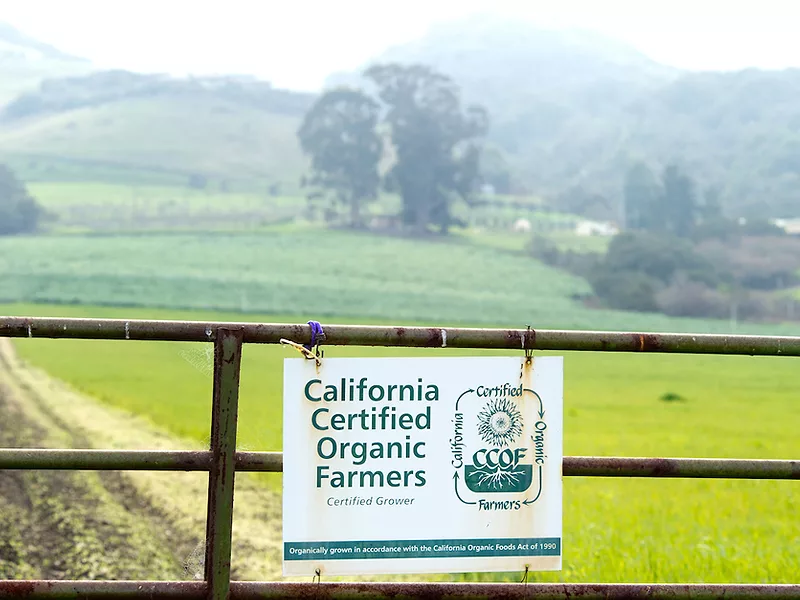
The California Organic, Agroecological and Regenerative Transitions project is figuring out the regional trends driving successful transition to organic farming.
COAR involves researchers across the University of California system, specifically UC Davis, UC Berkeley, UC Merced, UC Riverside, UC Santa Cruz and UC Agriculture and Natural Resources. Ryan Galt, a UC Davis professor and director of the campus’ Agricultural Sustainability Institute who is leading the COAR project, said it seeks to identify barriers to organic farming, especially across different ethnicities and size of operation.
Cut through the clutter! We deliver the news you need to stay informed about farm, food and rural issues. Sign up for a FREE month of Agri-Pulse here.
The project is also looking at indigenous strategies of working with landscapes and how to support tribes. Among those practices, the team is focusing on salmon revitalization, cultural burns and agroforestry.
According to the state's nature-based solutions climate targets established by Assembly Bill 1757, California must transition 10% of total conventional acreage to organic systems by 2030.
Through their research, the team will propose updates or changes to policies and programs that support long-term farming practices for both the UC system and the state. COAR is funded through a grant from the UC Office of the President.
For more news, go to Agri-Pulse.com.

