
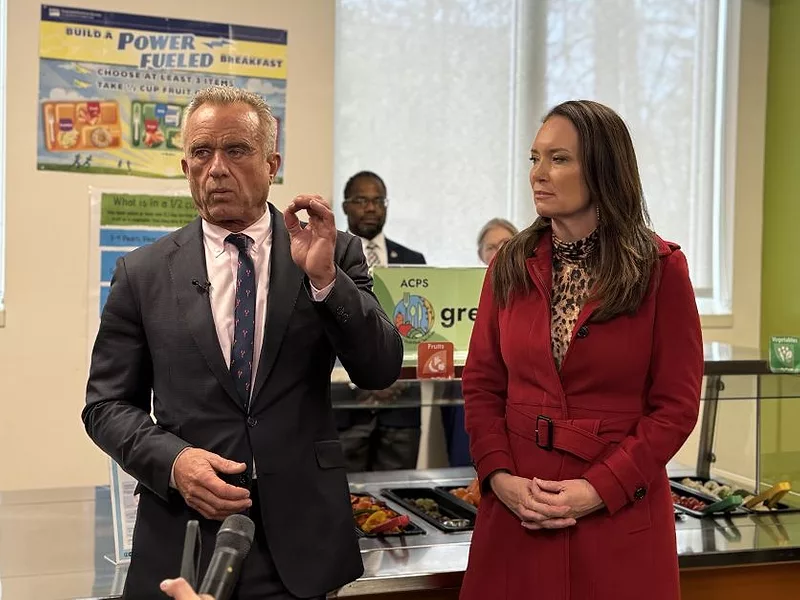
Farm groups are largely in the dark about what will be included in an upcoming report on chronic diseases among children but are bracing for the worst.
The Make America Healthy Again Commission, which is led by Health and Human Services Secretary Robert F. Kennedy Jr., is expected to release its first report on Thursday, identifying possible drivers of chronic diseases among children, including diet and environmental factors.
As of Tuesday, the report was still not finalized but it does touch on insecticides and herbicides, according to a person familiar with its contents. But the characterization of those statements was still subject to change.
The report also will likely touch on ultraprocessed foods and metrics like additives, added sugar, saturated and trans fats, according to the source.
What makes it into the report will largely reflect the already public remarks by Kennedy and MAHA allies Casey Means and Callie Means, according to the source. The next step of what policies could come from the report is the bigger and potentially more unknown question.
While other agencies are represented on the panel and have engaged with stakeholders throughout the process, sources say HHS has taken the lead but has declined to meet with stakeholders.
As a result, farm groups are looking to Kennedy’s previous comments on what he considers the key drivers of chronic disease among children. They are also closely monitoring statements by Calley Means, a special adviser to the White House, who they see as a key driver of the report. Means' sister, Casey Means, has been nominated by President Donald Trump to be surgeon general.
“What we’re really afraid of is it’s basically just an all-out attack on the way we currently do agriculture here in America,” said Alan Meadows, a Tennessee soybean grower and treasurer at the American Soybean Association.
The report is rumored to single out specific herbicides like glyphosate and atrazine, which the ag industry considers crucial to modern farming. Having that out in the public could be damaging for the industry. Meadows notes the chemicals have been proven safe repeatedly by EPA, and reviews are mandated every 15 years.
“With so much uncertainty in farm country right now, it’s just another thing, it’s something else for us to worry about,” Meadows said.
During a Senate hearing Tuesday, Sen. Cindy Hyde-Smith, R-Miss., asked Kennedy about the report and potential statements on glyphosate, the active ingredient in Roundup, which she called one of the most thoroughly studied products of its kind.
“Have you been able to refute thousands of studies and decades of scientific review in a matter of months?” Hyde-Smith asked.
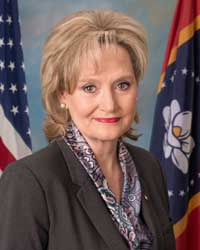 Hyde-Smith (official Senate photo)
Kennedy said her information about the report was “simply wrong.”
"The drafts that I've seen, there is not a single word in them that should worry the American farmer," Kennedy said.
"There's nobody that has a greater commitment to the American farmer than we do. The MAHA movement collapses if we can't partner with the American farmer in producing a safe, robust and abundant food supply.”
He acknowledged that glyphosate is an essential tool to farmers, and he vowed the administration would not take a step that would jeopardize business for farmers.
Alexandra Dunn, president and CEO of CropLife America, said his response leaves room for the report to talk about shifting the American food production system away from pesticides or herbicides.
If the report does include strong, negative statements on certain pesticides, it could be “detrimental” to the farm economy and American economy in general, Meadows said. If farmers move away from these products as a result of this report or other commission work, it could increase grocery costs for consumers, he said.
It’s a concern several farm groups raised in a statement Tuesday morning. The groups include ASA, National Corn Growers Association, International Fresh Produce Association and National Association of Wheat Growers.
They urged the Trump administration to consider the consequences of the report before it is finalized and ensure the findings are based on sound science and evidence-based claims rather than “opinions and preferences of social influencers” that have little background in farming.
The farm groups warned the report could threaten cooperation with the MAHA initiative.
“I think you could see a lot of outrage to be honest,” Meadows said if the fears come to fruition and the report does single out crop protection products. “When you start attacking something that is near and dear to people's hearts and that has been proven safe time and time again, I think you could see farmers become extremely upset.”
Cut through the clutter! We deliver the news you need to stay informed about farm, food and rural issues. Sign up for a FREE month of Agri-Pulse here.
There are additional concerns about what the report could say about seed oils, another target of Kennedy and the MAHA movement. Meadows said past research doesn’t support a lot of the rhetoric being pushed on seed oils.
“The idea of putting fear in people’s minds that the food they’re consuming is not safe, that’s not going to resonate well with the average consumer,” Meadows said. “Basically, it’s false information, and it seems to be one person’s opinion, instead of being based upon science.”
Farm groups like ASA have been trying to talk with HHS and those writing the report, but their appeals are “falling on deaf ears,” Meadows said.
MAHA views on pesticides
Part of the frustration among farm groups lies directly with Calley Means, whom they view as a key architect of the report and MAHA policymaking. Groups unsuccessfully requested to meet with a variety of people involved with the report, including Means, according to a source.
Means was key to bringing Kennedy into the Trump campaign and has since been a public face for the MAHA movement. He’s spoken publicly about the work of MAHA inside the federal government and spoke at a recent HHS and FDA event announcing the agencies’ plans to phase out synthetic food dyes. Both he and his sister are outspoken critics of pesticides, seed oils and more.
Speaking at the launch of the MAHA Institute last week, Calley Means said the country was on the verge of one of the “most significant realignments in American politics, in American history,” as MAHA is integrated into “MAGA” and the federal government.
Means said the administration is focused on getting to the root causes of various childhood diseases and what is “poisoning” children. He went on to criticize children’s consumption of ultraprocessed food, refined grains, added sugar and seed oils.
 Calley Means (photo from LinkedIn) He also said environmental toxins are another obvious driver of chronic diseases among children. He said the United States produces and ingests 25% of the world’s pesticides and noted that some of these chemicals are phased out or banned in other countries.
 Glyphosate is allowed for use in the European Union with some restrictions. Atrazine, on the other hand, is banned there.
He said the MAHA Commission report is a scientific assessment and a “statement of what’s happening” and “unimpeachable facts.” From there, the conversation can shift to policy. However, he emphasized that the government does not want to take regulatory action on pesticides similar to a “European nanny state system.”
“We're going to give Americans the facts, and … we're going to bring out pro-innovation policies to solve this issue,” Means said.
Potential impact of the assessment
Dunn said CropLife has met with members of Congress and individuals in the executive branch as much as possible and does feel they’ve been able to raise their concerns.
The group, which represents innovators, developers and distributors of pesticide products, put in this effort because of Kennedy’s history with pesticides and his past public statements.
“It was very clear to us that the possibility that this initial assessment … could raise questions with pesticide exposures,” Dunn said.
 Alexandra Dunn (GWU Law photo)While “pesticide” is not included in the executive order establishing the commission, it does include language referencing the American diet, absorption of toxic materials, environmental factors, chemicals and food production.
“So seeing that, we certainly felt that it was quite possible that this report would take a position that pesticides as used in growing American food are posing some sort of risk to American children,” Dunn said.
Dunn said a major concern with the report and any negative statements about the safety of pesticides or herbicides is that it will make consumers question the safety of grown foods. This could push people away from healthy foods like fruits and vegetables.
“We believe that any statements that question the safety of the American food system, or farmers’ commitment to producing affordable, abundant and healthy food will actually make American children less healthy,” Dunn said.
Members of Congress have also raised concern both with the potential contents of the report and the overall process.
Sen. Chuck Grassley, R-Iowa, was an early critic of Kennedy following his nomination to HHS. However, in private and public meetings he said he received assurances that Kennedy was supportive of farmers using tools like pesticides.
In a call with reporters Tuesday morning, Grassley also pointed out that Kennedy told the Senate Finance Committee that he believed EPA and USDA should be the regulators for agriculture, rather than his own department. Grassley said he also received assurances that Kennedy would follow a “radical transparency” approach at HHS.
But the reports the senator has heard from stakeholders run counter to these commitments.
Grassley said he wants to know from Kennedy and HHS if his staff has met with food and agriculture stakeholders and if the commission is using a risk-based, scientific approach.
“I support the administration's desire to make America healthier, and for that reason, I hope we get some clear answers to my questions, and that these people that are in the cabinet keep the promises they made pre-confirmation,” Grassley said.
For more news, go to: www.Agri-Pulse.com

