
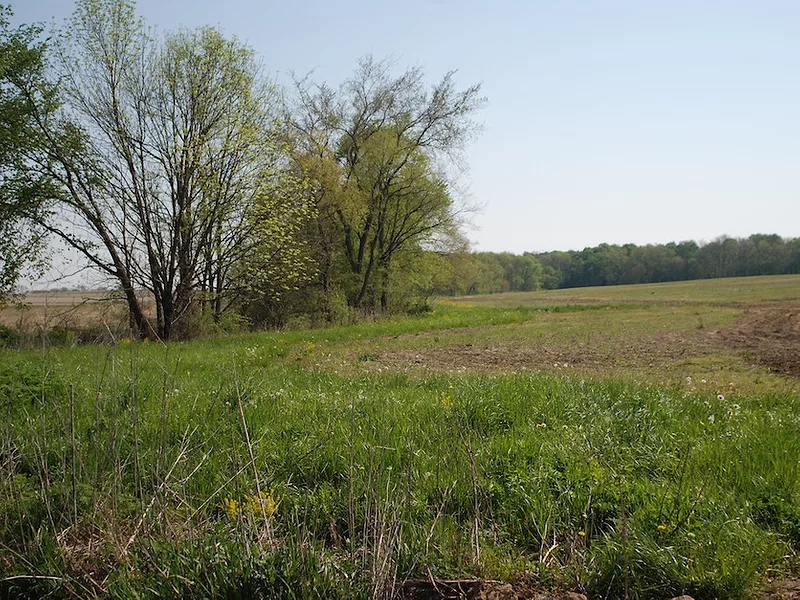
USDA is accepting new applications for the Conservation Reserve Program but high enrollment over the past few years will limit the amount of land USDA can enroll. And with authorization of the program set to lapse Sept. 30, it's not clear whether USDA will be able to accept applications next year.
Four major conservation programs were included in the House’s budget reconciliation bill but CRP was not. Its fate likely depends on Congress passing either a separate farm bill or an extension of existing farm bill programs left out of reconciliation.
"That does put CRP in a precarious position as far as authority past the end of the fiscal year,” said Andrew Schmidt, Pheasants Forever government affairs director. "We will need some type of farm bill extension to CRP authority to maintain the ability to enroll acres past this fiscal year.”
CRP pays farmers to remove environmentally sensitive land from production, although activities like haying or grazing can continue in some circumstances.
"When I look at the current crop prices, I see a high demand for CRP probably next year,” said Bruce Knight, who led the Natural Resources Conservation Service during the George W. Bush administration. "So there’s going to need to be some sort of action.”
Thompson: 'Working already' on skinny farm bill
The Senate is expected to modify the House-passed reconciliation bill but will be constrained by its Byrd rule, which restricts such bills to provisions that raise or lower revenue and spending. Some Senators may face pressure from conservation groups to try to include CRP reauthorization in their version of the bill.
"There are plenty of levers they could pull to squeeze in CRP, so I imagine they will," farm policy expert Ferd Hoefner said of the Senate.
Thompson plans to address CRP's reauthorization in a pared-down version of the farm bill, which he said will include programs that are “not really controversial. “We still have a fair amount of work to do with Farm Bill 2.0, but we’re working hard already,” he said.
It’s easy to be “in the know” about agriculture news from coast to coast! Sign up for a FREE month of Agri-Pulse news. Simply click here.
But Thompson may struggle to get Democratic support for a skinny farm bill due to frustrations with SNAP spending cuts in the House reconciliation bill that offset increased funding for commodity programs and crop insurance, said Jonathan Coppess, associate professor at the University of Illinois. Using reconciliation to make major changes to programs historically addressed through a farm bill is “fairly unprecedented," and it's hard to tell how that affects support for a stand-alone farm bill.
Passing a stand-alone bill “could be a different situation” than a normal farm bill process since the bill would be smaller, and there could be support for simply reauthorizing existing programs like CRP that were left out of the reconciliation process, Coppess suggested.
Lynn Tjeerdsma, former policy advisor to Sen. John Thune, R-S.D. who now sits on Pheasants Forever’s board, said that, based on people he’s spoken to, “there’s not a great deal of optimism” that a separate farm bill can be passed later this year.
"They’re hopeful they can do it, but if I were to throw out a number, it’d be 50/50,” he said.
USDA up against enrollment cap in latest sign-ups
A total of 25.9 million acres is currently enrolled in CRP’s three sign-ups, leaving just more than 1 million acres of space for the Farm Service Agency to fill before the program reaches its 27-million-acre cap. Around 1 million acres is set to expire this year, potentially leaving additional room although at least some expiring acreage will be reenrolled.
FSA announced May 12 that it had opened enrollment for CRP’s general and continuous sign-ups and will accept applications through June 6.
 Ferd Hoefner (LinkedIn photo)
In a press release, Administrator Bill Beam said he and other agency employees are “very aware that we are bumping up against the 27-million-acre statutory cap.”
"With the limited number of acres that we have available, we’re not necessarily looking for the most acres offered but instead prioritizing mindful conservation efforts to ensure we maximize the return on our investment from both a conservation and economic perspective,” Beam said.
General CRP focuses on retiring whole fields from production for 10- to 15-year periods, while continuous CRP targets smaller parcels through practices like buffers and filter strips. Grassland CRP allows farmers to graze land they enroll, which can only be done in “emergency” conditions in a general sign-up.
Continuous CRP allows acreage to be enrolled throughout the year, rather than being subject to one sign-up period. However, space constraints may keep enrollment opportunities limited for 2025.
“If current trends continue from previous years, they’ll fill the whole thing and then send everybody else away empty-handed, which from a continuous standpoint is really, really unfortunate,” Hoefner said.
This year’s continuous sign-up period looks to be “batched,” meaning USDA gives a window of time for producers to offer land before they make decisions and announce the results of the “batching period,” said Ivy Jean Reynolds, former general CRP program manager at FSA who founded the Agrarian Policy Center. She emphasized that her opinions were her own and not USDA's.
 Ivy Jean Reynolds (LinkedIn photo)
Reynolds said that based on the information in USDA’s recent notice, there will likely be only one batching period for continuous CRP in fiscal 2025, which means “if somebody wants the best opportunity to enroll in CRP, they will need to enroll in both the continuous and general sign-ups.”
“They will need to offer in both continuous and general, and then wait to see if they’re accepted,” she said, adding that “this will be the only option, the only chance to enroll in continuous for this year.”
Dates for the grassland CRP sign-up will be announced “in the near future,” the USDA press release said.
Acreage enrolled in that CRP subprogram has seen a significant increase, jumping from around 100,000 acres in FY17 to 8.6 million acres in FY24, increasing its share of total CRP acreage.
“CRP as a whole has been on an upward trajectory of enrollment over the last five years, but general and continuous, which are the longer-standing sign-up types in CRP, have continued to trend downward,” Pheasants Forever's Schmidt, said.
He said FSA likely will leave room for enrollment in the grasslands signup, although acreage likely will be smaller.
For more news, go to Agri-Pulse.com.

