
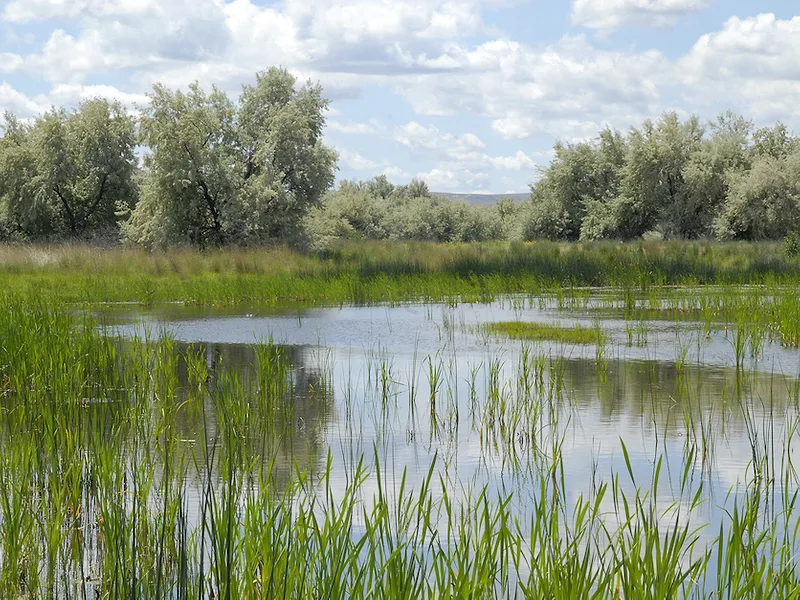
A federal judge on Thursday upheld the constitutionality of the farm bill’s Swampbuster provision, which puts producers at risk of losing access to farm program benefits if caught destroying protected wetlands.
U.S. District Judge C.J. Williams of Iowa’s Northern District wrote in an opinion that Congress has the power to place conditions on federal funding given to farmers.
The case in question involves James Conlan, who bought 71.85 acres of Iowa land in 2022, including nine forested acres that the USDA had concluded were wetlands in 2010. Conlan had planned to remove tree stumps and grade and level some of the land, but was told by NRCS representatives that doing so could amount to a wetlands violation because it could enable agricultural production on the land, he wrote in a court declaration.
Conlan argued in a lawsuit that “the federal government has unconstitutionally taken farmers’ land for wetland conservation without paying them just compensation.” He also claimed Swampbuster violates the Constitution’s Commerce Clause because his farm’s wetlands have no connection to interstate commerce.
However, Williams wrote in his ruling that producers voluntarily accept USDA benefits and in return, agree not to destroy or alter wetlands. Swampbuster “does not independently take anything from, or require anything of, the landowner,” the judge added.
It’s easy to be “in the know” about what’s happening in Washington, D.C. Sign up for a FREE month of Agri-Pulse news! Simply click here
“Even under this agreement, plaintiff can do many things with its land—including, for example, what it did here: logging,” Williams wrote. "Further, plaintiff can use its land any way it wants at any time. The only consequence is a potential loss of certain USDA benefits."
Williams said the plaintiff’s argument about violating the Commerce Clause “misses the point.” Swampbuster does not need to pass muster under the Commerce Clause, since it fits under Congress’s spending power, he said.
Williams also pointed out that Conlan could ask USDA to revise its 2010 determination of the area found to contain wetlands, which could potentially lead some of the land being reclassified. But the Iowa landowner had not requested such an action.
For more news, go to Agri-Pulse.com.

