
President Donald Trump and his cabinet officials are touting what they’re describing as a “deal” with China to preserve a truce negotiated last month, with officials arguing the agreement will avert further tariff increases and provide a springboard for further talks that could include provisions to increase sales of U.S. ag products.
“Our deal with China is done,” Trump wrote on Truth Social on Tuesday. The two sides have agreed on a path forward for implementing a tariff truce reached in Geneva last month. The president said that Beijing had agreed to approve magnet and rare earth exports to U.S. companies in exchange for “Chinese students using our colleges and universities.”
“We are getting a total of 55% tariffs, China is getting 10%,” Trump added.
Commerce Secretary Howard Lutnick – who was in London with Treasury Secretary Scott Bessent and U.S. Trade Representative Jamieson Greer negotiating with their Chinese counterparts earlier this week – told CNBC on Wednesday that U.S. and Chinese tariffs would remain unchanged, and should remain at this level for the foreseeable future.
The U.S. is applying a 10% baseline tariff to imports from China, as well as 20% duties over China’s role in the fentanyl crisis. Lutnick explained the 55% figure Trump cited also refers to pre-existing tariffs that Trump imposed on certain Chinese products in his first term.
China maintained a 10% retaliatory tariff on U.S. imports as part of negotiations last month.
Lutnick said he is confident the talks this week had secured a tariff détente. “I felt really good leaving last night,” Lutnick said. Lutnick added that tariff levels would “definitely” remain at current levels.
Chinese officials also agreed to work with U.S. officials to examine opportunities to deepen trade, Lutnick said, including in agriculture.
It’s easy to be “in the know” about what’s happening in Washington, D.C. Sign up for a FREE month of Agri-Pulse news! Simply click here
“We’re going to go through that in the next couple of months,” Lutnick said. “How about China you buy more of our agriculture, you buy more of our equipment? I think they’ve agreed to that.”
During Trump’s first administration, Beijing committed to purchase around $80 billion of U.S. agricultural products from 2020-2021. It ultimately fell short of those targets, however.
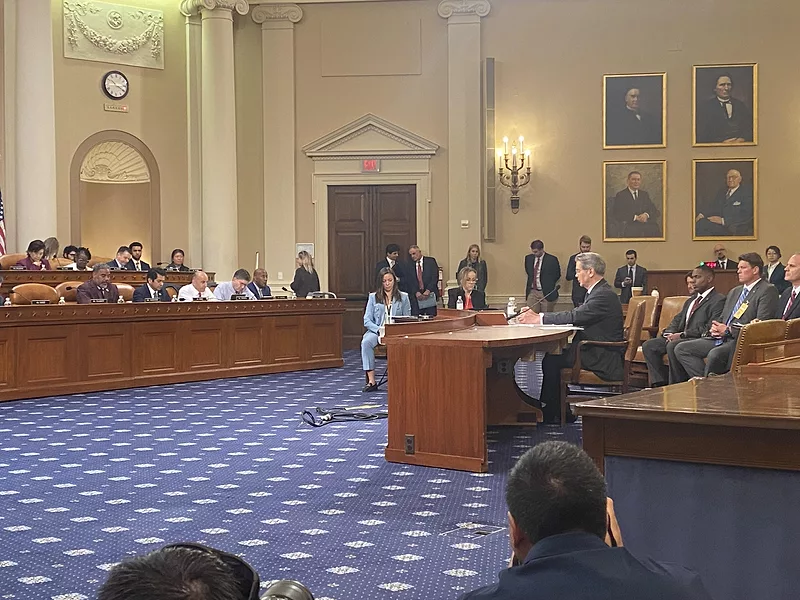
In a hearing before the House Ways and Means Committee on Wednesday, Bessent also indicated that agricultural purchase commitments have been a component of discussions with U.S. trade partners.
“We are pushing substantial purchase agreements for American farmers,” Bessent told lawmakers.
Like Lutnick, Bessent asserted that the tariff truce with China would serve as a platform for more extensive trade discussions. The talks this week, Bessent said, were towards “a specific goal” and served to “stabilize” the bilateral trade relationship, but he added that a more comprehensive deal would need a “much longer process.”
The talks follow complaints from Trump and Greer that Beijing had not been living up to its end of a bargain secured last month in Geneva to reduce tariffs on each other’s imports. As part of that deal, which saw U.S. tariffs fall on Chinese goods from more than 100%, Beijing was expected to lift some non-tariff retaliatory measures.
“China, perhaps not surprisingly to some, HAS TOTALLY VIOLATED ITS AGREEMENT WITH US,” Trump wrote in a May 30 Truth Social post. “So much for being Mr. NICE GUY!”
As Lutnick was projecting confidence on Wednesday that tariffs would hold steady, Democrats were pressing Bessent on China’s reliability as a trade partner.
During Wednesday’s hearing, Democrats pointed to Beijing’s history of reneging on its trade commitments, including its failure to meet its purchase goals agreed to under the Phase One deal, and asked Bessent whether he saw China as a reliable trade partner.
“We will see,” Bessent said.
Lutnick told CNBC that with the Chinese tariff truce ironed out, himself, Bessent and Greer could focus on other trade negotiations, which he said could begin yielding “deal after deal” as soon as next week.
The administration is focused on talks with 18 “important” trade partners, Bessent told lawmakers on Wednesday, and he argued that the administration is willing to “roll the tape forward” for countries negotiating in good faith.
But Rep. Linda Sanchez, D-Calif., who serves as the ranking member of the Ways and Means trade subcommittee, said she is skeptical that the administration can invest the resources needed to extract meaningful concessions from Beijing while juggling so many trade negotiations.
“This administration is too swamped with trying to negotiate with 90 countries around the world, and to me, a poorly negotiated trade deal with China is probably not worth the paper that it's written on,” Sanchez said. “Negotiating trade agreements with China requires more time and effort than this administration has given so far.”
Trump’s 90-day pause on country-specific tariffs unveiled on April 2 is set to end in less than a month, with the U.S. asking countries to submit their final negotiating offers last week. Bessent suggested, however, that countries negotiating “in good faith” could see the pause on their tariffs extended.
One negotiation that is set to require additional investments of time and effort is the ongoing discussions with the European Union. Lutnick said on Wednesday that talks with the bloc have been “more than thorny,” adding that a potential U.S.-EU deal would likely be at the “very end” of the queue of U.S. trade deals.
The president’s and senior officials’ attendance at a G7 meeting in Canada early next week could provide an opportunity for further negotiations with some governments, however.
Bessent told lawmakers on Wednesday that he will be accompanying the president to the G7 and said he expects a meeting with Canada’s Prime Minister Mark Carney on the sidelines of the meeting.
For more news, go to Agri-Pulse.com.

