
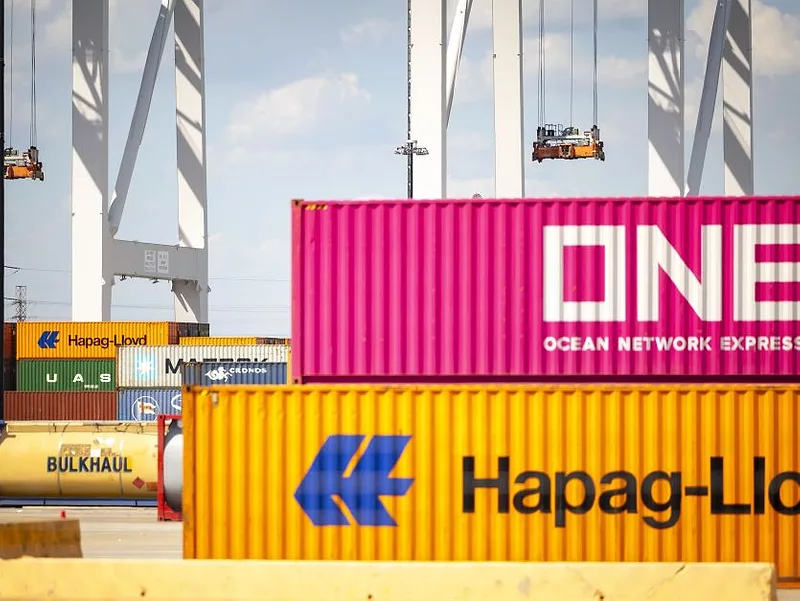
Tariff increases and U.S.-China trade tensions since January have triggered net export losses of around $2 billion for U.S. farmers, with lost Chinese sales dwarfing modest gains elsewhere, a new study says.
The study from North Dakota State University’s Center for Agricultural Policy and Trade Studies finds that between January and April, U.S. agricultural exports to China contracted by more than $5 billion, leaving export volumes some 55% lower than the previous year.
U.S. ag exports to South Asia, the European Union and Central America climbed by 43%, 39% and 24%, respectively. But the gains were not enough to offset the losses in the Chinese market. Overall U.S. ag exporters suffered a net export loss of $2 billion, the authors find.
The authors tracked Agriculture Department weekly export sales reports to provide a timelier picture of the trade landscape than the Commerce Department’s regular trade data releases.
President Donald Trump began raising tariffs on U.S. imports shortly after taking office, beginning with new duties on Canada, China and Mexico. His administration proceeded to increase tariffs on steel and aluminum, automobiles and then on virtually every U.S. trading partner in what the president called “reciprocal” tariffs.
The duties triggered multiple rounds of retaliatory duties from China, Canada and the European Union, although some have been postponed to allow negotiations to play out. Beijing, however, increased its minimum tariff rate on U.S. imports to 125% from April 12, severely limiting U.S.-China trade and sending Chinese ag importers scrambling for alternate suppliers.
Both sides reduced their tariffs as part of a pact negotiated in Geneva in mid-May. But even after reaffirming that truce this week, the U.S. has preserved its 10% baseline tariff on Chinese products and a 20% tariff applied over China’s role in the fentanyl crisis.
It’s easy to be “in the know” about what’s happening in Washington, D.C. Sign up for a FREE month of Agri-Pulse news! Simply click here
Meanwhile, Beijing has kept a 10% retaliatory tariff in place on imports frpm the U.S.
Unsurprisingly, with such steep tariffs in place on U.S. exports to China during April and early May, ag export losses for early 2025 were concentrated in commodities that are heavily reliant on the Chinese market. Soybeans, sorghum, beef, biodiesel and tree nut exports hit five-year lows for the first four months of the year.
Some commodities that saw their China sales crater shifted to alternate markets. Corn sales to China, for example, have been negligible since January, but saw a large jump in sales from Southeast Asia and Central America, and ended the period with export sales 24% higher than last year.
Soybean meal and ethanol are also “bright spots,” the report finds.
Jim Sutter, CEO of the U.S. Soybean Export Council, told Agri-Pulse earlier this year that China’s pivot to alternative suppliers had boosted the attractiveness of U.S. agricultural exports in other markets and helped mitigate ag export losses. The rush of Chinese buyers to secure Brazilian ag products drove their prices skywards, Sutter said, reducing the price premium of U.S. products in the short run.
Accordingly, “non-Chinese business was being attracted to the United States,” Sutter said in an interview last month.
The report’s authors note that many commodities have been in their seasonal low points in the first few months of the year, and a strong second half of the year could see some recovery, particularly given the reduction of Chinese tariffs on U.S. imports after May 14.
But although the tariff spike “in April was brief, Chinese tariffs remain significantly elevated,” the authors write, “with ongoing and evolving effects.”
Sandro Steinbach, director of agricultural policy and trade studies at NDSU and one of the report’s authors, warned in an interview with Agri-Pulse that just because some of the Chinese tariffs have ebbed, doesn’t mean U.S. ag exports will bounce back to where they were.
For products like soybeans that are harvested later in the year, the tariff relief may spur Chinese buyers to resume purchases and the export losses for the new crop could be more muted. But Steinbach said that other commodities could suffer lingering effects of the tariff tensions.
“Once you lose the market, it’s gone, basically,” Steinbach said. Steinbach pointed to the Chinese export losses that some commodities suffered during Trump’s first term that took years to return – if at all.
Much will depend on whether the U.S. and China can reach an agreement on cross-border agricultural trade that addresses non-tariff barriers, or whether the substance of the framework agreed this week in London – which has still not been made public – reduces any non-tariff barriers to trade.
“Tariffs are only a small part of the bigger picture,” Steinbach said. Non-tariff barriers like inspections can sever off markets without applying any tariffs, he pointed out. “I would be interested to see what the framework actually holds in terms of any of the non-tariff parts.”
For more news, go to Agri-Pulse.com.

