
President Donald Trump on Thursday ordered heads of the Army Corps of Engineers and the Energy, Interior and Commerce departments to pull out of Biden-era agreements intended to halt litigation over salmon declines in the Columbia and Snake River system.
In a presidential memorandum, Trump ordered an end to a $1 billion Biden Administration initiative that would have funded fish restoration efforts and tribal clean energy projects, implemented changes to federal hydropower operations, and studied how to offset the transportation, recreation, and irrigation impacts resulting from the potential removal of four dams on the lower Snake River.
"It is essential to protect Americans’ ability to take full advantage of our vast natural resources to ensure human flourishing across our country," Trump said in the memorandum. "My administration is committed to protecting the American people from radical green agenda policies that make their lives more expensive, and to maximizing the beneficial uses of our existing energy infrastructure and natural resources to generate energy and lower the cost of living."
The Biden Administration plan was proposed as part of an agreement with Northwestern tribes, environmental and fishing groups, and the states of Washington and Oregon aimed at bolstering salmon populations in the Snake and Columbia rivers. In return, the non-federal parties agreed to halt a 22-year-long legal battle for five years while the plan was rolled out.
Salmon runs in the Columbia and Snake River system have declined more than 90% over the last 100 years, according to estimates from the Washington Department of Fish and Wildlife and the Oregon Department of Fish and Game. Federal agencies have spent $17 billion building hatcheries and equipping the dams with additional safety measures like fish ladders and diversion screens, but conditions remain challenging for two at-risk species: spring-summer chinook and sockeye salmon.
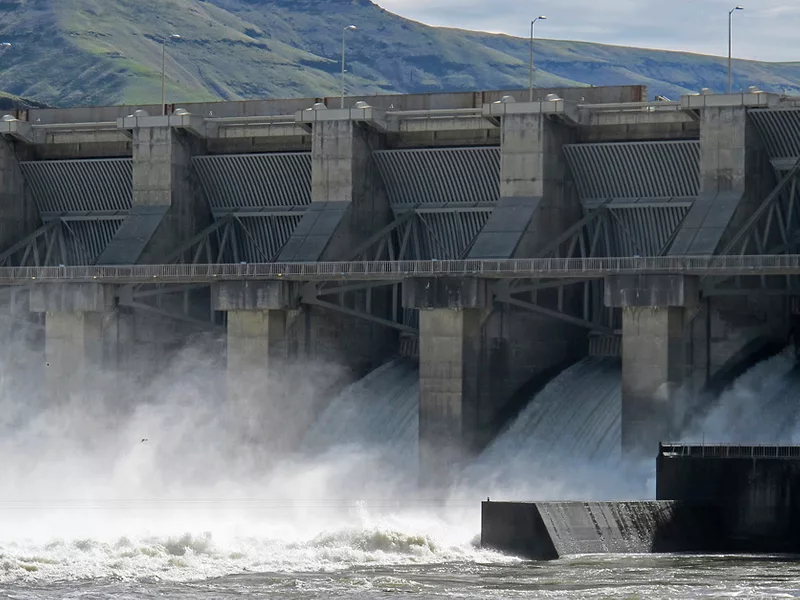
Tribes, environmental groups and fishermen who are worried about the fates of the two species, as well as steelhead and spring-summer chinook salmon, have spent years pushing for the breaching of four Eastern Washington dams — Ice Harbor, Lower Monumental, Little Goose and Lower Granite. The idea has been fiercely opposed by farmers, shippers and utility companies concerned about losing a shipping route for approximately 10 percent of the nation’s wheat exports, a renewable energy source capable of generating 1,000 megawatts of power each year, and a water source capable of irrigating thousands of acres of farmland.
Under the Biden administration agreement, the Energy Department had committed to develop renewable energy infrastructure for tribal nations capable of supporting at least 1 to 3 gigawatts to help offset potential energy lost by breaching. Meanwhile, the Bonneville Power Administration agreed to provide $300 million in funding over 10 years for fish restoration projects and hatchery upgrades, and the Corps said it would make operational adjustments to some of the dams.
It’s easy to be “in the know” about what’s happening in Washington, D.C. Sign up for a FREE month of Agri-Pulse news! Simply click here
While the agreement did not go as far as proposing to breach the dams, it would have funded federal studies analyzing alternate systems for transportation, irrigation and recreation in the event breaching were to occur.
In the memorandum, Trump said breaching the dams "would be devastating for the region" and that "there would be no viable approach to replace the low-cost, baseload energy supplies; the critical shipping channels lost; the vital water supply for local farmers reduced; or the recreational opportunities that would no longer be possible as a result."
Environmental and fishing groups who are plaintiffs in the lawsuit criticized Trump's decision and said they would continue to push to restore salmon populations in the Columbia River Basin.
"This move by the Trump administration to throw away five years’ worth of progress is shortsighted and reckless,” said Mitch Cutter, a salmon and energy strategist for the Idaho Conservation League, one of the groups in the lawsuit.
Jim Matheson, CEO of the National Rural Electric Cooperative Association, praised Trump's decision, saying it "smartly helps preserve affordable, reliable electricity for families and businesses across the Pacific Northwest."
“Hydroelectric power is the reason the lights stay on in the region," Matheson wrote. "And as demand for electricity surges across the nation, preserving access to always-available energy resources like hydropower is absolutely crucial."
For more news, go to www.Agri-Pulse.com.

