
President Donald Trump’s 90-day pause on many of the country-specific reciprocal tariffs is set to expire in less than three weeks. The administration maintains pacts with countries seeking to avoid those duties are forthcoming, but some on Capitol Hill are getting anxious over the pace of negotiations.
“I want it to speed up as quickly as possible,” Sen. Ron Johnson, R-Wisc., told Agri-Pulse this week.
Shortly after Trump announced the sweeping new duties on April 2, White House trade adviser Peter Navarro told Fox Business Network that the U.S. would use the threat of the new duties to chase “90 deals in 90 days.” But more than two months after Trump’s “Liberation Day” tariff splurge, the administration is well short of this mark, having signed just one trade framework with the United Kingdom and negotiated a tariff détente with China.
The uncertainty around what tariff rates will apply to U.S. trade partners after the pause ends is complicating investment and business decisions and clouding economists’ economic outlooks – including the Federal Reserve’s. The Fed opted to keep interest rates flat on Wednesday, with Chair Jerome Powell citing ongoing tariff uncertainty.
“We need to return some certainty to our economy,” Johnson told Agri-Pulse.
Sen. Todd Young, R-Ind., also said he was unsatisfied with the current pace of negotiations. Although he added that he blames U.S. trading partners for the lackluster progress.
The president and senior administration officials have pointed to difficult negotiations with multiple trading partners, including the European Union. Commerce Secretary Howard Lutnick last week described European officials as not being engaged early in the negotiations.
“Europe was more than thorny,” he said.
Trump on Tuesday told reporters that he doesn’t feel the EU is offering a “fair deal.” The president also described “tough” negotiations with Japan.
“They're either going to make a good deal or they'll just pay whatever we say they have to pay,” Trump added.
Sen. James Lankford, R-Okla., who sits on the Senate Finance Committee with both Young and Johnson, told Agri-Pulse on Wednesday that he had pressed the administration to secure another trade deal soon.
“That's my encouragement to them,” Lankford said. “The sooner people can have stability, the better.”
At least one senator also raised the tariff issue to White House Chief of Staff Susie Wiles during a meeting with GOP senators on Wednesday, according to Sen. John Hoeven, R-N.D.
Lankford, however, said that he is confident the administration will soon announce further deals, based on his conversations with officials.
“They're getting very close to several of the deals,” Lankford said, but he declined to elaborate on which countries he had been told are coming next in the deal pipeline. The White House did not respond to Agri-Pulse’s request for comment. Multiple industry representatives who have been attending a weekly briefing from the Office of the U.S. Trade Representatives said officials have not notified participants of any imminent deals with any specific country.
It’s easy to be “in the know” about what’s happening in Washington, D.C. Sign up for a FREE month of Agri-Pulse news! Simply click here
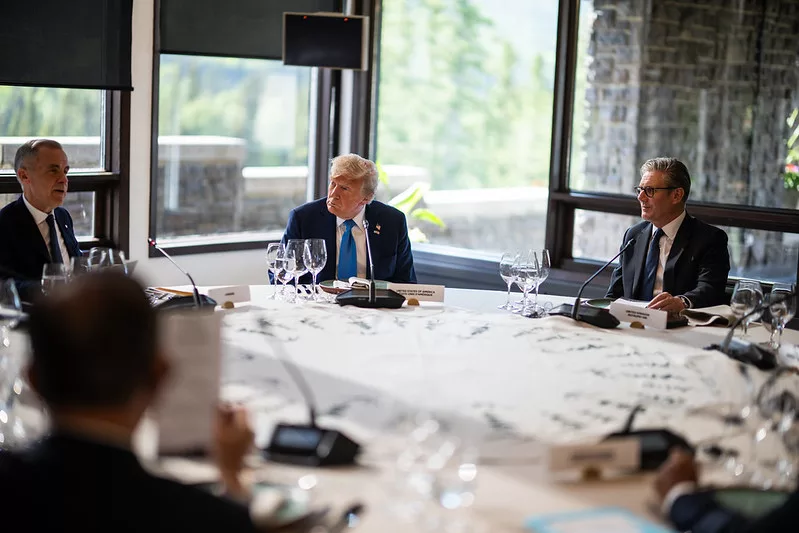
In public comments, senior trade officials have touted progress on several negotiating fronts, including Vietnam, Canada and Japan. Readouts from the U.S. and Canadian meetings at the G7 summit earlier this week said that both sides had committed to pursuing a deal within the next month.
USTR Jamieson Greer also told Fox last week that Vietnamese negotiations have been “very helpful,” adding “we’ll see if we’re able to land something with them.”
The Vietnamese government has been particularly eager to ink a deal with the U.S. and has gone to some length to demonstrate its willingness to work with officials, including by fast-tracking approvals for a Trump family golf complex, according to New York Times reporting last month.
Vietnam's trade relationship with China, however, could pose one potential sticking point. Navarro and Lutnick have both singled out Vietnam in recent months for its role in helping China circumvent U.S. tariffs by re-exporting Chinese products.
Addressing harmful Chinese trade practices should be a key component of U.S. trade negotiations, Young told Agri-Pulse.
“The only way to bring China's state capitalist economy to heel,” Young said, is by forming a joint front with U.S. trading partners. Accordingly, the goal of ongoing trade negotiations should be to “pocket concessions, maybe ask for a little bit more, reset trade relations, and then collectively work together to apply leverage against China so that we might bring them into a position of better behavior.”
Even absent any new tariffs, economists are anticipating price hikes to worsen in the coming months. Powell told reporters on Wednesday that he expects to see U.S. inflation pick up over the summer if tariffs remain in effect.
Sen. Rand Paul, R-Ky., told Agri-Pulse he is concerned about the cumulative effect of U.S. tariffs if the administration does not ink deals to lift duties.
“You're going to see significant increases in prices,” said Paul, who has been an outspoken critic of the administration’s tariff policy. “There's a lot of contracts that are going to expire in the next month or two – where you've got goods that are made overseas and then are imported and sold here, but they already had prices set with their retailers.”
In an appearance before the House Ways and Means Committee last week, Treasury Secretary Scott Bessent said countries negotiating “in good faith” are likely to see their reciprocal tariff pause deadline pushed back to give more time for negotiations to play out.
While such a move would do little to address the climate of uncertainty that many businesses and lawmakers loathe, GOP Rep. Darin LaHood, Ill., told Agri-Pulse he’d rather officials extend the pause and take the time needed to secure a better deal than rush into hastily crafted and ineffective agreements.
“Maybe people aren't aware, trade negotiations are complicated. They're nuanced. They're time-intensive. They take lots of lawyers. They need to be I be codified through multiple layers of government,” said LaHood, who sits on the Ways and Means Committee. “Those are not easy to get done quickly.”
Philip Brasher contributed to this report.
For more news, go to Agri-Pulse.com

