
State lawmakers from coast to coast appear to be gaining ground in a fight against products such as beverages and gummies that contain hemp-derived THC consumables. But an array of new laws could spell trouble for the $445 million industrial hemp industry.
The 2018 farm bill federally legalized production of hemp to support the ag sector and industrial hemp farmers. But the law specified limits only for delta-9 THC (the psychoactive compound found in marijuana), which created a loophole for intoxicating products containing synthetic hemp-derived cannabinoids such as delta-8 THC, a form of tetrahydrocannabinol.
These consumables range from THC-infused beverages to gummies to vapes, and their largely unregulated status has caused states to take matters into their own hands. However, experts and industry leaders worry that industrial hemp producers also stand to lose with new restrictions and bans on these consumables — all because of a tricky issue of definitions.
What’s in a name?
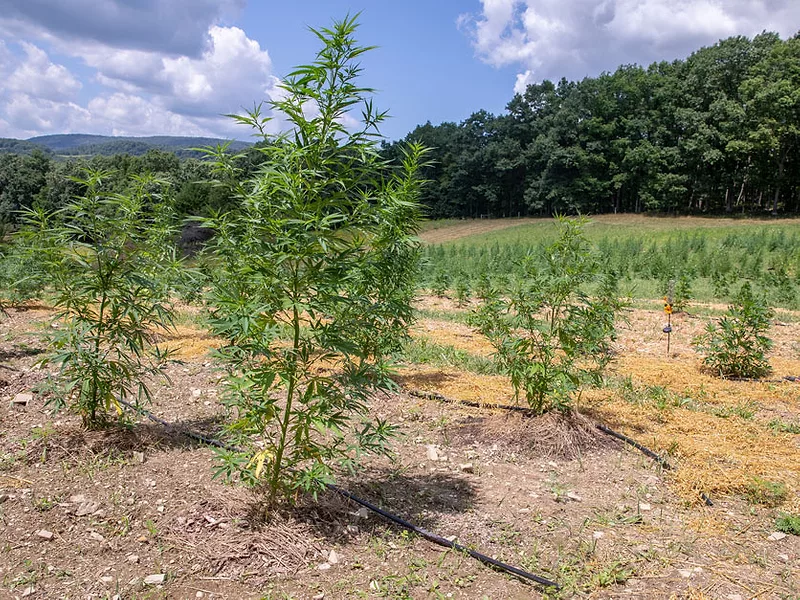
Industrial hemp is typically defined as hemp grown specifically for fiber or grain, according to Erica Stark, executive director of the National Hemp Association. Industrial hemp is cultivated like a row crop, unlike cannabinoid hemp, which is grown in a more horticultural environment for the purpose of human consumption, Stark told Agri-Pulse.
“Just by a visual inspection, you can tell within a few seconds of looking at a field what type of cultivation you're looking at,” Stark said. “It's important to understand that there is a difference — that industrial hemp is traditional agriculture, and cannabinoid hemp is more specialty, horticulture-type presentation,” she said. “Completely different end uses.”
Despite the differences, no federal definition officially delineates the two types of hemp. Stark said this creates unintended consequences at the state level when states pass laws restricting hemp-derived THC without clearly carving out a space for industrial hemp.
 Erica Stark (Pennsylvania Hemp Industry Council photo) Recently, attention has been on Texas, where Governor Greg Abbott vetoed a bill that would have banned hemp-derived THC consumable products in Texas. If enacted, reports estimated the bill would have shuttered a $5.5 billion industry. The bill was a special project of Lt. Gov. Dan Patrick, who had been exerting pressure on conservatives for months to pass the bill.
In a statement, Abbott said the bill was “well-intentioned” but had “legal defects” that would have “valid constitutional challenges” similar to the legal battle that has delayed an Arkansas ban from taking effect. Rather than “a lengthy battle that would render it dead on arrival in court,” Abbott called for a special session to create a “regulatory framework” that “aligns with federal law.”
The 2018 loophole
The 2018 farm bill removed hemp and hemp seeds from the Controlled Substances Act provided that it contains no more than 0.3% of the psychoactive component of marijuana.
Along with establishing hemp as a regulated commodity in the U.S., the bill also opened the floodgates for a new market of hemp-derived THC products. As lawmakers would soon find out, delta-9 THC was only one of more than 100 cannabinoids naturally produced by the Cannabis sativa L. plant — and as long as delta-9 THC remained under 0.3%, cultivating hemp for other cannabinoids such as delta-8 and delta-10 became legal in all 50 states.
It’s easy to be “in the know” about what’s happening in Washington, D.C. Sign up for a FREE month of Agri-Pulse news! Simply click here
But the music has stopped for the largely unregulated hemp-derived THC market in many states. In March, California Gov. Gavin Newsom extended an emergency ban he first implemented in September on all hemp-derived THC products, citing concerns of “adverse health effects,” especially for children. The ban, adopted by the California Department of Public Health, prohibits the marketing and sale of “industrial hemp food, beverages, and dietary products that contain THC or other intoxicating cannabinoids.” The ban was upheld in October by a California court.
In South Dakota, the sale and production of synthetically derived THC compounds, such as delta-8-THC, was made illegal in 2024. Many other states have passed new restrictions on hemp-derived THC consumables in recent legislative sessions.
In Montana, passage of Senate Bill 375 prohibited the sale of hemp products containing THC unless they are “authorized as a food or drug by the United States food and drug administration.”
An Alabama bill placing heavy restrictions on hemp consumables was enacted in May. The law bans the sale of smokable hemp products along with synthetic cannabinoids and places a maximum limit of 10 milligrams of total THC per any consumable hemp product or beverage.
For Kentuckians, a new law means that THC beverages are now subject to a regulatory framework similar to how alcohol is regulated. And as of Jan. 1, 2026, in Tennessee products containing 0.3% or more compounds such as THCa, THCv, Delta-8 and Delta-10 will be illegal.
Hemp, redefined
For hemp researchers like Russell Jessup, director of the Texas A&M AgriLife Research and Extension Center in San Angelo, Texas, this patchwork of regulations poses serious concerns that are “all about definitions.”
 Russell Jessup (Texas A&M photo)
While he and his researchers are working on a new type of hemp variety that will contain zero THC, he said zero-THC hemp is not possible for industrial hemp producers to grow with the varieties available. Jessup’s concern is that, in their rush to take hemp-derived THC products off shelves, lawmakers could effectively outlaw industrial hemp in the process.
“Any fiber and grain is going to have some tiny, tiny amount (of THC),” Jessup said. “So, by definition, they would be in trouble.”
Instead of fighting the battle over hemp semantics in 50 states, both Jessup and Stark said the solution to this issue lies in getting a federal definition of industrial hemp on the books. Both House and Senate Ag Committee farm bill proposals in 2024 included definitions of industrial hemp, which Jessup said would “streamline” the regulatory process, remove barriers for industrial hemp producers and create some certainty in state markets.
The House committee's 2024 bill would have added a statutory definition of industrial hemp as that grown for fiber or for the "whole grain, oil, cake, nut, hull, or any other non-cannabinoid compound, derivative, mixture, preparation, or manufacture of the seeds of such plant."
Likewise, proposals released in 2024 by the Senate Ag Committee GOP majority included a similar definition for industrial hemp that included restrictions on how the commodity “will not be used in the manufacturing or synthesis of natural or synthetic cannabinoid products.”
However, until this legislation passes, states are on their own when it comes to deciding how industrial hemp is addressed (or not) in the various THC bills across the country.
“I know the intention is not to stifle or harm the industrial side,” Stark said. “But the reality is some of these definitions can if they're not worded properly.”
For more news, go to Agri-Pulse.com.

