
Republicans forced their version of the One Big Beautiful Bill through the Senate after a dramatic, marathon vote-a-rama before Vice President JD Vance could cast the deciding tie-breaking vote shortly after noon Tuesday on the massive budget reconciliation measure.
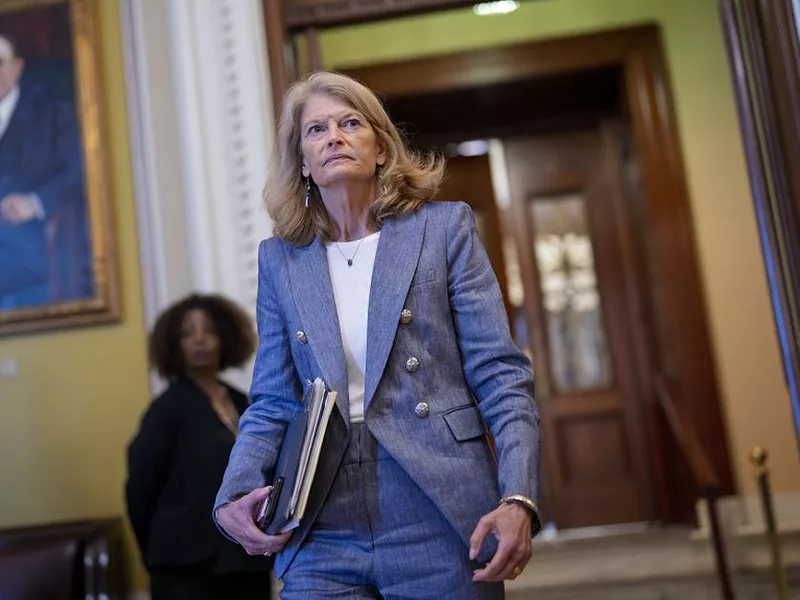
The bill’s fate wasn’t sealed until GOP leaders finally nailed down the support of Sen. Lisa Murkowski, R-Alaska, to make her the critical 50th vote for the legislation.
With the votes of Murkowski and Susan Collins, R-Maine, on the line, the final version of the bill in the form of a comprehensive amendment doubled a fund for rural hospitals from $25 billion to $50 billion to soften the impact of Medicaid funding cuts in the bill.
For Murkowski, Republicans also included a provision delaying a new state cost-share requirement for the Supplemental Nutrition Assistance Program for states with the highest error rates. The provision would effectively delay the cost-share requirement for states with error rates above 13.3%. Alaska had the highest error rate by far last year at 24.7%.
The bill now returns to the House, where GOP lawmakers will be under heavy pressure to approve the Senate versions in time for Republicans to meet President Donald Trump’s July 4 deadline for passing his top legislative priorities when it comes to spending and tax policy.
Both the Senate and House bills contain sharp increases in spending for farm programs offset by cuts to funding for SNAP. Also important to U.S. agriculture, the legislation would extend expiring provisions of the 2017 Tax Cuts and Jobs Act and expand existing business expensing provisions.
The Senate version would increase spending on farm bill programs by about $66 billion, $50 billion of which would be provided through the Price Loss Coverage program for row crops. The legislation also would lower crop insurance premiums and provide new funding for trade promotion, agricultural research, animal health, and disaster assistance.
For farm groups, some of the biggest suspense of the vote-a-rama ended Monday night when Sen. Chuck Grassley, R-Iowa, quietly ended his quest to get a vote on scaling back commodity program payment limits and tightening eligibility requirements.
In exchange for not offering an amendment, Senate Ag Committee Chairman John Boozman, R-Ark., and Grassley “agreed to work together with USDA to look at possible fraud and abuse within farm payments as well as ensuring payment limits are properly attributed,” a committee aide said.
During the vote-a-rama, Democrats trained much of their criticism of the bill on the bill’s Medicaid funding cuts and a Senate Ag provision that would force states to start sharing the cost of SNAP benefits for the first time.
Ahead of the final vote, Senate Agriculture Committee Ranking Member Amy Klobuchar, D-Minn., said this policy alone would force states to shoulder major new costs that some won't be able to absorb.
“It’s one thing to say you want to make some major reforms, some sensible reforms,” Klobuchar said. “This goes way beyond that. These are major, major shifts over to the states that can’t afford it.”
It’s easy to be “in the know” about what’s happening in Washington, D.C. Sign up for a FREE month of Agri-Pulse news! Simply click here
Given the level of funding in reconciliation for farm programs, Klobuchar said there is less incentive to get a farm bill done. However, there are still many challenges the committee needs to address in farm country such as avian flu and tariffs that could drive desire for a farm bill, she continued. She added that she and Boozman share a desire to get a farm bill done.
“Boozman and I continue to get along and that’s really important,” Klobuchar said. “These cuts to SNAP … it kind of like sours the milk.”
The Senate version included a shorter extension of the 45Z tax credit than the House bill, but included similar language on foreign feedstocks backed by farm groups. The Senate bill removes the special subsidy rate for SAF of $1.75 per gallon and makes the credit value $1/gallon, the same as other renewable road fuels. SAF advocates argued this would damage the industry, as it needs the additional investment to build up infrastructure.
However, the Ernst amendment was not brought to the floor, and the credit reduction remained in place.
Ahead of the vote, Sen. Roger Marshall, R-Kan., said $1.75 is an “expensive lift,” and noted that biofuel lawmakers got the bulk of their asks.
“I’m supportive of it, but I’m also very grateful for where we are,” Marshall said of the amendment in the midst of the vote-a-rama. “45Z is a big priority for us. Of all the things in this bill, 45Z may be what’s most important to the agriculture economy.”
The Senate bill also includes a controversial measure that moderate Republicans worry would hurt rural hospitals, even causing some to close. The final version included a policy limiting and lowering the amount a state can impose through provider taxes that enable states to qualify for federal matching funds. The federal Medicaid has in turn helped rural hospitals operating on tight margins.
During debate on the bill, Democrats joined several Republicans in voting down an amendment by Collins to double the size of the fund to $50 billion, but the larger fund was ultimately included in the final "wraparound amendment.
An analysis by the National Rural Health Association found that the original $25 billion fund would fill 43% of the shortfall rural hospitals may experience.
The Congressional Budget Office said amendments adopted during debate on the bill would increase outlays by about $90 billion, reduce revenue by $20 billion and increase deficit spending by $110 billion over 10 years. The full bill would increase deficits by an estimated $3.4 trillion over CBO's January baseline.
For more news, go to Agri-Pulse.com.


