
Farm groups are in line for big wins in President Donald Trump’s One Big Beautiful Bill, which includes significant increases in farm program spending, starting with the 2025 crop year, as well as an extension of valuable tax benefits and the 45Z biofuel subsidy.
The bill, passed by the Senate on Tuesday, still must pass the House. It includes a $66 billion increase in farm program spending over 10 years, as estimated by the Congressional Budget Office, paid for in part by historic cuts to the Supplemental Nutrition Assistance Program.
While Democrats stressed that SNAP cuts could doom the prospects for passing a stand-alone farm bill needed to reauthorize or modify programs left out of the budget reconciliation bill, the legislation would provide a broad array of financial aid to farmers, largely starting in 2026.
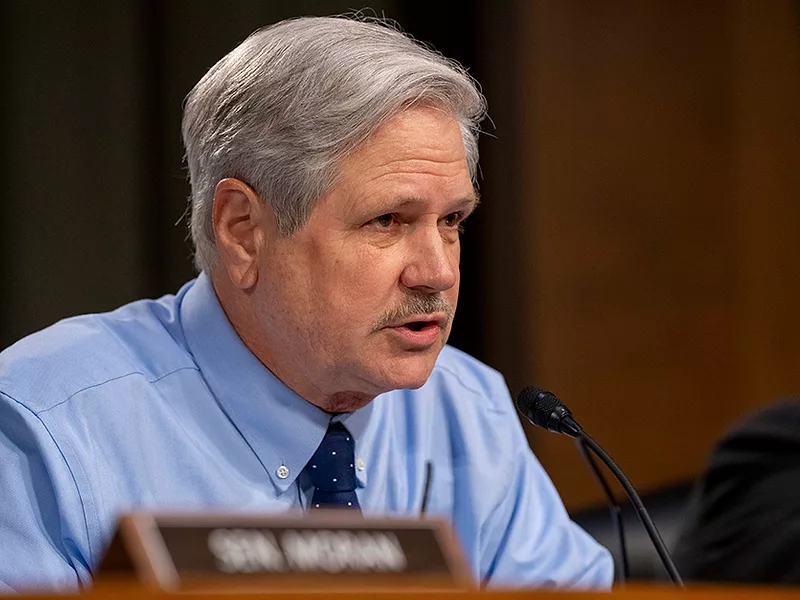
“This is going to move the needle in a big way,” said Senate Agriculture Committee member John Hoeven, R-N.D.
The biggest funding increase will be in Price Loss Coverage, about $50.4 billion over 10 years, according to CBO, reflecting an increase in reference prices of 10% and 20% and a provision allowing farmers to enroll up to 30 million new base acres. The program triggers payments on base acreage of a commodity when market prices for the commodity fall below reference prices.
But farmers who use Agriculture Risk Coverage, which provides payments based on county revenue and is especially popular with corn and soybean growers, also will benefit. The bill would raise the ARC maximum coverage level to 90% of benchmark revenue guarantee and increase the payment band to 12%. Under current law, ARC covers a payment band between 76% and 86% of benchmark revenue.
An analysis provided to Agri-Pulse by Terrain indicates wheat growers in particular could benefit from the boost to PLC.
Based on current price projections, wheat growers would likely see a payment of 80 cents a bushel from ARC and 95 cents a bushel from PLC, if the enhancements in the bill become law. Earlier this year Terrain estimated that, based on current law set by the 2018 farm bill, wheat growers would get just 28 cents a bushel under ARC and only 6 cents a bushel from PLC.
Under a provision in the Senate’s bill, farmers don’t have to worry about which program they signed up for in March, because USDA will automatically calculate which program will provide a farmer the most money for 2025 and pay them accordingly. After this year, farmers will again have to start choosing between ARC and PLC heading into planting season.
For corn and soybean growers, the latest Terrain analysis suggests ARC would remain the most lucrative program under the legislation.
It’s easy to be “in the know” about what’s happening in Washington, D.C. Sign up for a FREE month of Agri-Pulse news! Simply click here
For corn, Terrain estimates ARC would provide 32 cents a bushel on this year’s crop, compared to 22 cents under PLC. Payments for soybeans are estimated to be 70 cents a bushel under ARC, compared to 46 cents a bushel under PLC. Sorghum would see similar payments under both programs, 64 cents under ARC versus 67 cents under PLC.
 John Newton (Agri-Pulse photo)
Under current law, Terrain had projected that ARC would pay corn growers just 13 cents a bushel and that PLC offered only 6 cents for 2025 crops. Soybean growers were expected to get 47 cents a bushel under ARC and nothing under PLC.
“If expectations hold for record corn and soybean yields, PLC benefits could increase on lower prices and ARC could be reduced in areas where the yield is above the benchmark yield,” Terrain Executive Head John Newton said in an email to Agri-Pulse.
“The good news for farmers is that the higher payment would be made automatically, so they do not need to change their coverage election.”
CBO estimates the cost of ARC would rise $3.6 billion over 10 years under the bill, far less than PLC, which has long been favored by producers of southern crops, including rice and cotton.
Here are some other highlights of the reconciliation bill:
Farm programs
- For milk producers, the Senate-passed legislation as well as the original House bill would increase the Dairy Margin Coverage program’s tier I and tier II coverage levels from the first 5 million pounds of milk to the first 6 million pounds of milk. Producers also could lock in a 25% discount on DMC fees by signing up for 2026 through 2031. CBO estimates the cost of the DMC changes to be $100 million over 10 years.
- Sugar growers would benefit from increased loan rates and storage rates for both cane sugar and sugar beets.
- Lawmakers also are enhancing supplemental disaster assistance programs at a projected cost of nearly $2.9 billion.
- Both House and Senate bills increase crop insurance premium subsidies and boost the top coverage level and premium subsidy for the area-based supplemental coverage option. Subsidies on individual-based policies would increase 3% to 5% depending on the coverage level. The Senate-passed bill would allow farmers who buy SCO to also enroll in the ARC program, not just PLC. The House version limited farmers to PLC. CBO estimates increased premium subsidies will cost taxpayers $3.1 billion over 10 years and that the enhancements to SCO will cost $1.4 billion.
- Funding for specialty crop block grants would be increased from $85 million to $100 million a year and mandatory funding for the Plant Pest and Disease Management and Disaster Prevention Program would increase from $75 million to $90 million a year.
- Trade promotion programs would get a funding increase of $2.2 billion, according to CBO. Spending on agricultural research programs is projected to increase by $1.6 billion. Annual mandatory funding for the Specialty Crop Research Initiative would be increased from $80 million to $175 million. The Foundation for Food and Agriculture Research would get an additional $37 million.
Tax policy
- The Senate-passed bill makes permanent the 20% Section 199A deduction for pass-through business income. The Senate bill, as well as the earlier House version, also would increase the estate tax exemption to $15 million for an individual, or $30 million per couple, and index the limit to inflation. The higher exemption would be permanent.
- The Section 179 expensing limits would be increased and full bonus depreciation would be restored. The amount a business can expense through Section 179 would be raised to $2.5 million and reduced by the amount the investment exceeds $4 million.
Biofuels
The 45Z clean fuels credit was a subject of intense negotiations down to the last minute in the Senate. Under the Senate’s final version, the credit would be extended two years, from 2027 to 2029 but the credit value for sustainable aviation fuel would be cut from $1.75 a gallon to $1, the same rate as for biomass-based diesel.
Senate Ag Committee Chair John Boozman, R-Ark., told Agri-Pulse that supporters of the 45Z worked hard to get an increase for its use in sustainable aviation fuel. He sees future opportunity to adjust SAF provisions through appropriations or future budget reconciliation.
The 40A credit for biodiesel plants that produce less than 60 million gallons a year also would be extended and increased. Eligible producers would get an extra 20 cents per gallon on the first 15 million gallons.
Rebekah Alvey contributed to this report.
For more news, go to Agri-Pulse.com.

