
|
An Agriculture Department pause on Rural Energy for America Program grants could lead to farmers in certain states losing guarantees of funding for some projects already underway, grant writers tell Agri-Pulse.
USDA paused new REAP grant awards earlier this year so it could implement new regulations under an executive order tasking agencies with reducing subsidies for wind, solar and other “green” energy sources. But the pause also could cause applicants already working on projects to lose their awards since some states have rules that don’t allow grant agreements to be fully executed until after projects are finished, grant writers who work with program participants say.
REAP "will not be making further grant awards until the new regulations are in effect,” when the agency will publish a new notice of funding opportunity, a March 31 stakeholder announcement from the agency says. It also notes that “any applicants who previously submitted an application will have the opportunity to reapply,” which would apply to all applicants who “do not possess a fully executed Financial Assistance Agreement.”
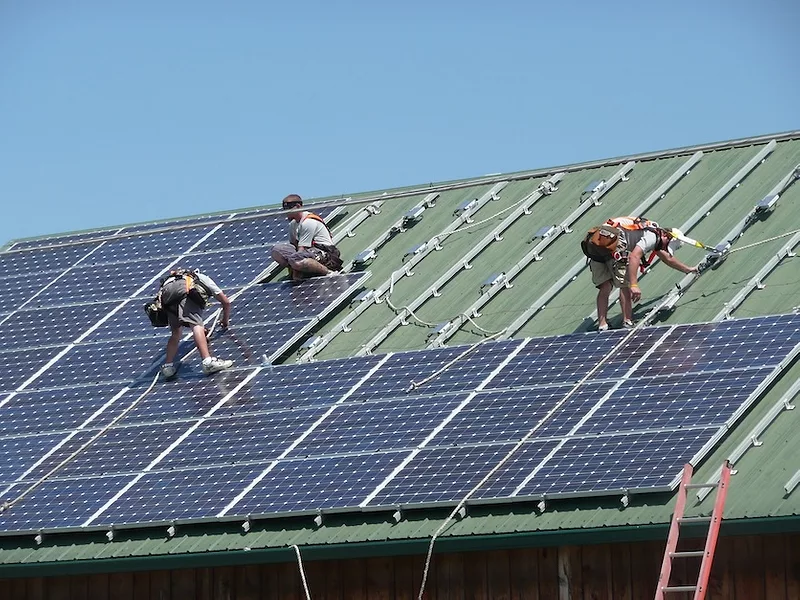
REAP, created by the 2008 farm bill and administered by USDA’s Rural Development division, provides grants and guaranteed loans for on-farm renewable energy sources like solar, biomass, wind and geothermal, just to name a few. It also funds adoption of energy-efficient technologies like grain dryers.
Veronica McFadden, a grant writer and the CEO of Sun Grants Consulting, said each state Rural Development office has its own timelines and processes for executing grant agreements. Some states, like Illinois, don’t sign them until the project is complete and the customer requests reimbursement funds, she noted. Others, like Iowa and Wisconsin, sign theirs earlier in the process.
As a result, she said customers who had signed and submitted forms to some state RD offices expect to lose awarded funding, since agency officials have not yet finalized those forms. She said two of her clients whose projects had been awarded funding have now found themselves in this situation.
“It’s just heartbreaking,” McFadden said of the situation. "Customers are dealing with increased farm costs, tariffs, and then high electricity costs. They're in a bind. This is one step to address those issues, and now, here, they get chopped off at their knees and they can’t.”
Some impacted applications date back to 2024, she said.
A statement provided by a USDA spokesperson said, “bringing regulations in line with the Trump administration’s priorities to end market-distorting subsidies for unreliable, foreign-controlled energy sources is a top priority for the USDA.” It said the halt in the distribution of grant awards is only in effect until the new regulation is complete. Once that's done, the agency will make funding available.
Interested in more news on farm programs, trade and rural issues? Sign up for a four-week free trial to Agri-Pulse. You’ll receive our content - absolutely free - during the trial period.
The spokesperson also said the agency last obligated REAP grants on Sept. 30 of last year, and that no REAP grant awards have been made in fiscal 2026. USDA said guaranteed loan applications "are still being accepted and loans obligated” and one REAP guaranteed loan has been made in this fiscal year.
The person also said that with the recent announcement “no funds are paused as there is not a notice of funding opportunity currently open for the program.”
"We want to make certain that we are funding projects that will actually benefit rural America, that make economic sense and that don't unnecessarily impact productive farmland,” Deputy Agriculture Secretary Stephen Vaden told ag reporters Tuesday at the North American Agricultural Journalists annual meeting. "And so until we have those regulations in place, it doesn't make sense to issue new awards under the program.”
“Having said that, we are working to get those regulations in place expeditiously, and I expect them in place this year,” Vaden added.
According to a USDA frequently asked questions document, REAP guaranteed loans are still being accepted and certain solar voltaic and wind applications are eligible for guarantees. However, renewable energy systems and energy efficiency applications for fiscal 2026 are not currently being accepted, it says.
Justin Barnhart, an Ohio-based grant writer and Republican political consultant, said he also has heard from customers in Illinois that are losing awarded funds as a result of the USDA decision. He said if that agreement has not been fully executed, the agency is “considering that they do not have a grant agreement in place."
“Taking money from people that had funds obligated to them is not only confusing, it’s wrong,” he said. “They had those funds obligated. Basically, the government wrote a check and then canceled it.”
House Ag Committee Ranking Member Angie Craig, D-Minn., and 23 other House Democrats told Agriculture Secretary Brooke Rollins in a letter Tuesday that they had “deep concerns” about the pause of grant awards.
"Farmers are looking for anything they can find to lower their input costs and diversify their incomes,” they wrote. "Shutting down a popular grant program that can do just that is a slap in the face to farmers who need a lifeline.”
National Sustainable Agriculture Coalition Policy Specialist Richa Patel said the recent halt in new awards is “really eroding the trust that folks are having in USDA programs.”
“Folks who have been sitting waiting to apply for the REAP program are getting more and more and more frustrated,” she said, adding that REAP "had been operating on such a regular cadence before this and it was considered a known entity.”
Pause comes after period of uncertainty for REAP applicants
Data provided to the Environmental Law and Policy Center under a Freedom of Information Act request suggest there were 128 projects awarded farm bill REAP grants between Jan. 22 and May 31 of last year, according to ELPC policy advocate Matt Ohloff. That’s the most recent dataset the group has obtained from the agency, he said.
An analysis of federal grant data by NSAC research analyst Becky Schewe found that for FY2025, a total of $373.5 million in REAP grant funding had been obligated, while $107.3 million was outlaid, or disbursed. There were a total of 2,307 REAP grants that fiscal year, though 1,301 of them had no dollars outlaid, according to the analysis.
The analysis also found that 23 REAP grants funded through the Inflation Reduction Act were obligated after inauguration last year, though 20 of these were obligated in late January. Three others had base action dates of Sept. 29, 2025, Schewe found. A base action date is the are date that funds are obligated.
Schewe found another 340 REAP awards funded through general farm bill dollars with base action dates spread between February and September. Another 58 grants with base action dates following Trump’s inauguration "do not have a Treasury account or federal account associated with them at all,” Schewe's analysis said.
Early last year, the Agriculture Department froze payments for REAP projects funded through the Inflation Reduction Act following a Jan. 20 executive order that called for all agencies to “immediately pause” funds from the 2022 bill. The agency lifted the freeze on REAP funds in late March but gave awardees 30 days to modify their proposals to remove climate and Diversity, Equity and Inclusion considerations and bring the projects in line with the Trump administration’s policy for increasing U.S. energy production.
Patel said applicants expected USDA to open an application window for the program from July 1 through Sept. 30, 2025. However, Rural Development Deputy Undersecretary Todd Lindsay announced in mid-July the agency would instead use the remainder of July to “implement the secretary’s direction to disincentivize solar panels on productive farmland for future application windows,” according to a notice released to stakeholders. The notice said the agency would open the grant application window for FY2026 payments on Oct. 1.
In a memo sent to field staff the following month, Rural Business-Cooperative Service Administrator J.R. Claeys announced that REAP projects with ground mount solar photovoltaic systems larger than 50 kilowatts, that cannot document historical energy usage, or proposing to be installed on certified cropland, and solar photovoltaic systems with components made by foreign adversaries would be ineligible for REAP guaranteed loans and disincentivized in program grants.
While Lindsay’s July notice had said the agency would be opening applications on Oct. 1, the federal government shut down amid a disagreement in Congress over a government funding bill. After it reopened on Nov. 12, Patel said the agency had not sent out any notices of funding to prospective applicants.
McFadden said that once the shutdown ended, state coordinators were confused about whether the grant cycle had opened, with some indicating they’d accept applications and others saying they wouldn’t. She said some states did informally accept applications but did not issue a formal notice.
Biodigester, controlled environment agriculture loan guarantees also paused as agency investigates delinquencies across portfolio
In a separate action, USDA in early April also extended a pause of all guaranteed loans for biodigesters and controlled environment agriculture programs in Rural Business Cooperative Service programs through the end of December. REAP is among the guaranteed loan programs impacted by the pause.
The pause was first put in place in January, and also extends to vertical farming, hydroponics, aeroponics and aquaponics projects.
On April 2 of this year, Claeys wrote in a memo that “a recent snapshot shows Controlled Environmental Agriculture projects have a 40% delinquency rate inside” the agency's portfolio. Meanwhile, biodigesters have a 28% delinquency rate. He said that this is on top of realized losses, he said.
Claeys wrote that the extended pause would help support the agency’s development of sector specific underwriting guidance, would help it assess lender eligibility, expertise and oversight requirements, strengthen collateral evaluation and loss mitigation, and ensure future approvals "reflect a sustainable and fiscally responsible approach.”
"The choice is clear: We can continue approving projects we have reason to believe will fail, or we can preserve capital for job creating rural projects we have strong confidence will succeed,” Claeys wrote. "This extension ensures that the latter prevails.”
In an earlier memo from January, Claeys wrote that $102.6 million loans for biodigester projects were delinquent, while $311.9 million in controlled environment agriculture loans are delinquent.
An Agri-Pulse analysis of USDA loan data found that within REAP specifically, 13 of 486 loans are delinquent. Vertical Harvest Maine, a Maine-based controlled environment agriculture farm, has three delinquent loans in total, owing $23.7 million for all combined.
Within REAP, two loans for biodigesters are delinquent. Ringler Energy owes $696,492 for one project, while Dovetail Energy owes $891,179. Both companies are based in Ohio.
The operator of a third digester project owes money under a Rural Development program, but not through REAP. Wisconsin-based BC Organics owes $100.9 million for two loans made through the agency’s Biorefinery, Renewable Chemical, and Biobased Product Manufacturing Assistance Program.
Patrick Serfass, the executive director of the American Biogas Council, said the REAP program “has always been important to the biogas industry” and that the pause “is definitely impacting project development.” He also said the four digester projects represent only a fraction of overall digester funding in USDA’s loan portfolio.
“The more we learn about those projects, the more surprised we are that there's a pause on this program in the first place,” Serfass said. "I think the pause and the extension of the pause is a much stronger reaction to what we understand has actually happened with these projects."
Friends of the Earth, Earthjustice, the Institute for Agriculture and Trade Policy and other environmental groups petitioned for a rulemaking deeming manure digesters ineligible for REAP funds on Jan. 14, the same day the pause on biodigester loan guarantees was first established. However, a USDA spokesperson said Claeys' notice halting digester loan guarantees was not prompted by the petition and was drafted before Rural Development had received it.
The environmental groups’ petition argues that funding manure digesters “runs directly counter to Congress’s intent to strengthen rural communities and economies and protect the environment” by causing "water and air pollution that threatens community members’ health.” It asks for a regulation that would state USDA no longer gives grants or loan guarantees to manure digesters.
The petition also says manure digesters that received loan guarantees between FY2021 and FY2025 generate 4.5 times less energy per public dollar than solar projects. It also pointed to construction costs of between $2 and $12 million and said digester projects "are unlikely to recoup their high costs.”
Kara Goad, an associate attorney at Earthjustice, said that between FY2021 and FY2025, her group found the average loan guarantee for a digester through REAP was $18.6 million. In contrast, she said loan guarantees for solar projects during that time were about $6.5 million.
“We talk about how REAP, you know, its purposes include things like environmental benefits and supporting rural economies," Goad said. "And, you know, we can kind of see that digesters fall short under both of those goals."

