
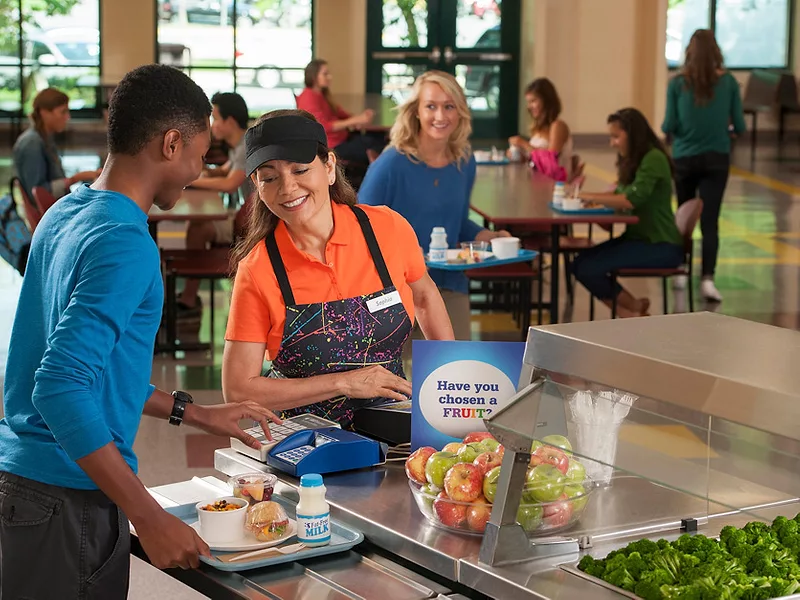
Starting last fall, students at all schools in the Laveen Elementary School District in Arizona were able to receive free breakfast and lunch without needing to fill out applications to determine their eligibility.
District nutrition directors said allowing all kids to get free meals cut barriers in school administration and reduced the stigma often tied to receiving free or reduced meals. In the first year of implementation, there was a 12% increase in lunch participation, which equates to about 140,000 additional meals.
“We were able this year to really just focus on feeding the kids and not so much of the administrative work,” said Jennifer Gordon, child nutrition director for the district.
Laveen schools were able to offer this because they qualified for the community eligibility provision through USDA. Eligibility is determined by levels of students on SNAP and other federal programs.
CEP adoption has increased over time to reach millions of students. But school nutrition advocates are concerned that SNAP cuts required by the budget reconciliation bill that President Donald Trump signed into law July 4 could lead to schools losing eligibility or getting less reimbursement for free meals.
Under the CEP, schools are reimbursed for free meals based on the identified student percentage, which is the number of students directly certified, divided by enrollment. Direct certification is determined by the student’s enrollment in other federal programs like SNAP and Temporary Assistance for Needy Families. Some states also allow direct certification for students enrolled in Medicaid.
That's where the reconciliation bill comes in. It's expected to cut federal SNAP funding by $186 billion through 2034, according to the Congressional Budget Office. The Center on Budget and Policy Priorities estimates expanded work requirements and other provisions in the bill will put millions of SNAP recipients' benefits at risk, including nearly 1 million children.
Neither the original House bill nor the final Senate version would have directly cut CEP, but the cuts to SNAP mean there will be indirect impacts on school meals, said Katie Bergh, a senior policy analyst on CBPP’s food assistance team.
 Katie Bergh, CBPP (LinkedIn photo)
Based on the initial House version of the bill, the CBO estimated about 420,000 students would lose access to free school meals because of the state cost-share provision. Some states have also warned that this provision would shift costs that they are unable to handle, which could push them to opt out of SNAP entirely.
While this outcome is unprecedented and hard to fully predict, Bergh said SNAP is a significant contributor to the ISP that determines CEP. Therefore, a state opting out of the program would have significant impacts on CEP-eligible schools and districts.
Students 130% below the federal poverty line would still qualify for school meals, but households would need to apply.
“We obviously know that anytime you erect a paperwork barrier, people who are eligible fall through the cracks and lose access to the support that they need,” Bergh said.
Direct certification is the process by which states can automatically enroll students in free meals if they are receiving benefits from other assistance programs. It can also make students automatically eligible for summer Electronic Benefits Transfer (EBT) and the Special Supplemental Nutrition Program for Women, Infants, and Children (WIC).
Interested in more news on farm programs, trade and rural issues? Sign up for a four-week free trial to Agri-Pulse. You’ll receive our content - absolutely free - during the trial period.
This significantly reduces the paperwork barriers for families and for schools that don’t have to certify eligibility.
“We are concerned about kids missing out on meals because their parents don’t know to apply, they don’t know how to, they might be hesitant to because of immigration status,” said Diane Pratt-Heavner, director of media relations with the School Nutrition Association.
 Diane Pratt-Heavner (SNA photo)
Students who are not directly certified have to apply annually for free or reduced-price meals. Families have to prove income, unemployment, social security, workers' compensation and more. All this information can be challenging for working families, and a major change-up for families that have been directly certified for years, Pratt-Heavner said.
If a family is unaware that they now have to apply for free or reduced meals, they could begin to accrue a debt, which is an additional challenge.
Challenges for schools
While these scenarios pose a significant concern for students and food access, it could also put a strain on schools.
School nutrition professionals are already short-staffed, said Pratt-Heavner. The Biden administration finalized a rule issuing new federal nutrition standards for school meals, and nutrition directors are working to modify menus and adapt to these new rules.
If a significant number of students lose direct certification, or a school loses CEP entirely, those school meal administrators would need to educate families on the free meal application process. If more meal debt is accrued, administrators would have to follow up with those families and attempt to collect that debt.
“Any increase of administrative burden on school nutrition programs is a detriment to the mission of focusing on serving students,” said Pratt-Heavner.
This all comes as federal nutrition programs, including school meals, have come under scrutiny by Health and Human Services Secretary Robert F. Kennedy Jr. and the "Make America Healthy Again" movement. Kennedy has criticized the level of ultraprocessed foods in school meals.
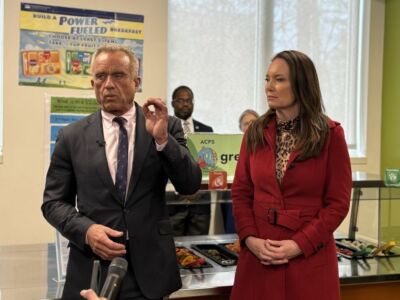 RFK Jr. and Ag Secretary Brooke Rollins (Agri-Pulse photo)
The MAHA Commission report, released in May, also listed the national school lunch and breakfast programs as contributing to negative health conditions among children by failing to set limits on ultraprocessed foods. The report states this leads to excessive intake of sugar, processed carbohydrates and fats.
Pratt-Heavner said school meals are the healthiest meals Americans consume because of existing nutrition standards. She said the administration should focus on ensuring as many students as possible have consistent access to these meals.
CEP and direct certification can also free up time and resources for school nutrition administrators to strengthen the program, said Erin Hysom, a senior child nutrition policy analyst with the Food Research and Action Center. This could mean increasing local foods in school meals, getting feedback from students on what they want to eat and implementing culinary training for staff.
CEP is on a four-year cycle, which means Laveen schools should be unaffected through the 2028-2029 school year. But Gordon said she’s concerned cuts to SNAP and Medicaid will lower the direct certification rates when it’s time to reapply. This could mean fewer schools could qualify for CEP, or it could decrease the federal reimbursements and revenue they receive.
If school reimbursement levels dramatically decrease, it could make it “financially infeasible” for some schools to continue offering free meals to all students.
“Cuts to SNAP are cuts to school meals,” said Hysom. “Cuts to SNAP that reduce the number of children receiving SNAP benefits will break that link to free school meals, eligible children will fall through the cracks, and paperwork burdens will increase for families and school nutrition department.”
For more news, go to Agri-Pulse.com.

