
The U.S has withdrawn from a tomato suspension agreement with Mexico, paving the way for new duties on inbound tomatoes. As of today, imported tomatoes from Mexico will face antidumping duties of between 2.8% and 273.4%, with most imports subject to a 17% rate.
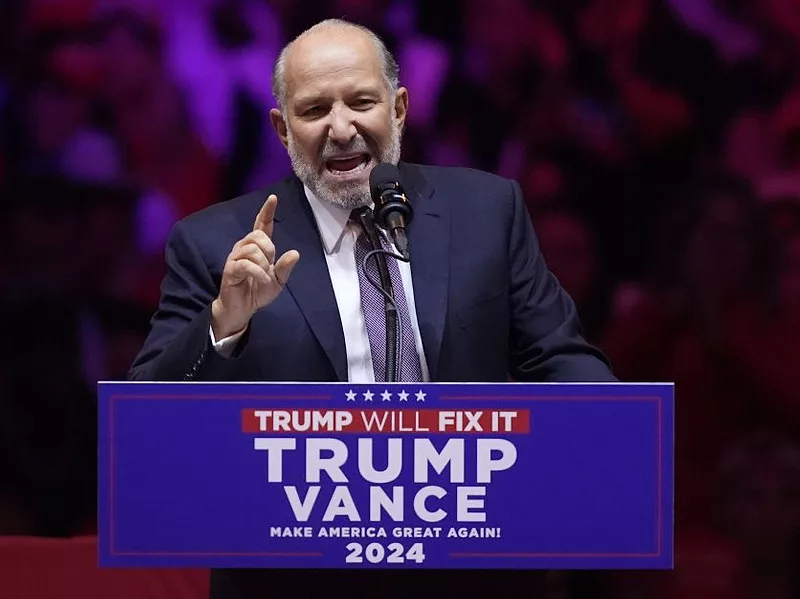
Commerce Secretary Howard Lutnick said “Mexico remains one of our greatest allies, but for far too long our farmers have been crushed by unfair trade practices that undercut pricing on produce like tomatoes. That ends today.”
The U.S. withdrawal came in the face of intense lobbying from groups representing importers and growers with cross-border operations, as well as from lawmakers in states that benefit from imported tomatoes. In the days leading up to the agreement, aides to Texas Gov. Greg Abbott, Arizona GOP Rep. Andy Biggs and Texas GOP Sen. John Cornyn all pressed the administration to reconsider the decision, according to International Trade Administration filings.
The “decision is an enormous victory for American tomato farmers and American agriculture,” said the Florida Tomato Exchange. The group has petitioned successive administrations to scrap the deal. “We commend Commerce Secretary Howard Lutnick for his clear-eyed assessment.”
Trump turns to tariffs as cudgel for Ukraine peace
President Donald Trump is warning that he could impose tariffs on countries that do business with Russia if President Vladimir Putin and Ukraine can’t reach a peace deal in 50 days.
“We're going to be doing secondary tariffs if we don't have a deal,” Trump told reporters in the Oval Office alongside NATO Secretary General Mark Rutte.
This is the second time in as many weeks that the president has threatened new tariffs for reasons not directly linked to trade and economic policy. Last week he threatened Brazil with 50% duties over its prosecution of its former president and Trump ally, Jair Bolsonaro.
Take note: The White House has been sending letters out informing countries of their new tariff rates after Aug. 1 if they are unable to negotiate a deal with the U.S. But on Monday Trump said that he’d rather not negotiate deals to lower the duties.
"I really don't want deals. I just want the paper to get sent. It's true," he said during a White House event. The tariffs, he said, “have barely started.”
MAHA news: FDA OKs natural ingredient, ice cream makers pledge dye removal
U.S. health officials are touting the approval of a new natural dye — gardenia blue — even as ice cream makers commit to phasing out the use of artificial colors,
Appearing at USDA along with his boss, Health and Human Services Secretary Robert F. Kennedy Jr., FDA Commissioner Martin Makary announced the “fourth natural food dye from natural ingredients” approved by the FDA since the Trump administration took over.
“We believe in incremental improvements in health,” Makary said. “The sickness of American kids is not a will power problem. It's not their fault. We can do things that will make the food supply healthier one step at a time.”
It’s easy to be “in the know” about agriculture news from coast to coast! Sign up for a FREE month of Agri-Pulse news. Simply click here.
But, but, but: Even as brands are moving toward natural food dyes voluntarily, some speakers at an Institute of Food Technologists’ meeting in Chicago said the supply chain can’t sustain a 100% transition away from synthetic dyes.
David Schoneker, president of Black Diamond Regulatory Consulting, said it often takes more natural dyes to reach the same vibrancy of a synthetic one. And growing the source of natural dyes, like beets, would also have to rapidly increase.
“It's simply not a feasible possibility regarding the reformulation issues, but a lot of what's not being talked about is the supply,” he said of phasing out synthetic dyes on a short timetable. “There's not enough natural color available today in the world to take the place of this volume of synthetic color.”
Other speakers noted that FDA reviews and approvals for natural dyes can take years, and many of the dyes now getting approval had been in the hopper long before the Trump administration.
Take note: The White House touted the move by ice cream makers and other voluntary action by companies under the MAHA umbrella. In a release, they said the In-N-Out Burger chain had switched to beef tallow. However, the post they linked to backing up the claim was from an unofficial, fan account for the chain posted on April Fools’ Day. The chain has not made this transition, according to the San Francisco Chronicle.
Read our coverage of the ice cream makers’ commitment here.
Senate Democrats look to block Prop 12 preemption
Thirty-two Senate Democrats are urging Senate Agriculture Committee leaders not to include preemption of California’s Proposition 12 in a new farm bill.
In a letter, the senators caution Senate Ag Committee Chair John Boozman, R-Ark., and ranking member Amy Klobuchar, D-Minn., against including the Food Security and Farm Protection Act in the upcoming bill, arguing it could have ramifications for state laws on invasive pests, health and safety standards, food safety and fishing regulations.
They also argue the bill threatens “countless state laws” and opens “the floodgates to unnecessary litigation.”
"The bill is particularly draconian in that it aims to negate state and local laws when there are no federal standards to take their place, creating an overnight regulatory vacuum,” they write.
Final word
“Ultimately, we have to move to a 100% American workforce. Now, a lot of this … can be solved through automation. We are looking at that very closely and working with a lot of our great farmers around the country.” — Agriculture Secretary Brooke Rollins, talking on Fox Business about the future of farm labor.
She also reiterated that she thinks expanded work requirements for government programs will increase the ag labor pool.
Rebekah Alvey, Oliver Ward and Noah Wicks contributed to today’s Daybreak.


