
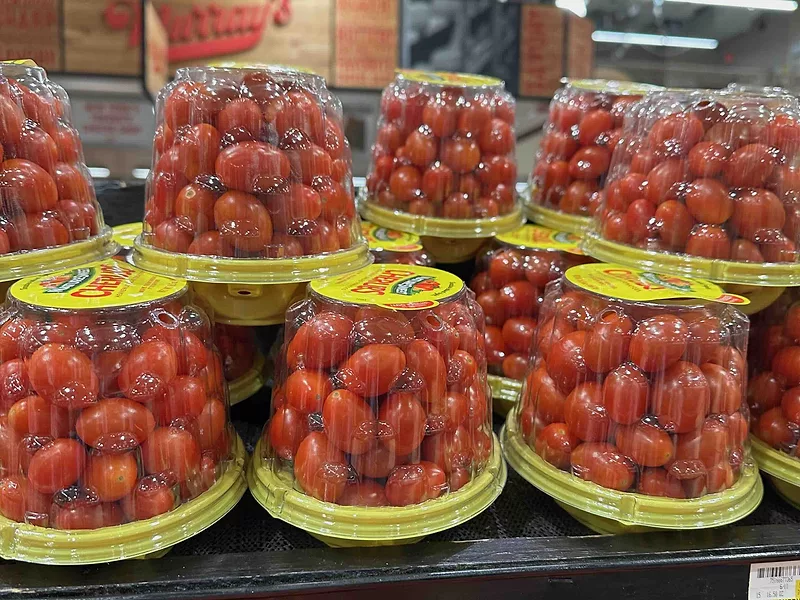
Critics of the Trump administration’s decision to scrap an antidumping duty détente with Mexico and impose new tariffs on tomato imports see multiple avenues for getting the tariffs lifted and aren’t giving up lobbying.
“We're still going to fight with everything we can to have tomatoes removed from antidumping duties or to have a new agreement put in place,” Lance Jungmeyer, president of the Fresh Produce Association of the Americas, told Agri-Pulse.
Earlier this month, the U.S. withdrew from a tomato deal with Mexico that had been in place since 2019 -- the latest iteration of an agreement initially established in 1996. Under terms of the agreement, Mexican tomato growers agreed to sell their products in the U.S. above a minimum floor price in exchange for the U.S. refraining from imposing antidumping duties.
With the deal’s termination, the U.S. has imposed tariffs of 17% on most Mexican tomatoes.
But Jungmeyer said he will continue to work with allies in Congress and across Texas, Arizona and California who want the deal reinstated and push for an alternate solution. The case for returning to the negotiating table to hash out another suspension agreement, Jungmeyer added, could soon strengthen when consumers begin to notice price increases at the grocery store.
Mexico provides as much as 70% of the tomatoes consumed in the U.S. Many are greenhouse-grown, vine-ripened tomatoes of various varieties that have no equivalent domestic production, Jungmeyer argued.
“This antidumping duty is not going to magically create more vine-ripened tomatoes in Florida,” he said, because Florida growers produce mature green tomatoes. With new tariffs in place and a loss of competitiveness in the U.S. market, Jungmeyer argued that some Mexican growers will pivot to other food products, constricting supply.
“After the market settles out and people quit growing more tomatoes in Mexico, we'll see a supply drop and a price increase,” he predicted.
The legal front
In May lawyers for Mexican tomato growers filed a petition asking the U.S. International Trade Commission to reexamine whether antidumping duties are needed to protect the U.S. tomato industry.
The groups argue that the U.S. tomato market has changed since the commission last studied the landscape in 2019. A shift in consumer demand and U.S. investment in Mexico to supplement their U.S. operations and ensure year-round supply, they say, have created a segmented market and that imports no longer pose a threat to U.S. producers.
It’s easy to be “in the know” about what’s happening in Washington, D.C. Sign up for a FREE month of Agri-Pulse news! Simply click here
The commission was already reviewing the 2019 suspension agreement, but with the deal terminated, that review is alive but in limbo. The new request would ensure that the commission will carry out a review, even if the earlier review is scrapped.
USITC last week collected public comments on whether circumstances have sufficiently changed to warrant a new probe into whether Mexican tomatoes present a risk of injury to U.S. producers.
“We certainly feel that if the dumping investigation occurred today, they would not find dumping,” Jungmeyer said.
 Lance Jungmeyer (Wilson Center photo)
But Matthew Nolan, an attorney at ArentFox Schiff who represents NatureSweet, isn’t optimistic that the USITC will overturn the antidumping order.
“That’s a difficult one to win,” Nolan told Agri-Pulse. “The commission tends to be conservative about this sort of thing.”
“It is a possibility. It’s just it's not a high-percentage possibility,” he added.
Broader US-Mexican trade talks
A political solution might be a more feasible outcome. The issue could feature in ongoing U.S.-Mexico tariff discussions. President Donald Trump has threatened to increase Mexico’s tariff rate from Aug. 1 unless President Claudia Sheinbaum’s government steps up efforts to curb the flow of fentanyl and migrants into the U.S.
At a press conference Friday, Sheinbaum told reporters that her government aims to reach an agreement with the U.S. on tariffs before the Aug. 1 deadline. A negotiating team was in Washington last week, she said, for talks with U.S. counterparts.
At the same conference, she also committed to supporting Mexican growers affected by the tariffs, including by increasing exports to Asian countries like Japan.
“There is always the possibility of a government-to-government agreement,” Nolan said.
The U.S.-Mexico-Canada Agreement is also up for review in 2026. Jungmeyer noted that the review is not his preferred venue for negotiating a solution because importers would eat the tariffs for at least a year. Nonetheless, Nolan expects the issue at least to be raised in the talks.
“I would expect the Mexican government to try to include it in those discussions,” Nolan said.
“But what is the reaction to the Florida producers going to be to that?” Nolan added. “So far, they have shown little interest in trying to participate in any kind of a negotiated settlement or revision to manage the trade.”
Florida growers and their allies on Capitol Hill are an ongoing obstacle to efforts to lift the tariffs. They have proven a formidable lobbying force, with access to senior administration officials.
For a political agreement to succeed, Nolan said, it should be acceptable to all interested parties.
“At this point, the Florida tomato growers are apparently not particularly interested,” Nolan said. “That's not to say that you couldn't come up with something that might be of interest, but right now, I don't see much of it right there.”
For more news, go to Agri-Pulse.com.

