
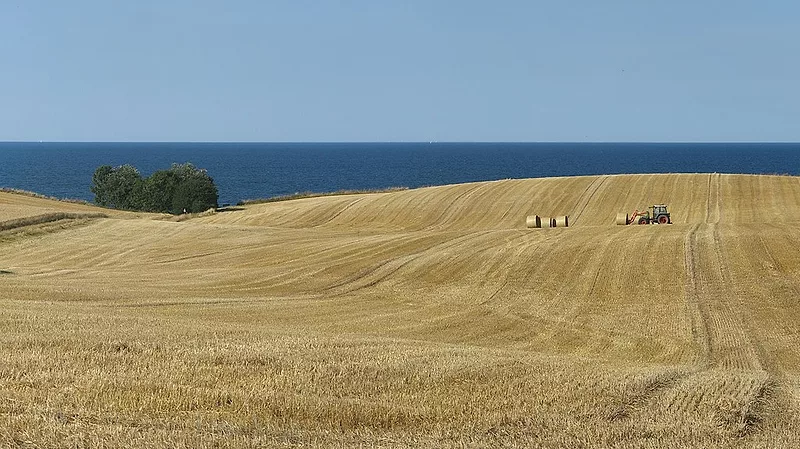
The Danish government and a preeminent farm industry group believe that a new pact can be a model for other countries seeking to reduce agricultural greenhouse gas emissions. But European farm groups have doubts that the negotiating model is scalable.
In November the Danish parliament voted to adopt the “Agreement on a Green Denmark,” which included a slate of initiatives for slashing agricultural emissions. The deal resulted from months-long negotiations between the government, the Danish Agriculture and Food Council and the Danish Society for Nature Conservation to craft a package that was palatable to farmers and environmentalists, while furthering Danish climate goals.
Among the agreement’s measures are a phased-in tax on livestock emissions, incentives to reduce nitrogen run-off, funding for forest restoration and expedited approval of new technology.
Denmark has set the lofty goal of slashing economy-wide greenhouse gas emissions by 70% by 2030, with 55% to 65% reductions in the agricultural sector. The policies adopted in the tripartite agreement ultimately reflect Denmark’s unique political landscape and deep-rooted commitment to curbing emissions, and may not be suitable or politically feasible for other governments. But the negotiating model of putting ag representatives around a table with environmentalists and government ministers, with portfolios covering the economy, tax, climate, environment and agriculture, could serve as a workable model for other governments, participants say.
“We want to show other countries outside Denmark that you can develop your agriculture – you can have a strong agriculture – and at the same time reduce the emissions,” Niels Peter Nørring, climate director at the Danish Agriculture and Food Council, told Agri-Pulse.
 Niels Peter Norring (LinkedIn photo)
Denmark is also in a position to influence the European climate agenda. On July 1, Denmark began its six-month rotation in the presidency of the European Council – one of the European Union’s two legislative bodies, alongside the European Parliament. Denmark’s presidency comes as the bloc undergoes a rebalancing of climate and competitiveness goals.
Europe’s climate rethink
The EU’s climate policy has whipsawed somewhat in recent years and left some agricultural groups feeling ignored at times in EU policymaking. In May 2020, the bloc launched its farm-to-fork strategy as part of what was touted as the European Green Deal. The initiative aimed to reduce pesticide and fertilizer use, boost organic farming, reduce food waste and strengthen animal welfare.
A string of farmer protests and intense industry pushback followed, and the bloc has walked back some of the more ambitious goals and efforts, including a push to cut fertilizer use in half by 2030.
“There were many in the agri-food sector, who felt that she was going too fast", Meghan Sapp, external relations director at the European Alliance for Regenerative Agriculture, told Agri-Pulse, referring to European Commission President Ursula von der Leyen.
Part of the problem, critics argued, was that the Directorate-General (DG) for Health and Food Safety had led the strategy, not the DG for Agriculture and Rural Development. Accordingly, many farm groups and industry stakeholders felt voiceless in the policy debate.
The European Commission stood up a strategic dialogue on the future of EU agriculture last year, involving 29 major agricultural stakeholders from agri-food, civil society, rural communities and academia, according to the Commission. The panel's recommendations ultimately shaped the new “Vision for Agriculture and Food” published in February. But the process still resembled a typical regulatory process in many advanced economies whereby industry offers input and officials decide what to incorporate and what to omit.
The Commission established a new agriculture and food advisory board this year to offer ongoing feedback on EU ag policy, but Sapp pointed out that the limited convenings and “lack of actual opportunities to input” are already causing frustration among members.
Putting agriculture in the negotiating seat, as the Danish government did, rather than on the sidelines offering advice as the EU and other governments tend to do, Nørring said, has resulted in a fairer and more feasible policy that should better preserve ag industry competitiveness.
Among the adjustments the Danish Agriculture and Food Council negotiated during the tripartite talks, Nørring said, was a more limited scope for livestock emissions tax.
It’s easy to be “in the know” about agriculture news from coast to coast! Sign up for a FREE month of Agri-Pulse news. Simply click here.
“When we went into the room, [the proposal] was a general tax on greenhouse gases from agriculture. But we narrowed it to only be livestock,” Nørring said. Over the course of discussions, the council was able to narrow it further. The final tax “only covers emissions from the stables and from the storage of manure,” he noted.
Further, the council also pushed to ensure that the most climate-efficient farmers would be able to avoid the tax entirely, clearly incentivizing farmers to cut their emissions. The group also advocated for using the tax revenues to fund green investments on farms — which prevailed, despite others arguing that the money should be spent on forest regeneration.
The farmers didn’t get everything they were asking for, however. Nørring noted that they had to swallow a tax on lime use that could eventually be implemented. But the back-and-forth over policy and three-way negotiations inspired participants to accept compromises and attempt to “find a solution — not digging ditches deeper,” Nørring said.
Is it scalable?
The commission is exploring expanding its emissions trading scheme and seeking ways to integrate agriculture. Challenges that plagued Farm to Fork and ongoing restlessness from EU farmers and agricultural groups should spur reexamination of climate policymaking, some analysts say.
“Dialogue is extremely important and is something that is absolutely lacking,” Sapp said, adding that she would welcome “progressive leadership” from the Danes on climate policy.
“There is such an urgency,” Sapp added. “We see the floods. We see the impacts. We see the droughts, we can't wait any longer. … Policymakers are absolutely looking for solutions.”
 Meghan Sapp (LinkedIn photo)
But others were skeptical that such an approach would work at the EU level, where policymakers have to find workable solutions across a diverse range of countries and agricultural sectors.
“There would be a lot of hurdles,” said Alice O’Donovan, secretary general of the European Liaison Committee for the Agricultural and Agri-food Trade. It’s “much easier to achieve something like that in a smaller country,” she added, which enjoys greater alignment within the domestic agricultural sector and more homogenous production processes and economic conditions.
Nørring described how between tripartite meetings, the Agriculture and Food Council met with other agri-food stakeholders, including major companies and commodity groups. While he acknowledged the council couldn’t consult with every industry, he said it was important for the council to enter negotiations confident of broad industry backing.
In a more fragmented agricultural sector, like the U.S.’ or the EU’s, this effort would be more onerous and challenging, analysts noted.
Ana Rocha, director of EU agriculture and forestry policies at the European Landowners’ Association, also pointed out that Denmark’s tripartite negotiations did not give academia a seat at the table.
“If you also don't have numbers and innovation, you miss a big part,” Rocha said.
Rocha also doubted whether the model could even be replicated in other EU member states. To support its reforesting efforts, Denmark is establishing a $6.6 billion fund and will use money from the EU’s Common Agricultural Policy to pay farmers to reduce nitrogen pollution.
“It is a lot of money,” Rocha said. The Danes are in a position to spend but are “any other countries in Europe?” she asked. “You might have one or two,” she added.
“I'm not going against it. I'm just saying that it's not as rosy as they present it,” Rocha concluded.
For more news, go to Agri-Pulse.com.

