
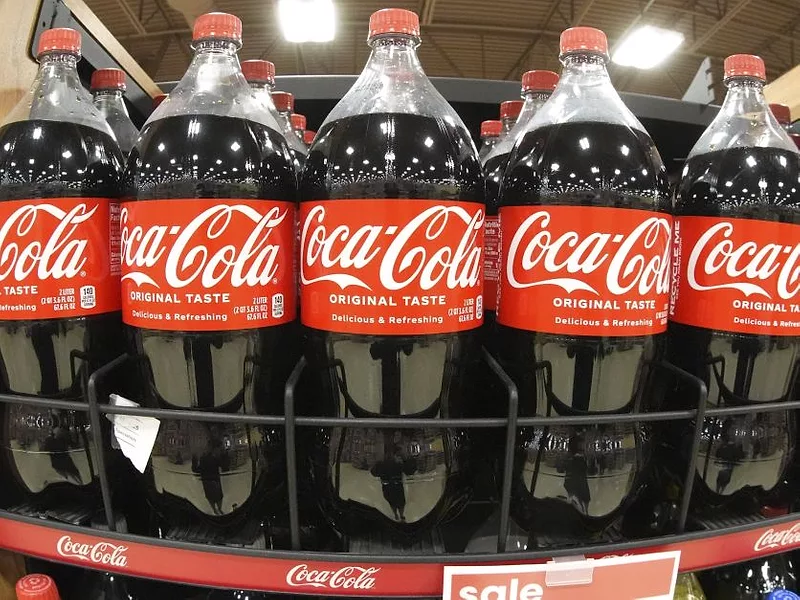
Top soda makers are expanding or contemplating use of cane sugar as a sweetener. But the move is likely to create economic headaches for corn producers and other sugar users, without clear nutritional benefits.
U.S. trade policy that's designed to protect American growers from foreign competition also will drive up the cost of the additional cane sugar that the beverage industry needs.
On Tuesday, Coca-Cola announced it would roll out Coke sweetened with cane sugar to U.S. markets as early as the fall. Currently, the soda is sweetened with high-fructose corn syrup. The cane sugar version is expected to complement, not replace, existing products.
It follows a social media post by President Donald Trump last week backing a shift toward cane sugar-sweetened Coke. “I’d like to thank all of those in authority at Coca-Cola. This will be a very good move by them — You’ll see. It’s just better!" Trump wrote in the post.
In another recent investor call, PepsiCo suggested it would consider using cane sugar in products if consumers wanted it.
Make America Healthy Again figures in the administration, including Health Secretary Robert F. Kennedy Jr. and FDA Administrator Martin Makary, have been fairly quiet on the soda issue, even as they welcome companies shifting away from artificial dyes.
Kennedy reshared a post from fast food chain Steak ‘n Shake announcing they would offer cane-sweetened Coke moving forward, and wrote “MAHA is winning.”
But Kennedy, who has previously spoken out against HFCS, has also broadly called sugar a poison and suggested he wants to lower overall consumption.
Beyond concerns about pesticide residues in HFCS, there is little to no nutritional difference between the syrup and cane sugar.
Both sweeteners have about the same number of calories and are treated the same by the body, said longtime nutrition expert Marion Nestle. She argued the move to cane sugar in sodas would do little to improve public health, as they will still be sugary drinks that should not be consumed in excessive amounts.
“Everyone would be healthier eating less of either one,” Nestle said.
The American Heart Association recommends limiting consumption of products high in sugar, and does not differentiate between high-fructose corn syrup and cane sugar.
Brian Ronholm, director of food policy for Consumer Reports, said these announcements are “empty calories” and distractions from the ultimate goal of reducing obesity and improving public health. The focus needs to be on encouraging lower consumption of high-sugar products like soda rather than just shifting the sweetener.
“Using a different type of sugar in foods that are generally considered unhealthy is not going to have a significant impact to overall public health,” Ronholm said.
A shift to cane sugar by beverage makers could lead to serious consequences for the corn industry, said John Bode, president and CEO of the Corn Refiners Association.
Roughly 400 million bushels of corn are used in high-fructose corn syrup production, which equates to thousands of U.S. manufacturing jobs, Bode said. A third of the volume in corn refining goes to HFCS, meaning a scale-back in demand could have a substantial impact on the industry.  John Bode (Agri-Pulse photo)
A report commissioned by CRA and conducted by researchers at North Dakota State University, found that completely eliminating HFCS would cut corn prices by up to 34 cents per bushel.
Soda makers switched to using corn syrup in the late 1970s and '80s because of the functional and cost benefits, Bode said. Corn syrup is more stable and cheaper to use in beverages, while cane sugar serves different benefits in certain baking items, for example.
Switching to using cane sugar as a sweetener would increase capital costs for manufacturers to add new processing systems and equipment to bottling plants. This is on top of additional costs associated with using cane sugar over HFCS, Bode said.
Shortly after Trump’s post, CRA sent a letter to the administration and members of Congress raising concern with how a transition would impact farmers and rural communities, with no substantial nutritional benefit.
“Facts are a persistent thing, so we’ll stay at it,” Bode said. “I don’t think urban legend is going to rule the day.”
Sugar importers could also face headaches
While the corn industry would face some disruption, the sector would likely adjust and offset losses by amplifying efforts to grow exports of corn, corn syrup, ethanol or livestock — which all benefit domestic corn producers, Scott Irwin, an agricultural marketing professor at the University of Illinois, told Agri-Pulse.
Sugar users and importers, however, could see lasting impacts if PepsiCo enters the market in force.
Domestic sugar supplies cannot keep up with existing demand, according to Paul Ryberg, president of the International Sugar Trade Coalition. To meet a surge in demand, imports would need to grow, he said. This would put the administration in a position where it would need to choose whether to step in to protect jobs in downstream industries that rely on imported sugar or let prices rise, to the benefit of domestic sugar growers.
It’s easy to be “in the know” about what’s happening in Washington, D.C. Sign up for a FREE month of Agri-Pulse news! Simply click here
The U.S. maintains steep tariffs on imported sugar but allows limited quantities to enter the country at a reduced rate, as required by the World Trade Organization. In the event of a significant uptick in demand – like, say, a major beverage producer rolling out a hugely popular new cane sugar product – USDA would have to intervene to allow more sugar to enter at a lower tariff rate and prevent sugar prices, already high compared to the rest of the world, from jumping.
In recent years USDA has been happy to let high-tier imports grow rather than allocate more quotas or redistribute existing quotas more efficiently. In the 2024 financial year, the U.S. imported almost 3.5 million metric tons of sugar, according to USDA data. Around 1.1 million metric tons were subject to high-tier tariffs, compared with just 6,200 metric tons in 2008.
"It's political," a former U.S. trade official granted anonymity to speak candidly about the situation told Agri-Pulse. Domestic producers welcome higher prices and can exert significant pressure on the administration to leave the quotas as they are.
"They're never going to be keen to see additional sugar brought in above the WTO minimum," they said.
This increasing reliance on high-tier imports has already been a source of concern for sugar importers.
A provision included in the recent budget reconciliation bill that requires USDA and the Office of the U.S. Trade Representative to swiftly reallocate unused quotas could provide some relief for importers, Ryberg said. Around 10 countries that receive annual sugar quotas every year no longer export sugar. Quickly reallocating their quotas to sugar-producing countries could allow an extra 100,000 metric tons to enter the U.S. at the lower tariff rate. But 100,000 metric tons would only make a small dent in the 1.1 million tons of high-tier sugar imports that entered the U.S. last year.
Ryberg also noted that other actions from the Trump administration are having the opposite effect and are already creating upward pressure on the cost of importing sugar. The 10% baseline tariff that went into effect in April applies to many U.S. sugar imports. This tariff is applied on top of the sugar-specific tariffs that importers pay, adding to their import costs.
The president has also threatened Brazil, a major sugar-exporting nation, with 50% tariffs over its prosecution of former President Jair Bolsonaro, a Trump political ally, injecting further uncertainty into markets.
Only Mexican sugar, of which limited volumes can enter the U.S. duty-free under the terms of a North American free trade agreement and a separate suspension agreement, has been spared from Trump’s tariff hikes so far.
But Ryberg noted that Mexico would struggle to scale up its imports to meet rising U.S. demand given the industry has been plagued by drought and underinvestment in recent years.
The Trump administration has also canceled a separate tariff-rate quota for 2026 that has historically allowed organic sugar to enter at a reduced tariff rate. In a statement announcing the move earlier this month, Deputy Agriculture Secretary Stephen Vaden said the action was to protect domestic sugar producers from foreign imports.
“That's another pressure point adding to prices going up,” Ryberg said.
And it isn't only PepsiCo that stands to be affected. If PepsiCo manages to secure domestic suppliers, it could force other sugar users to turn to imports.
If Coca-Cola’s emergence as a major sugar buyer raises sugar prices, it could also risk undermining the president’s reshoring ambitions, the former trade official said. Companies that use sugar as a major input have long debated whether to base operations in the U.S., where high tariffs keep sugar prices high, or across the border in Canada, where they have been able to access the U.S. market without paying a sugar premium.
“Some of our candy companies have left the U.S. over the years … moved across the border to Canada so they could access cheaper sugar,” the former official said. If Coca-Cola’s entry into the market triggers firmer prices, it could prompt more companies to reevaluate their U.S. operations.
For more news, go to Agri-Pulse.com.


