
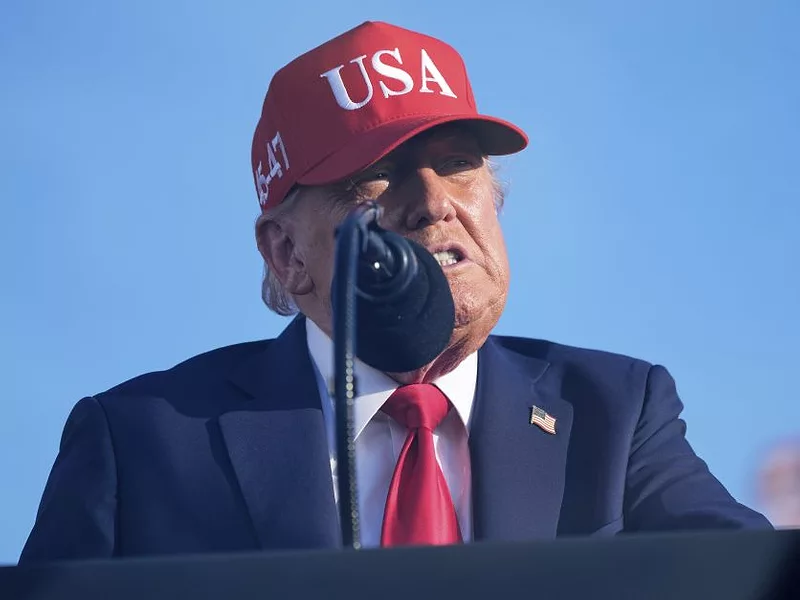
President Donald Trump said Tuesday night that the U.S. and Japan have clinched a deal that would see the U.S. reduce its so-called reciprocal tariff rate in exchange for increased market access for rice and other agricultural products.
“We just completed a massive Deal with Japan,” Trump wrote in a post to Truth Social. “Japan will open their Country to Trade including Cars and Trucks, Rice and certain other Agricultural Products, and other things.”
The president said that the Japanese government will invest $550 billion in the U.S., “at my direction,” adding that the U.S. would receive 90% of any profits – although Trump did not provide further details.
The White House did not immediately respond to a request for comment. The Japanese embassy in Washington did not immediately respond to Agri-Pulse’s request for comment or to confirm the terms of the deal.
Japan’s top trade negotiator, Ryosei Akazawa, has previously stressed to reporters that his government would not “sacrifice” the country’s agricultural sector to secure a deal with the United States, earning Trump’s ire.
Trump had threatened Japan with a 24% tariff under his April 2 tariff plans, before issuing a new threat of 25% tariffs earlier this month set to kick in Aug. 1. It is not clear whether the deal will provide any tariff relief from the sector-specific tariffs that Japan had been hoping to avoid, including those on Japanese auto exports.
It’s easy to be “in the know” about what’s happening in Washington, D.C. Sign up for a FREE month of Agri-Pulse news! Simply click here
The U.S. rice industry is hoping that the deal results in meaningful market access.
Peter Bachmann, USA Rice president, said in a statement that the deal represents "the first opportunity since the 1990s" to further U.S. market access in the country.
"We thank the President for continuing to prioritize additional rice market access throughout the negotiating process," Bachmann said, adding the move has "further solidified the importance of Japan as a market for high-quality U.S. rice."
Japan’s Prime Minister Shigeru Ishiba is also fresh off an election blow on Sunday when his ruling coalition lost its majority in Japan’s upper house.
Japanese officials have been meeting with representatives from the U.S. agricultural industry in recent months during trips to Washington. One ag industry representative granted anonymity to discuss private conversations told Agri-Pulse earlier this month that officials had conveyed to them that the Japanese government planned to wait until after the July 20 election before making significant concessions.
They would “start to play ball in a real way with real offers as soon as they get past that,” the industry representative said. The theory was that Ishiba would have looked weak if there had been any leaks to the media that the Japanese government was offering the U.S. concessions.
For more news, go to Agri-Pulse.com

