
President Donald Trump’s executive order imposing steep new duties on Brazilian exports came with a long list of exempted products, including agricultural goods not produced in the U.S. in amounts sufficient to meet domestic demand. But congressional Democrats and industry groups questioned how the list was put together, with some requesting a more transparent, formal process.
Last week the president claimed emergency powers to impose a new 40% duty on Brazil, arguing that its prosecution of former president Jair Bolsonaro violates human rights, erodes the country’s rule of law and threatens U.S. interests. The tariff hike that kicked in Wednesday is the second new tariff Brazil has faced under Trump after a 10% baseline tariff was applied in April.
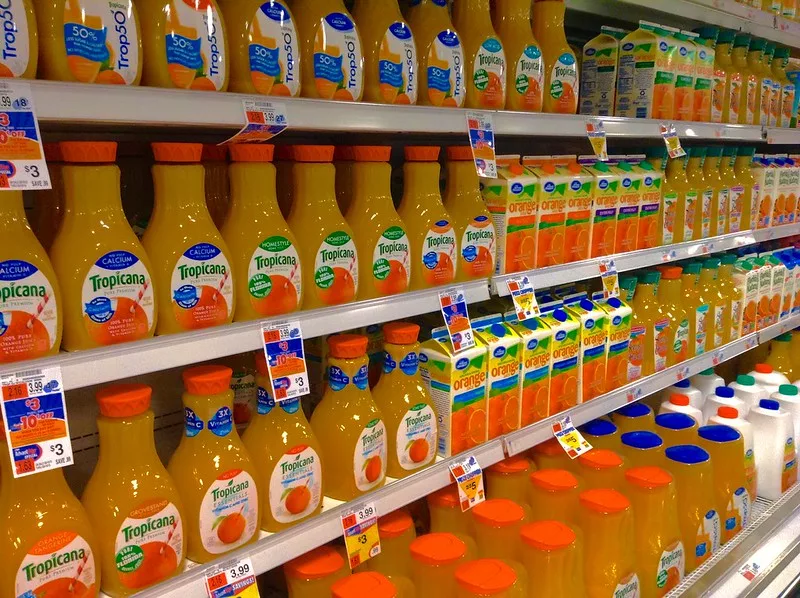
Brazil’s vice president told Reuters last week that he anticipates the new duties will cover only about a third of Brazilian exports. A long list of exempted products, from orange juice to fertilizer and wood pulp, softened the blow.
Democrats question the list and why some products but not others were exempted.
Sen. Ron Wyden, D-Ore., said the list appears to have been put together “by Trump whim.”
“That's how trade policy is made in this country,” said Wyden, ranking member of the Senate Finance Committee, which has responsibility for trade.
Sen. Elissa Slotkin, D-Mich., told Agri-Pulse Friday that some businesses approached her office to share their dissatisfaction.
“What I am hearing from companies across the board is that you go in and if you get your deal made with the White House, you can get an exemption or a special allowance,” Slotkin said. “That's the entire process.”
The Office of the U.S. Trade Representative did not respond to Agri-Pulse’s request to comment and a question on how the exemptions were assembled.
Making the exemption case
Officials excluded some products from the so-called reciprocal tariffs applied to almost every trading partner. Commerce Secretary Howard Lutnick said last week that specific ag products unavailable in the U.S. could receive tariff exemptions. Agri-Pulse has reported that USTR is seeking information on products that might fit that criteria.
During Trump’s first term, USTR and the Commerce Department stood up formal processes for tariff exclusions. Companies could apply for exemptions, listing rationale and data to support their case. The requests were published and the administration made a case-by-case determination.
It’s easy to be “in the know” about what’s happening in Washington, D.C. Sign up for a FREE month of Agri-Pulse news! Simply click here
But no such process has been established to shape exemptions in Trump’s second term.
“In the first Trump administration, you could go to the Department of Commerce, and there was sort of like a substantive way to make your case,” Slotkin said. “It's now just dealmaking with some of the senior people around the president.”
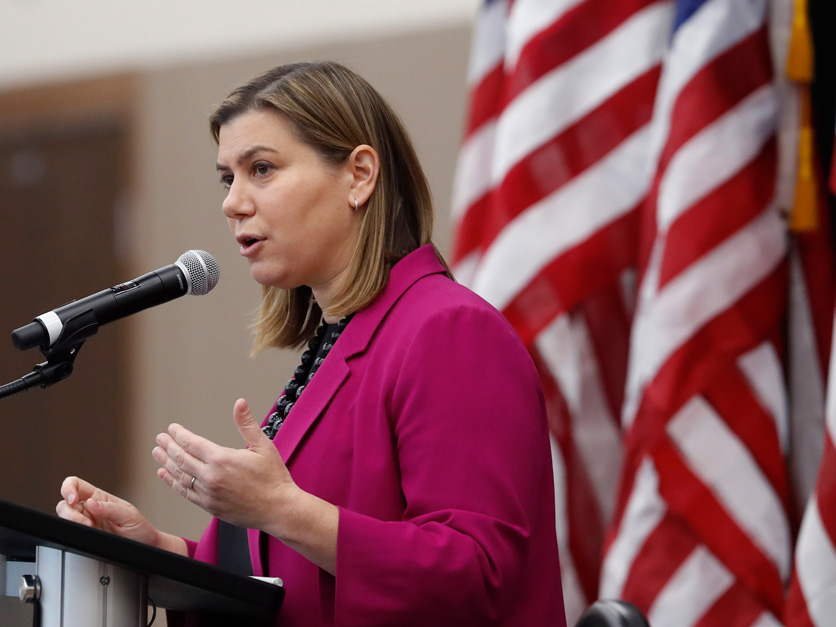 Sen. Elissa Slotkin (AP Photo/Carlos Osorio)
An agricultural industry lobbyist – who, as with others interviewed, was granted anonymity to speak candidly about recent lobbying efforts – agreed.
“We are in a different era with exemptions,” the lobbyist said.
Part of the challenge is the speed at which the new administration is moving to impose new tariffs and cut deals. During the first administration, Trump used tools such as Section 232 of the Trade Expansion Act of 1962 and Section 301 of the Trade Act of 1974. Both require investigations before tariffs can be applied, allowing time for a formal exclusion process.
Similarly, the previous Trump administration cut traditional deals that required congressional authorization and a public comment period, including the U.S.-Mexico-Canada Agreement.
This time around, Trump has wielded emergency powers to enact trade policy priorities and cut narrower deals that do not require congressional approval. In doing so, the administration also bypassed some processes industries have traditionally used to weigh in on tariff exemptions.
“Proportionally, there was more opportunity to have exclusions than there are today,” Everett Eissenstat, deputy director of the National Economic Council in the first term, told Agri-Pulse.
But Democrats are concerned that reliance on access to a small group of senior trade officials could lead to cronyism and abuse of power.
It leaves “potential for corruption,” Sen. Tim Kaine, D-Va., told Agri-Pulse. “If you're my friend, I'll exempt that product.”
Kaine said that an exemption process that relies on courting administration officials behind closed doors could silence would-be critics.
“People who might otherwise want to speak out against tariffs also are like, ‘Well, maybe I shouldn't say anything, because I might be applying for a waiver,’” Kaine said. “I'm struck by the number of companies in Virginia that talk to me about tariffs, but they say, ‘But you can't tell my story publicly,’ because they don't want to get in a bad place with the administration.”
Some in industry would prefer a formal process to give every company an equal chance to make its case – particularly when officials have struggled to find time to arrange meetings with industry.
A lobbyist in the tech industry told Agri-Pulse last week that they had struggled to get a meeting with USTR officials and convey their position on exemptions. They worried that the lack of access could hurt their ability to secure an exemption for their inputs.
Another lobbyist told Agri-Pulse on Monday that this sentiment is widely shared in Washington.
“There's a lot of concern about how this works, and it would be far better to be transparent than it would to be kind of behind the scenes like that,” they added.
“I think it would be great, if there was a more formal intake process,” said Tom Madrecki, vice president of campaigns and special projects at the Consumer Brands Association. The CBA represents food and beverage giants like Nestlé, WK Kellogg, Coca-Cola and Tyson Foods.
 Tom Madrecki (LinkedIn photo)
But Madrecki pointed out that even a formal process won’t necessarily eradicate all political capture and cronyism.
A study published in the Journal of Financial and Quantitative Analysis last year found that companies tied to donors to Republican political candidates were much more likely to receive tariff exemptions from Trump’s first-term tariffs on China than others with similar products.
Further, the authors noted that companies with ties to Democratic donors faced worse outcomes than those with executives who hadn’t made any political donations at all, suggesting that the administration penalized companies aligned with political opponents.
Open to persuasion
Madrecki said the Trump administration has been receptive to industries that import products unavailable in the United States and have been particularly interested in whether domestic substitutes exist for the products.
“From my vantage point, it has been really focused on understanding the data and the information,” Madrecki said of the administration.
At the International Sweetener Symposium in Traverse City, Michigan, on Monday, Deputy Secretary of Agriculture Stephen Vaden was asked by a sugar industry official how the administration’s policy will accommodate industries like sugar that rely on specific imported inputs.
“The most important thing that any farmer or any trade organization can do is to participate in the process,” Vaden said.
Vaden directed attendees to the administration’s ongoing Section 301 investigation into unfair trade practices by Brazil and opportunities for input as part of that probe to air concerns.
But accepting public comments as part of an investigation is not the same as standing up a formal exemption process. And those hoping that the Section 232 and 301 investigations lead to a more formal process down the road may be disappointed.
“I don't think Trump has any intention of doing that. I think he feels like the 232s on steel and aluminum, in particular, were Swiss cheese because there were so many exclusions that were granted,” a lobbyist told Agri-Pulse. “I don't think they have any interest in having any kind of exclusion process.”
However, the lobbyist added that much will depend on how economic impacts of the tariffs play out. “Ultimately, over time, I suspect there's going to be things you're going to realize, ‘Gosh, it would be good not to prevent this [stuff] from coming in.'”
For more news, go to Agri-Pulse.com.

