
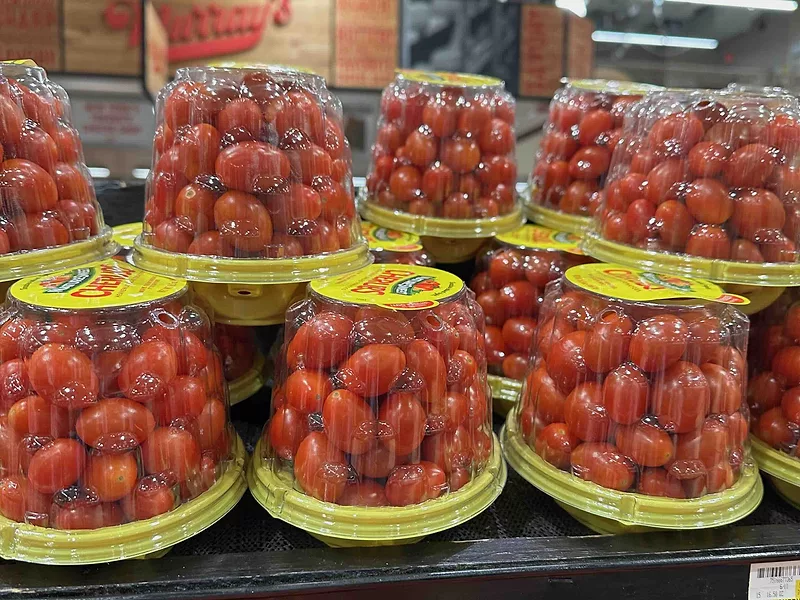
The Mexican government says it will impose a minimum price for tomato exports following new U.S. tariffs.
The U.S. withdrew from a decades-old pact last month that had long suspended antidumping duties on Mexican tomatoes provided producers from south of the border sold their products above a minimum price. The end of the agreement saw antidumping duties of 17% applied to many Mexican tomatoes arriving in the U.S.
In response, Mexico’s economy and agriculture ministries announced in a joint statement on Sunday that the government would adopt a floor price for tomato exports to “protect national production, avoid distortions in the international market, and guarantee supply to domestic consumption,” according to an informal translation.
The measure would ensure Mexican producers export cherry, grape and other varieties of tomatoes above $1.70 per kilo. Round tomatoes will have to sell above 95 cents and Roma tomatoes above 88 cents per kilo.
The Mexican government said it plans to review the prices annually, if not more frequently, and will adjust them as needed.
Prior to the end of the suspension agreement, Mexican producers met as much as 70% of U.S. tomato demand; almost all of the country’s 2 million tons of exports anticipated for 2025 were set to go the United States, according to an Agriculture Department report.
Agreement advocates have warned that the reimposition of antidumping duties could disrupt cross-border tomato trade, raising prices for consumers and leading to industry job losses on both sides of the border.
Don’t miss a beat! It’s easy to sign up for a FREE month of Agri-Pulse news! For the latest on what’s happening in Washington, D.C. and around the country in agriculture, just click here.
The new floor price for exports could help Mexican producers in multiple ways, however. It could prevent a dash to cut prices among Mexican exporters, staving off a race to the bottom that would erode profits.
Matthew Nolan – an attorney at ArentFox Schiff who represents NatureSweet, which has growing and packaging operations in the U.S. and Mexico – told Agri-Pulse that the move could also bring down U.S. tariffs in the future.
Parties can request an administrative review of U.S. antidumping duties every year. These reviews examine the latest available data to determine the appropriate antidumping duty rate that companies should face.
Nolan pointed out that if Mexican producers were to slash prices to retain U.S. market access in the face of steep new duties, the U.S. Commerce Department could hike the antidumping rates applied during the next administrative review.
If Mexico’s export price floor is above the price needed to sell above market costs, Nolan said, the government could ensure dumping isn’t occurring and perhaps secure companies a lower duty rate during the next administrative review.
“That's the only thing I can think of,” Nolan said, for why the Mexican government would want to impose a floor price.
“It came as a surprise. I don't think anybody was anticipating this,” he added.
If the new floor price is part of an effort to secure lower duties though, the Mexican government could be waiting some time. Commerce needs to gather a year’s worth of data to begin the review, Nolan said. The review can then take up to 18 months to complete.
“So, we're talking between two and two and a half years before we actually get a result,” Nolan said.
Commerce had been reviewing the 2019 suspension agreement before the U.S. withdrew from the arrangement in July. Mexican producers have petitioned the International Trade Commission (ITC) to revisit whether the duties are even warranted and whether Mexican exporters have been dumping product into the U.S. market. The ITC is still considering whether to review the original antidumping determination.
This review is separate from any review that may be initiated to adjust the antidumping rate applied to Mexican tomatoes.
For more news, go to Agri-Pulse.com.

