
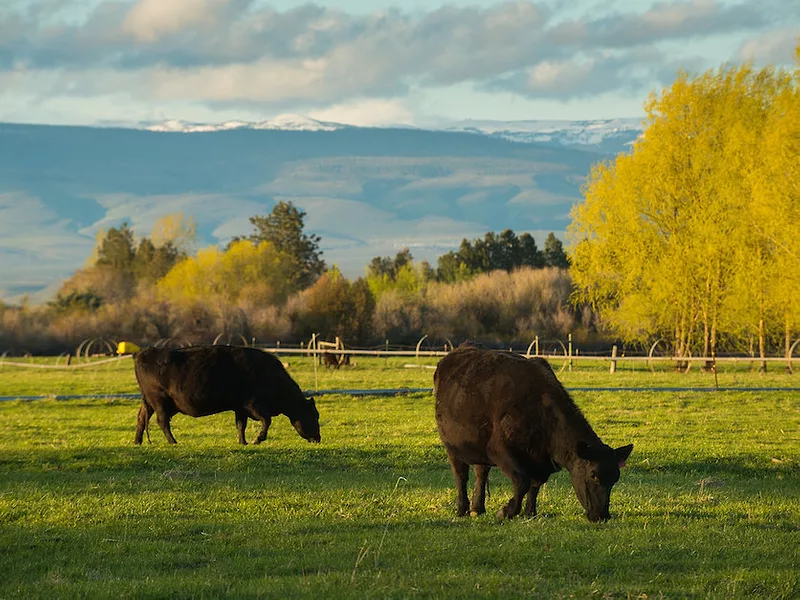
Tightening cattle inventories are helping fuel record high beef prices, a sign of U.S. cattle producers’ reluctance to begin rebuilding their herds after years of drought.
The size of the U.S. beef herd, including calves, dropped to 94.2 million head in July, a low that hasn’t been seen since the early 1950s, according to USDA estimates. That’s a 1% drop from 2023, the last July beef report (no data was collected in 2024 due to budget constraints).
Live slaughter steers of all grades sold for a weighted average price of $242.01 per hundredweight last week, a 27% increase from the same week last year, according to a USDA survey spanning five regions. High calf prices are benefitting cow-calf producers, though stockers and backgrounders are seeing margins tighten amid record cattle costs.
“They’re very much in the driver’s seat right now,” Oklahoma State University economist Derrell Peel said of cow-calf producers. “Everybody above them is a margin operation and, in most cases, the input part of that margin coming from the bottom up is rising farther and faster than the output part. So there’s a margin squeeze.”
That squeeze is particularly hitting packers, which are generally seeing losses, Peel said. In its second quarter, JBS’s North American beef division did see a 5% increase in net revenue from its first quarter, though JBS Global CEO Gilberto Tomazoni noted in a message to stakeholders that it “continued to face pressure from an unfavorable cattle cycle, as the spread between livestock costs and beef prices narrowed.”
“It’s going to be gradual,” JBS USA CEO Wesley Mendonca Batista Filho said of his expectations for cattle herd expansion during an earnings call. "It’s not going to be overnight that you’re going to see a complete change in the business. It’s going to be gradual. But I think the worst part of the cycle is going to be right here for the next maybe three, four quarters and then from there we’re going to see this change and gradually improve."
Consumers face higher costs, too. Retail ground beef prices climbed to an average $6.25 per pound in July, a record since 1984, when the Bureau of Labor Statistics began collecting data. It represents a 2.1% increase from June, when the average price was $6.10 a pound.
A report released Monday by USDA’s Economic Research Service said, “a further tightening is expected of calves available for placement in late 2025 and early 2026.” Peel said there’s a good chance that the next USDA cattle inventory report, which will come out in January 2026, will “prove to be the low” before expansion kicks in.
Cut through the clutter! We deliver the news you need to stay informed about farm, food and rural issues. Sign up for a FREE month of Agri-Pulse here.
“I think we are going to keep some more heifers this year, but it’s not going to be a fast build-back,” said Justin Tupper, president of the U.S. Cattlemen’s Association. He said it can take up to two years for progress to become noticeable when rebuilding beef inventories.
Import restrictions on Mexican cattle due to the New World screwworm has made “a tight supply even tighter,” particularly impacting feedlots in the Southern U.S., Peel said. On trade, he said tariffs on Brazilian beef imports may contribute to higher beef prices, particularly for ground beef. The ERS report said Brazilian beef imports fell nearly 100 million pounds from May to June.
Luke Frantz, a producer from Illinois, chose to sell off his inventory earlier this year and has since been custom feeding and grazing for other producers. But he said many cattle producers, particularly young ones like him who do not have a very large asset base and may struggle to access credit, are hesitant to restock due to current high costs.
“When bred cows and heifers are as expensive as they are, it’s really hard to get that money and everyone feels like they’re buying it at the top,” he said, adding, “There’s ample amount of struggles that come with high prices. I’d say there’s less opportunity for younger guys at high prices than at low prices, which may sound simple, but we’re sure seeing it now."
For more news, go to Agri-Pulse.com.

