
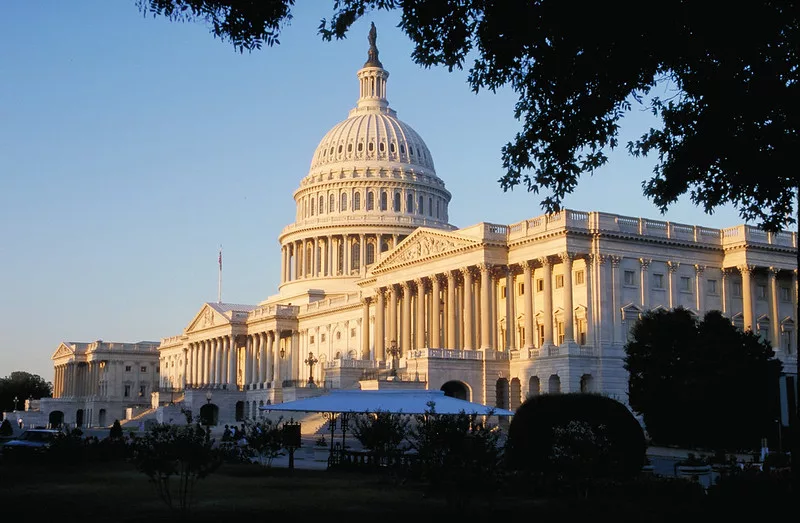
Lawmakers are back in D.C. after their long summer recess. House Republicans are kicking off the month by proposing to slash spending for the Labor Department and the Centers for Disease Control and Protection.
A draft fiscal 2026 spending bill that a House Appropriations subcommittee will consider today would cut the Labor Department’s budget by 28% and reduce the CDC’s by 19%. The Occupational Safety and Health Administration would see its budget reduced by $50 million, while Labor’s Wage and Hour Division would see a cut of $25 million.
The spending bill also includes provisions to block implementation of H-2A wage reforms proposed by the Biden administration.
SCOTUS to face critical decision on Trump powers
President Donald Trump’s trade agenda now rests with the Supreme Court. The U.S. Court of Appeals for the Federal Circuit ruled 7-4 on Friday that the president misused the International Emergency Economic Powers Act to impose the sweeping global tariffs that he has employed to force countries to make trade concessions.
Trump has other laws that he can use to impose tariffs, but they come with various restrictions. Section 122 of the 1974 Trade Act, for example, allows the president to impose tariffs of 15%, but only for 150 days without congressional approval.
The Wall Street Journal, in an editorial, called the case a “crucial moment for the Constitution’s separation of powers,” arguing that it would open the door to a Democratic president using tariffs to regulate products based on their greenhouse gas emissions.
Trump blasted the appeals court. “Without Tariffs, and all of the TRILLIONS OF DOLLARS we have already taken in, our Country would be completely destroyed, and our military power would be instantly obliterated,” Trump said on social media over the weekend. “In a 7 to 4 Opinion, a Radical Left group of judges didn’t care, but one Democrat, Obama appointed, actually voted to save our Country.”
Don’t miss a beat! It’s easy to sign up for a FREE month of Agri-Pulse news! For the latest on what’s happening in Washington, D.C. and around the country in agriculture, just click here.
By the way: Japan’s chief trade negotiator cancelled a trip to the U.S. over Trump administration demands for Japan to buy more American rice, according to the Nikkei news site.
Looking ahead: The Office of the U.S. Trade Representative will hold a hearing Wednesday in a case seeking retaliation against Brazil over its ethanol tariffs and use of deforestation to expand crop and grazing lands.
For more on this week’s D.C. policy agenda, read our Washington Week Ahead.
USDA discontinuing use of Farm Labor Survey
USDA will stop collecting data for the Farm Labor Survey, which has been used to set the Adverse Effect Wage Rate (AEWR) paid to farmworkers in the H-2A program. The survey and wage rate are intended to prevent the H-2A program from undercutting wages for domestic labor.
In a notice slated for publication in the Federal Register, the National Agricultural Statistics Service says it isn’t required by law to collect the wage data and that “scarce resources must be reallocated to activities that are required by statute and useful to the department and its customers.”
Ag reaction: The National Council of Agricultural Employers (NCAE) applauded the move. But NCAE President and CEO Michael Marsh also says he is seeking clarity on what this means for farmers.
Marsh hopes that discontinuing use of the survey, in tandem with a federal judge’s decision last week vacating use of a separate wage survey by the Labor Department, means “the market will be allowed to determine wage rates rather than a wrong-headed bureaucratic mandate. Markets work if the government will let them.”
For now, workers will still be paid the AEWR included in their contracts, Marsh says.
 Michael Marsh
Settlement proposed in Rio Grande water dispute
New Mexico, Texas and Colorado have come to an agreement in a feud over the Rio Grande.
The three states and the U.S. have filed a package of settlement agreements in a Supreme Court case over water-sharing on the river and requested the case be dismissed.
What’s being proposed? The parties are looking at adjusting the formula guiding how Rio Grande water is doled out. New Mexico has also agreed to reduce groundwater depletion within its borders.
Take note: The settlement still needs to be approved by the court. The case’s special master will consider the package of agreements at a hearing on Sept. 29, according to a press release from the New Mexico Department of Justice.
Avian flu spread slows but may pick up in fall
Highly pathogenic avian Influenza detections in poultry and dairy operations have fallen over the summer, but an American Farm Bureau Federation economist warns cases could pick back up during fall bird migration.
In a new report, AFBF economist Bernt Nelson says there have been no new detections in commercial poultry flocks in the last 30 days. Meanwhile, there has been one detection on a California dairy farm, which occurred on Aug. 1.
Still, he warns that the fall season will be a “likely time for HPAI flare-ups,” since migratory birds will head south for winter.
Final word
“This important decision by Administrator Zeldin ends a regulatory disaster that would have forced meat processing facilities to close, causing food prices to go up and hardship for livestock and poultry producers. We are grateful for the swift action of the Trump administration to put the consumer first and eliminate burdensome regulations that destroy jobs.” — Meat Institute President and CEO Julie Anna Potts, commenting on EPA Administrator Lee Zeldin’s decision to withdraw a proposal to control wastewater discharges from meat and poultry processing plants. Read more here.
Philip Brasher and Noah Wicks contributed to today’s Daybreak.


