
President Donald Trump’s steep new tariffs on Brazil took effect Wednesday, subjecting around a third of Brazilian exports to the U.S. to 50% duties. While some U.S. ag industries stand to benefit from higher prices and reduced competition, other countries also stand to gain and, in some cases, U.S. consumers and downstream industries will likely bear significant new costs.
Here are the biggest winners and losers under the new tariffs for a variety of agricultural products:
Beef
Winners: U.S. producers; Australia; Canada; Mexico
Losers: Brazilian producers; U.S. consumers
Brazilian beef producers had unexpectedly benefited from Trump’s early tariff rollout. In April, the country only received a baseline tariff of 10%, leading Brazilian exporters to believe they might escape the most crushing duty rates and emerge as a more favored supplier.
Initially, they were right, said Larissa Alvarez, a senior cattle market intelligence analyst at StoneX. Canada and Mexico are two of the U.S.’ top four sources of beef imports, with Brazil and Australia rounding out the list. When Trump moved to impose new tariffs on Mexico and Canada over cross-border fentanyl trade and injected uncertainty into North American markets, some buyers turned to Brazilian sources, with purchases of Brazilian beef from January to June jumping by 33% from last year.
But Alvarez said that the 40-percentage-point tariff hike on Brazilian beef would reverse those gains, and then some.
Brazilian beef already faces a 26.4% tariff when imported outside a 65,000-ton annual quota. The new duties will send that tariff rate above 75%.
“In Brazil, we're already seeing signs of market adjustments,” Alvarez said. Beef prices have dropped as the market waits to see how much of the beef usually sold to the U.S. ends up on the domestic market.
The move could benefit U.S. producers, if lower imports from Brazil lead to higher beef prices. But other countries also stand to benefit from Brazil’s new hurdles in accessing the U.S. market.
Australia, which only faces a 10% tariff under Trump’s so-called reciprocal tariff plans, could expand its U.S. footprint, Alvarez said. Beef from Canada and Mexico that meets the criteria under the U.S.-Mexico-Canada Agreement is also exempt from tariffs, and the two countries could bolster their U.S. exports.
Other smaller beef exporters that are subject to lower tariff rates than Brazil may also capitalize on new trade opportunities, Alvarez said, including Paraguay, Argentina, Uruguay and some Central American nations.
 Larissa Alvarez
 (LinkedIn photo)This is all bad news for the Brazilian industry, Alvarez added. Brazilian meatpackers are expecting losses of up to $1 billion as a result of the new duties. U.S. consumers and downstream industries are also set to pay more for their beef.
“For U.S. consumers, if they have to buy more Australian or Canadian [beef], or from another country,” Alvarez said, it’s “more expensive meat.”
“This will mean paying more at a time when these prices are already at historic highs.”
Sugar
Winners: U.S. producers; Central America; and (maybe) Mexico
Losers: Brazilian producers; U.S. food producers
It’s easy to be “in the know” about what’s happening in Washington, D.C. Sign up for a FREE month of Agri-Pulse news! Simply click here
Brazil receives the largest allocation of U.S. sugar import quotas annually. But the new tariffs, which will apply on top of the in-quota rate, raise serious questions about whether Brazil will still be able to meet its 156,000-metric-ton quota, analysts said.
“What it would cost to get that sugar, it's not feasible,” Jeff Dobrydney, head of futures and options at Jenkins Sugar Group Commodities, said during a panel discussion at the International Sweetener Symposium this week.
If Brazil, the largest quota holder, can no longer meet that quota, other countries can step in and, as with cattle, Central American producers are among those that could benefit, Dobrydney argued.
“Central America will be a huge focus in terms of making ends meet here in the states,” Dobrydney said. Costa Rica’s tariff rate is 15%, for example, while other Central American countries are only subject to the 10% baseline tariff rate.
Mexico is perhaps in the best position to capitalize on any diverted sugar purchases as sugar can enter duty-free under the USMCA, but its ability to scale up its exports depends on several factors – including whether U.S. officials will let it. In recent years, the Agriculture Department has preferred to let sugar arrive out-of-quota and under high tariffs than raise Mexico’s duty-free export limits.
Questions also remain about Mexico’s production capabilities following a drought and years of underinvestment, Paul Ryberg, president of the International Sugar Trade Coalition, told Agri-Pulse.
Accordingly, “domestic prices will continue to stay high,” Dobrydney said.
While downstream industries might lament high domestic sugar prices, propped up by added trade uncertainty and high tariffs on a major exporter, consumers could be somewhat insulated from price hikes.
Rob Johansson, director of economics and policy analysis at the American Sugar Alliance, pointed out that even in food products with comparatively high sugar content, sugar costs make up a fraction of the total sticker price.
Sugar costs, Johansson said, make up around 1% of the production costs for a candy bar. Other inputs, including labor, are much more important pricing components, he added.
Coffee
Winners: Colombia; Central American countries; Vietnam; Indonesia
Losers: U.S. consumers
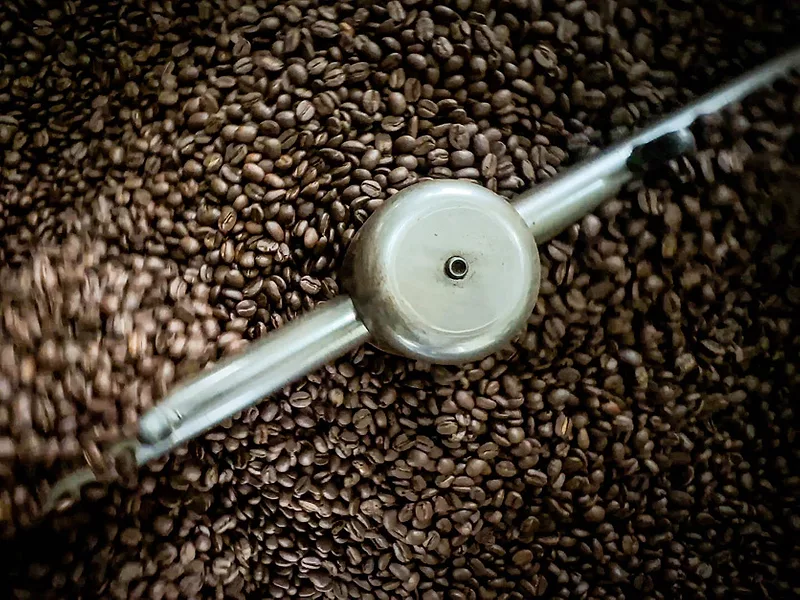
Among the most surprising details of Trump’s executive order imposing an additional 40% tariff on Brazil was the omission of coffee among the list of exempted products.
The U.S. has almost no commercial-scale industry, producing less than 1% of its total stocks domestically in places like Hawaii and Puerto Rico. Commerce Secretary Howard Lutnick even specifically cited coffee in an interview on CNBC last week when discussing how the administration is considering tariff exemptions for products not grown in the United States.
But when the executive order landed, there was no mention of coffee among the hundreds of products that secured a carve-out.
Joana Colussi, an agricultural economist at the University of Illinois, told Agri-Pulse she was caught off-guard by the announcement.
“Coffee is considered one of the most sensitive products for the U.S. economy,” she said. Consumers look at the price of a cup of coffee every day, and any hikes are sure to be keenly felt among voters.
Some in the industry are still hoping for a reprieve. The National Coffee Association and newly formed Congressional Coffee Caucus, which counts several House Ag Committee lawmakers as members, have been lobbying for a tariff exclusion. But as things stand, U.S. consumers are likely to be on the hook for higher prices, Fernando Maximiliano, a coffee market intelligence manager at StoneX, told Agri-Pulse.
 Fernando Maximiliano
 (LinkedIn photo)No other country can come close to Brazil’s production volume, Maximiliano said. In the 2024-2025 growing period, Brazilian farmers produced some 64 million 60-kilogram bags, according to USDA data. The second largest supplier, Vietnam, produced only 29 million.
For Arabica beans, Maximiliano pointed out, the ratio is even more stark, with Brazil producing around 40 million bags to Colombia’s 13 million bags.
“There is no other supplier that could fill this gap,” Maximiliano said.
In a sign of how the tariff is set to reshape global supply chains, China welcomed more than 180 Brazilian coffee sellers to the country in the days after the new U.S. tariff was announced, according to reporting from Reuters. The visit ended with new export approvals that could help Brazilian producers offset lost U.S. exports.
Coffee requires very specific growing conditions and unlike some other commodities, it takes years for a plant to begin producing, making it impossible for other countries to rapidly scale up production, Maximiliano argued.
Nonetheless, facing the prospect of 50% tariffs on Brazil, U.S. companies will likely pursue other sources, he added.
“American companies would try to buy more from Colombia, from Honduras, from Guatemala, from other countries,” Maximiliano said. “That would lead to an increase in their prices.”
There is a very good chance that these higher prices are going to be passed along to U.S. consumers, Maximiliano said. U.S. buyers have proven willing to swallow higher costs for their morning joe in the past, suggesting that companies will pass through the added costs to consumers this time.
“U.S. consumption is very strong” and relatively inelastic, Maximiliano said. Just in the past year, the price of a cup of coffee in the U.S. has increased 34%, according to the Bureau of Labor Statistics, but it has not dented consumption.
However, Maximiliano pointed out that there may be a limit on what consumers are willing to pay that companies haven’t found yet.
“This is a unique moment,” he added. Prices are already at their highest level on record. “It's difficult to really figure out what's going to happen.”
Tobacco
Winners: U.S. farmers; Canada; Dominican Republic
Losers: U.S. cigarette manufacturers; U.S. smokers
Brazil is also the largest supplier of U.S. tobacco, Colussi pointed out. The domestic U.S. industry has been shrinking in recent decades and now stands at about 3,000 farms, according to the Centers for Disease Control.
“There is a huge concern about tobacco” in the south of Brazil, Colussi said. Brazil exports more than $250 million of raw tobacco to the U.S. annually, and other large suppliers like Canada and the Dominican Republic, which face lower tariff rates, could capitalize on Brazil’s higher duties.
For more news, go to Agri-Pulse.com.
