
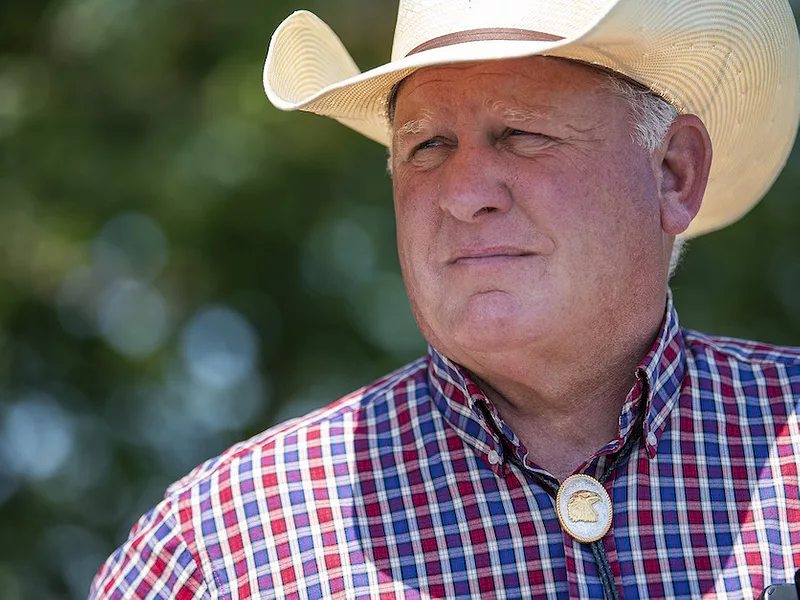
Congress has returned to session after the August recess. House Ag Committee Chair Glenn "GT" Thompson has continued to vocalize his goals to take committee action on a “farm bill 2.0” in September to address elements not included in President Donald Trump’s One Big Beautiful Bill.
During an interview for Agri-Pulse Newsmakers, the chairman discussed what’s on his radar this fall: farm aid payments, tariffs, ag labor reform legislation, the USDA reorganization plan, and his vision for "farm bill 2.0."
You can watch our full, unedited conversation here, or read the transcript below:
Lydia: USDA says farm income will be up this year, but it's mostly because of government payments and strong income in the livestock industry. To begin, what do you make of that report and the farm economy right now?
Thompson: It’s to be expected. You know, the income is up. I think the part that compounds that is basically the actual commodity prices have been down and that's the issue we need to address. We need to address that by expanding markets and also addressing the input costs. You know, at the end of the day, it's not so important what your revenue is. It’s what the your net is. It's the margin that is so important. So I wasn't surprised by that report.
It was really interesting, they also released the trade data for the past fiscal year. We had a pretty tough first half the fiscal year. It was really pretty tough coming out of Oct. 1 and the last quarter the Biden administration and the whole transition time with Trump.
Trade was up by 8 million metric pounds which is good. But revenue was essentially flat, and part of that is the input costs, it's the headwinds that farmers are facing. So I think that's good information. That's great data. And really to have us focus, use that as part of a root cause analysis to kind of inform now, what do we need to do? And I know the next step that we need to do is “farm bill 2.0.” It's also labor. It's continuing to work cooperatively with the administration on trade.
We've had some great wins for America's number one industry, agriculture, most essential industry dating back to December, but we've got a lot of work left to do as well.
Lydia: We spoke earlier this week and you said that farm aid will be necessary this fall with the predicted record yields and the uncertainty around tariffs and trade. Do you think that the farm income forecast lays a financial picture for you to advocate for those payments?
Thompson: Yeah, I think it does. I was honestly, last December, I was singing a different tune. I was really hoping that what we did, that $10 billion in economic harm would have been sufficient. It wasn’t going to fill in all the gaps. And we knew that. I think between that, the natural disaster assistance, everything that we've done, really from what I can tell based on the data, about a third of the losses is what it's covered. So I think there's more that we need to do. Food security is national security, and so I'll be advocating for investment.
I don't know how much, but a significant amount of money in tariffs has been collected. I'm advocating that just a fraction of that money would be invested, used to invest in our farmers to keep them financially stable going forward.
I think things are really good. I think we're actually seeing an increase, obviously, in agriculture exports. And the future is very promising, but I think there's a point here we're going to have to, may have to do some assistance and I think we need to be creative with how we do that. I appreciate the trade process negotiations the president is using and Jameson Greer is leading. But I would say I don't know what we had, at least $100 billion in tariff monies that have been collected. A fraction of that would be a great investment actually in “farm bill 2.0.”
Lydia: It’s a unique perspective maybe to use that tariff money for farm aid payments. In the past during the trade war during the first Trump administration, the Commodity Credit Corporation was used. You mentioned incorporating those payments into “farm bill 2.0,” but do you have a vision of how it will work to utilize that tariff revenue?
Thompson: Yeah, and just a fraction of them. You know, I think that's just a better way versus using the Commodity Credit Corporation which is what we've done in the past.
I stated early on that if this was needed – well over a year ago I had made this statement -- predicting that agriculture trade will once again be something that the administration will be working on. You know, that we may face a situation like we did under Trump 45 and we would be prepared with CCC to make sure it's replenished.
But I think there are some other alternatives. Why wouldn't we keep the CCC, the integrity of it, the way it is now so it can do what it was originally designed for? It's not often we have a viable alternative.
So that's something that obviously we need to be working together and certainly, most importantly, working with the administration to see how they feel about that.
Lydia - Deputy Ag Secretary Stephen Vaden mentioned at Farm Progress Show that the balance of the CCC is usually replenished in November. You explained using tariff revenue to fund those payments – does that have anything to do with the balance of the CCC now?
Thompson - Well, it will be replenished. It’s sort of a revolving credit card I guess. It's always I think to approximatly $30 billion is what it's recharged to. That’s what we use to pay the risk management, the other legislative, codified farm programs that that we need to do.
I think it would be important for certainty going forward that that fund remain robustly funded and ready to use for the farm programs, which we have made some great investments in with “farm bill 1.0.”
I think it’d be a reward for the patience of our farmers. You know? They recognize how important it is to have a president who cares about farming, cares about agriculture, advocates for agriculture trade.
The farmers are very patient and they understand that that disruption will sometimes interrupt markets for a short period of time, but I'm very confident in the Trump administration. Just like agriculture was the big winner under the working families tax cut bill -- the new title for the once called the One Big, Beautiful Bill -- I think our farmers in the end are going to be big winners when it comes to the President Trump-led trade.
Lydia:You mentioned “farm bill 1.0” and budget reconciliation. We've reported on an estimate that farm bill payments could exceed $15 billion for this year's crops because of the changes made in that. I’m curious how much more farmers will need?
Thompson: I'm very thankful for what we've done including both the $10 billion in December, the natural disaster aid and the record investments. The biggest investments in the farm programs, safety net program, since 2002.
We'll see how things progress. There's a lot of variables, Lydia, that are out there. The success of the of the trade programs, the trade negotiations. I'd love to see two, three trade agreements that are sealed, locked in, ready to go that have tremendous impact on agriculture. I think we're getting close to that. Obviously I think there's good signs given the fact that in the fiscal year, agriculture trade increased by 8 million metric pounds. That's a good sign. Most of that gain, all that gain, has been after President Trump has come into office. So that's the right momentum and that's the right direction.
But there's other things. We need to get Farm Bill 2.0 done to provide certainty on the remaining parts. We need to address workforce to make sure that there's certainty and affordability. I think some domestic market programs would be a determinant to including year-round E-15 would go a long way. A very positive, confident direction on sustainable aviation fuel would be huge.
The variables are really interesting. One of the problems with the corn industry right now financially is, it was too good of a year. The yield was too high. You know, that's it. Agriculture is an interesting industry. It really comes down to simple economics of supply and demand. If you're in oversupply and the demand isn't growing, then that suppresses the price.
But I think, like I said, I outlined about four or five things there that would really help change the economics. So I don't want to make a prediction of doom and gloom going forward. I think we have plenty of things that if we lean into economically, we could really make this next fiscal year a great fiscal year for American agriculture.
Lydia:You’re discussing the record crop we're expecting. Some of the downturn in markets, especially when it comes to tariffs, is because of President Trump’s trade policy. Do you think it's time for the President to reverse course on some of those things? We have this record crop and still not sure where it's going to go.
Thompson: No. I think the president should lean into trade. Trade is really important.
The trade policy of this country is one that was based on generosity, actually. It was really a model based on post WWII when most of Europe and Asia actually were in rubble following WWII. There was a purposeful decision that we would sort of disadvantage our country because we knew in the long run, helping those countries rebuild and have stronger economies was going to be good for world peace in the future and stability. So we chose to accept tariffs on our products in advantage to those other countries. Well this is 2025. We finally do have a president who's willing to do the hard work, and it's not easy. I look forward to continuing to work with him and Ambassador Greer to lean in on trade.
There's a lot of moving parts with it. It looks quite chaotic when you’ve got over 130 countries that you're negotiating with, but we just need to seal the deal on two or three here to provide ones that have really strong agriculture components. I hate to pick between commodity groups because as Ag chair, I feel like I'm picking between my kids. But strategically right now, because of the size and situation that's going on, I would say let’s put an emphasis of leaning on this first two to three trade agreements that are really strong for soybeans and corn and ethanol in terms of U.S. trade. But obviously, we need to be looking at all of them.
I think fruit and nuts right now are in a positive column in terms of trade and that's great. Let's keep that up. Now the livestock industry, it's like two different farm budgets. I mean, livestock is doing really well for the most part. Milk is down just a little bit, but we're on the cusp of getting Whole Milk for Healthy Kids done, so that's a domestic program that will help on the milk side financially.
A lot of people look at agriculture and farming and think well, that's a pretty simple lifestyle. But it's not a simple industry. There's a lot of moving parts.
I guess I'm an eternal optimist. I think that we have the ability to really get some things done here that will literally Make Agriculture Great Again.
Lydia: When you're talking about those trade deals on crops, mentioning soybeans in particular, is China what you’re referencing?
Thompson: Well, China. At the same time, recognizing that China has been the apparent threat to the United States in some ways. It's Blue Water Navy and different things. We need to work really hard to retain those markets. But we see China now gravitating to Russia.
I'm not saying back off from China. Those are important trade agreements. I thought we made so many gains under Trump 45 with the China deal. Unfortunately, it really wasn't attended to for four years under the Biden administration. It was kind of ignored and we lost all of that momentum. At the same time, it would be smart to look for new markets. You know, the African continent. Different places, new markets that we could open up for American agriculture.
The best of all worlds would be to resume China, but also expand in other markets.
Lydia: I want to also get your thoughts on “farm bill 2.0.” Obviously you’re pushing ahead to that this fall. You've mentioned that you want to take committee action in September. I'm wondering first if that's still the goal, and what all you'd like to see included in that?
Thompson: The framework is pretty, pretty easy to start with. It's taking the Farm, Food and National Security Act of 2024 and all we need to do is take out all the things that we put into law with the “farm bill 1.0.” 80% of the farm bill [was included]. It was the largest investment in the ag safety net since 2002. Whatever remains will be at the core of Farm Bill. 2.0.
Now, we need to take a fresh look at it. We have new members on the committee. We've been working hard with the Republican side to get their ideas, their requests, and seeing how we can maybe incorporate those in. We've already been doing that. We put a request in to the Ranking Member, Angie Craig. She's a good friend. She told me that she has received the priorities for the Democratic members.
We had a discussion last night [Sept. 3] on the floor. I asked, requested that we get those in the next 10 days so we have two weeks to get those incorporated because I think there are a lot of good programs that need to be reauthorized.
Now, we're not under a real time crunch at this point. I know technically the farm bill portions that weren't reauthorized on July 4 technically expire on Oct. 1. But functionally, they're all funded right through the end of the calendar year.
So we have time, but I think for providing our farmers with the certainty that they need and let's just call it the hope that they require too, the sooner that we can get 2.0 done and across the finish line, the better. We're working in a bipartisan, bicameral way and with the administration on this.
Lydia Johnson: There’s some more controversial provisions that you're considering within that, too. A legislative solution for Proposition 12, concerns about industrial hemp, lawsuits against pesticide manufacturers. Can you break down those three issues?
Thompson: Yeah, Lydia, you're spot on. They're the ones that when we did the farm bill last time out of committee last Congress, I was surprised they didn't get a tremendous amount of discussion.
Fully anticipate the “Save the Bacon” provision will be in “farm bill. 2.0.” The Supreme Court has made it very clear that it's not something they were going to fix. There may be an issue with interstate commerce. One state dictating agricultural practices to other states, but a number of the opinions clearly stated that's Congress's job and they we should do our job. So we are. We'll have the “Save the Bacon,” and we'll respect states’ rights to do internally whatever the states want to do. It's not going to interfere at all with animal health laws within individual states. It's just a matter of one state shouldn't dictate to another state. So that'll be there.
The pesticide labeling. I really believe that we need to be working with the EPA in terms of labeling for pesticide and that if we open this up to 50 different states knowing that pesticide labeling, we're going to see people get hurt because of the confusion, the lack of continuity in terms of education practices, the training requirements, the application guidelines. The EPA has a massive amount of scientists, most of them funded actually by the industry. It's a great public private partnership. And so that I really believe that needs to be addressed with within the farm bill.
And then we'll have the hemp discussions. I think the Agriculture Committee's intent in 2018 was to address industrial hemp, food and fiber. But the way the language was it wasn't a tight enough definition, so a lot of businesses have been created that use the hemp when it's hot when it has an addictive quality. That was never the intent of the Agriculture Committee. Like the last farm bill, I will manage that process in committee and we'll let the committee work its will on that. Whether that's one way or the other or some compromise in the middle, that's yet to be seen.
Lydia: And still looking at a price tag of about $8 billion over 10 years for that?
Thompson - Yeah. I think it may be a little higher, especially if we're going to incorporate some investments in to deal with some of the economic issues that our farmers are dealing with.
Lydia: How high do you think that that could be?
Thompson: I'm not sure at this point. I was really pleased with what we got for $10 billion. Pretty impressive support for agriculture. Dealt with about a third of losses, though. And so if we can do investment 2.0 to stimulate economic growth.
So we'll say with the farm bill, $8-10 billion in investments and then maybe another, it would be wonderful to be able to replicate what we did in December.
Lydia: Ag labor continues to be a major concern for rural America. You've teased a piece of legislation coming from the Ag Committee to actually reform the H2A program. Can you walk us through that? That's something that's been under the jurisdiction of the Judiciary Committee.
Thompson: Well, it is their jurisdiction to handle legislatively, although it's our responsibility because we know agriculture, right? We know the importance of the agriculture workforce and without the agriculture workforce, you have food insecurity. And with food insecurity, have rural economic insecurity, and then national insecurity.
We’re using the findings of the Agriculture Worker Task Force that I put together last Congress. Great group of 16 members, eight Republicans and eight Democrats. I think we had 25 findings that they came out with. 15 of those were unanimous, which was pretty impressive because those 16 members spanned the political spectrum and for all of them to come on board. And then we had five additional ones that were approved based on majority vote. So it was a strong vote. Can't do any better than unanimous, but majority vote still pretty good among all those members.
That's been to legislative council. We worked on that. We've taken that back out and talked with many of the commodity groups, both process and production, that have helped us with those ideas when they came in and testified over the course of a year.
And right now, the step we're in is reaching out. It's a bit of a burden, but it needs to be done. We're looking for technical assistance with the administration and I'm used to the farm bill where we reach out to USDA. Well, because of the scope and the nature of this, we're reaching out to USDA, we're reaching out to Homeland Security, we're reaching out to Department of Labor, and we're reaching out to the State Department. So I'm encouraging those agencies to be very timely and responsive in terms of giving us technical assistance because to make this work, we want to make sure that we haven't missed anything.
Then we'll be building a coalition around that starting with the Agriculture Committee. Obviously, we'll be working with the secretaries of those agencies and President Trump.
You know Lydia, the big excuse - because I really felt that we needed to do this for years - but the resistance I always got was they said, “The border is not under control. We can't do anything else until the border is under control.” And always thought, well, we can walk and chew gum at the same time. You know, we can do this. But that was not to be, obviously. And now the border is clearly under control. And not by the cartels, by the United States of America. So that that reason is gone.
I've had some discussions with the Chairman of the of the Judiciary Committee and he recognizes that as well. The border is under control and it's time to take that next step, especially when it comes to providing a reliable workforce to America's number one industry.
Lydia: The Agriculture Department has extended the USDA reorganization comment period from Aug. 26 to now Sept. 30. You've been concerned about brain drain at USDA. Is this reorganization going to make that worse?
Thompson: Yeah, it could. I mean, some people just are looking for an excuse to retire, right? I get that part. And you know, after you've made your home for maybe a decade or two decades in one place and your family is here, your family structure is here, to pick up and relocate to some other part of the country at the end of your career. For some people, they may welcome that. But for others, they may choose to retire.
I think it's really important. One of the assets we have is wisdom that we have with our more experienced employees. People that are dedicated to the cause of agriculture. So that is a concern. I'm supportive of whatever decisions the administration makes, but it is a concern that I have certainty expressed.
Lydia: Chairman Thompson, thank you so much for joining us.
Thompson: Lydia, My pleasure. Thank you so much for the opportunity.
Don’t miss a beat! It’s easy to sign up for a FREE month of Agri-Pulse news! For the latest on what’s happening in Washington, D.C. and around the country in agriculture, just click here.
For more news, go to Agri-Pulse.com.

